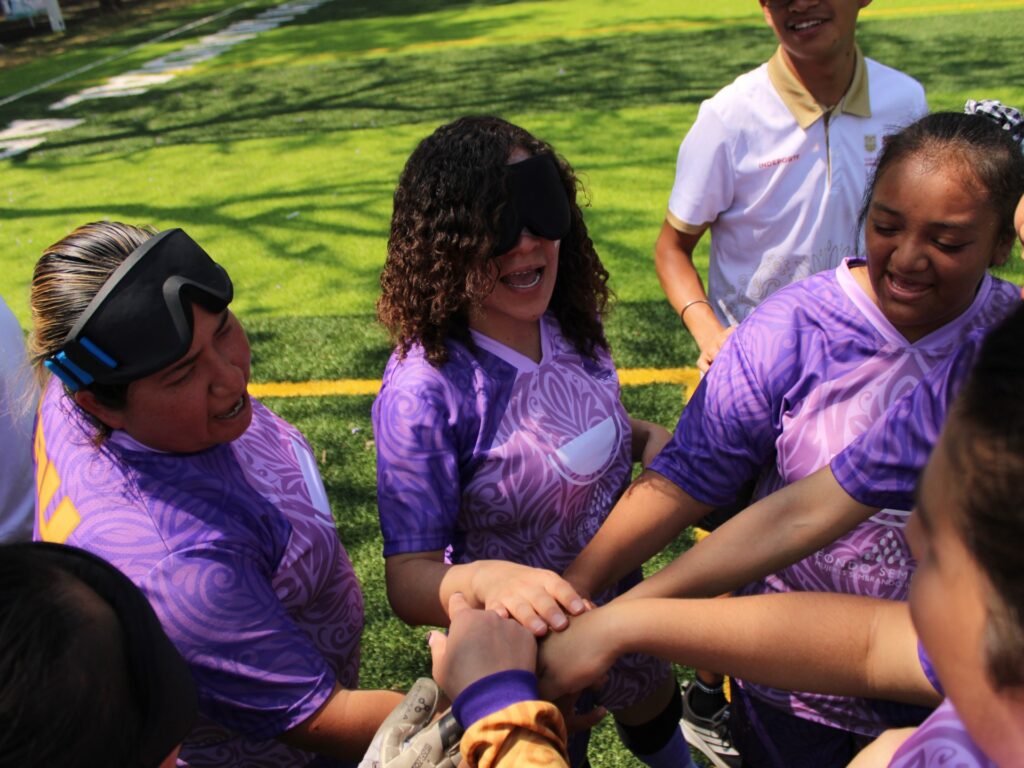
In a groundbreaking development, Mexico is poised to send its first blind women’s football team to an international tournament, marking a significant milestone for women with visual impairments in the country. This initiative is not just about sports; it’s about breaking societal barriers and empowering a marginalized group of women who have long faced challenges in accessing athletic opportunities.
Blind football, also known as five-a-side football for the visually impaired, is an exciting and inclusive sport that adapts traditional football to be accessible for players with limited or no vision. Players use a ball that makes noise when it moves, allowing them to track its position through sound. This unique adaptation enables visually impaired athletes to compete on a level playing field and experience the joy and camaraderie of team sports.
The formation of Mexico’s first blind women’s football team has been met with enthusiasm and pride, both from the players and the wider community. Many of the women on the team have shared how the sport has transformed their lives, giving them confidence, physical fitness, and a sense of belonging. For these athletes, football is more than a game—it is a vehicle for social change and personal empowerment.
Historically, women with disabilities in Mexico have faced double discrimination due to both gender and disability. Opportunities in sports have been especially limited, leaving many isolated and without access to physical activity and community interaction. The establishment of this team challenges these norms by providing a platform where these women can shine and demonstrate their talents and determination.
The upcoming international tournament, where Mexico’s blind women’s football team will compete, holds immense significance. It represents recognition of their abilities on a global stage and opens doors for future participation in international competitions. The team’s preparation has involved rigorous training sessions, guided by experienced coaches familiar with the needs of visually impaired athletes.
Support for the team extends beyond the players themselves. Coaches, organizations, and advocates are working collaboratively to ensure the team has the necessary resources, including adaptive equipment, accessible training facilities, and opportunities for competitive play. Media coverage and public interest are growing, helping to raise awareness about the sport and its impact.
The players express a mix of excitement and nervousness as they approach their first international challenge. They are eager to demonstrate their skills and show that blindness does not limit their potential. Their stories are inspiring many across Mexico and beyond, encouraging more inclusivity in sports and highlighting the importance of accessibility.
Beyond the pitch, this initiative is influencing broader societal attitudes. By showcasing the capabilities of women with disabilities, it challenges stereotypes and promotes a more inclusive perception of what women, particularly those with disabilities, can achieve. This has a ripple effect, encouraging improvements in education, employment, and social participation for people with disabilities.
In conclusion, blind football in Mexico is doing more than offering a sport; it is driving social transformation. The first blind women’s football team not only breaks new ground in athletics but also serves as a beacon of hope and empowerment for women with disabilities. As they prepare to compete internationally, they carry with them the aspirations of many who seek equality and recognition. Their journey exemplifies the power of sport to unite, inspire, and change lives.