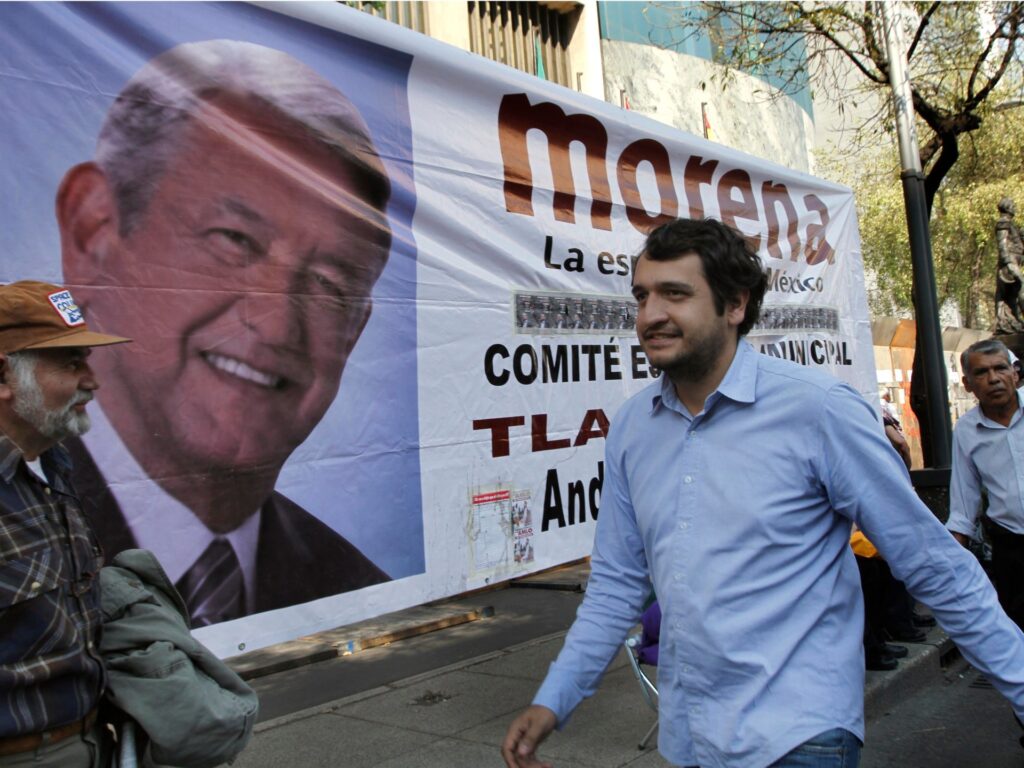
In a recent development, the son of Mexico’s former president Andrés Manuel López Obrador (commonly known as AMLO) has publicly alleged that the United States government revoked his visa. This claim has caught significant attention as it occurs within the broader context of an ongoing crackdown by U.S. and Mexican authorities on politicians suspected of having connections with drug cartels.
The United States government has not officially confirmed the revocation of the visa, leaving the situation enveloped in uncertainty. The allegation raises questions about potential political motivations and the criteria used by U.S. immigration authorities in revoking visas of high-profile individuals tied to foreign political figures.
AMLO, who served as president of Mexico, has been a polarizing figure, with his administration taking strong stances against criminal organizations but also being criticized for alleged tolerance or indirect associations with some factions. This new development involving his son adds another layer of complexity to the security situation between the U.S. and Mexico, especially as both countries collaborate closely to combat the influence of cartels and related corruption.
The alleged visa revocation can be seen as part of a larger effort by the United States to target individuals within Mexico who may be involved in or benefiting from organized crime activities. It also reflects the intense scrutiny that Mexican politicians face amidst ongoing investigations and enforcement actions related to cartel influence.
While the U.S. has been stepping up its efforts to address corruption and cartel-related violence in Mexico, revoking a visa connected to a family member of a former head of state underlines the seriousness and perhaps the political sensitivity of the issue. It sends a message about the extent to which the U.S. is willing to go in addressing these challenges.
The son of AMLO has not provided extensive details about the circumstances surrounding the visa revocation or the reasons given by U.S. authorities, which leaves room for speculation among political analysts and the public.
This incident further intensifies the ongoing dialogue about the role of political figures in Mexico’s complex landscape of crime, politics, and governance. It also highlights the cross-border implications of such domestic issues and the impact on diplomatic relations between the U.S. and Mexico.
Observers anticipate that more information will emerge as the case develops, and both countries’ governments may face pressure to clarify their positions and actions regarding this sensitive matter. For now, this story serves as a stark reminder of the interplay between politics, international relations, and security in the region.