In the complex and often tense political landscape of Taiwan, one figure has emerged as a controversial and solitary advocate for reunification with China: the man known as the ‘White Wolf.’ This nickname belongs to a former intelligence officer and businessman who has become the emblematic leader of Taiwan’s small but vocal pro-China faction, a group often marginalized in the island’s predominantly pro-independence society.
The ‘White Wolf,’ whose real name is Chang An-le, has made it his life’s mission to promote closer ties and eventual reunification between Taiwan and Mainland China. His campaign, however, takes place in the context of increasing apprehension among many Taiwanese about Beijing’s intentions, especially after years of assertive Chinese policies and military posturing around the island.
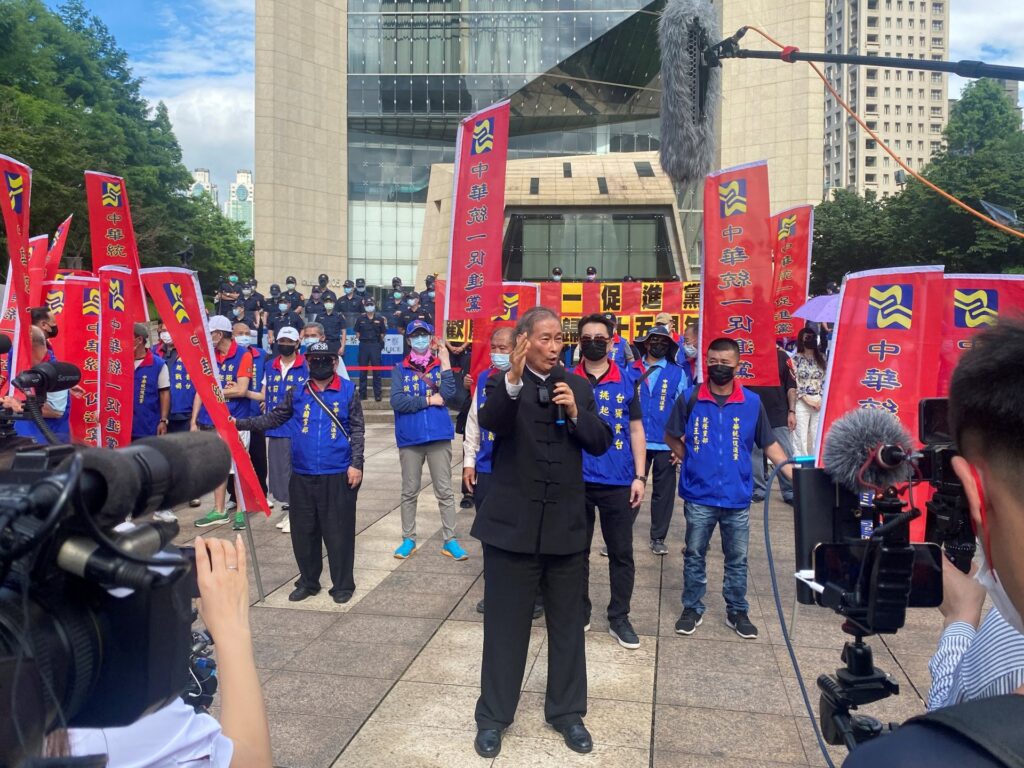
At the heart of this controversy lies the China Unification Promotion Party (CUPP), a minor political party in Taiwan that openly supports reunification under the governance of the Chinese Communist Party. Chang An-le is a leading figure within this party, advocating publicly for deep political, cultural, and economic integration with China.
Taipei’s authorities have recently intensified efforts to dissolve the CUPP, citing alleged ties between the party and Beijing. Officials claim the party acts as an instrument of influence, aiming to undermine Taiwan’s sovereignty and democratic system. The government’s move to ban the party reflects broader efforts to counter Chinese influence campaigns, which are perceived as threats to Taiwan’s security and political stability.
Despite these political pressures, the ‘White Wolf’ continues his campaign unabated, holding rallies and speaking out in favor of peaceful reunification. His critics accuse him of being a proxy for Beijing’s interests, while his supporters argue that dialogue and reconciliation are essential for regional stability.
The tension surrounding this issue highlights the precarious state of cross-strait relations. Taiwan’s government, backed by a significant majority of its citizens, remains wary of China’s ambitions, valuing its hard-won democracy and autonomy. Meanwhile, figures like the ‘White Wolf’ represent a countercurrent that believes engagement with China is the only viable path forward.
Internationally, Taiwan’s democratic resilience continues to garner support, even as China ramps up pressure. The contestation within Taiwan’s political spectrum over reunification or independence illustrates the island’s unique and volatile position in global geopolitics.
In summary, the ‘White Wolf’s’ lonely crusade underscores the deep divisions within Taiwanese society regarding identity and sovereignty. As Taipei moves to crack down on parties linked to Beijing, the future of cross-strait relations remains uncertain, contingent on a delicate balance of domestic will and international diplomacy.