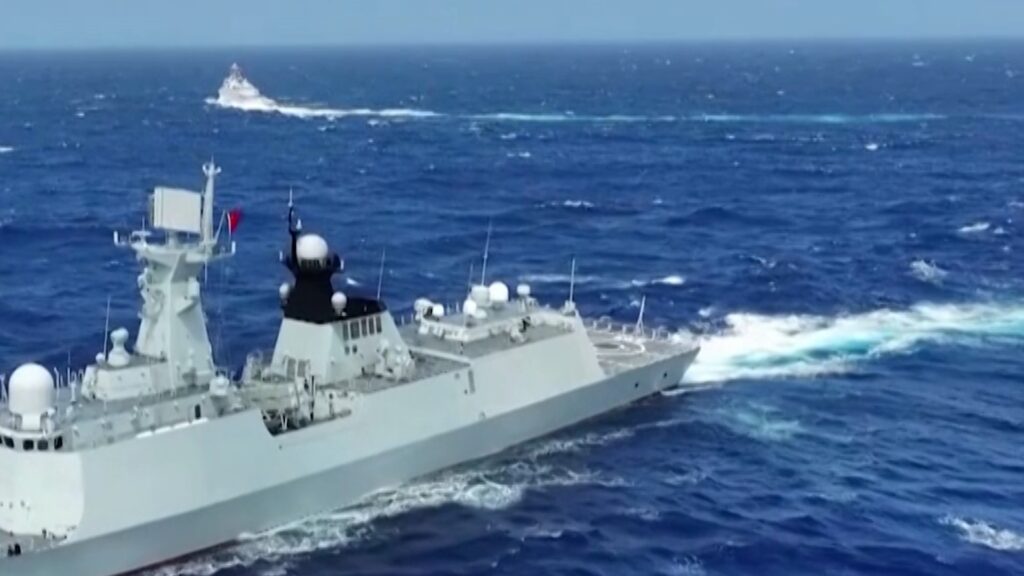
Recent naval exercises conducted jointly by China and Indonesia in waters east of Taiwan have stirred significant regional tension and anger in Taiwan. Chinese state media released footage showcasing the joint naval drill, emphasizing the collaboration between Beijing and Jakarta in maritime operations. The drills took place in strategically sensitive waters, a region close to Taiwan’s eastern maritime boundary, which Taiwan perceives as an encroachment on its vigilance and sovereignty.
China’s expanding naval activities in the region are part of its broader strategy to assert influence and control in the Indo-Pacific. The joint drills with Indonesia exemplify this approach by strengthening military ties with regional neighbors and projecting power in contested maritime areas. The participation of Indonesian naval forces is particularly notable, as it signals Jakarta’s willingness to engage militarily with China despite ongoing territorial disputes in the South China Sea.
Taiwan’s government has strongly condemned the exercise, viewing it as a provocative act that undermines regional peace and security. Officials in Taipei expressed concern over the implications of such maneuvers, interpreting them as attempts to intimidate Taiwan and disrupt the status quo in the Taiwan Strait. The location of the drills, considered by Taipei as close to its territorial waters, has heightened the sensitivity of the issue.
Analysts suggest that the joint drills also send a message to the international community about China’s growing naval capabilities and its determination to challenge US and allied influence in the region. Taiwan, which depends heavily on support from the United States and other Western allies, sees such exercises as direct threats that could complicate its defense posture.
Indonesia’s role in the drills is multifaceted. While Jakarta emphasizes its commitment to regional security and cooperation, critics argue that Indonesia risks entanglement in geopolitical rivalries that could destabilize its traditionally non-aligned stance. Nonetheless, Indonesian officials have stated that the exercises are routine and focused on improving maritime security, counter-piracy, and disaster response.
The footage released by Chinese state media includes scenes of coordinated maneuvers, maritime surveillance activities, and joint training operations demonstrating air and sea coordination. The visuals underscore the increasing interoperability between the two navies and their ability to conduct complex operations together.
The broader regional impact of the drills is significant. Taiwan’s neighbors and other Indo-Pacific countries are closely monitoring the situation, wary of escalating tensions. Diplomatic efforts to engage all parties in dialogue to prevent conflict in the Taiwan Strait and surrounding waters continue, but the recent drills add strain to already fragile relations.
In conclusion, the joint naval drills between China and Indonesia in waters east of Taiwan represent a clear signal of China’s rising maritime ambitions and Indonesia’s cooperative stance within this dynamic. Taiwan’s angry reaction highlights the delicate balance in regional security and the challenges of maintaining peace amid growing military assertiveness. The developments call for careful diplomatic engagement to avoid further escalation and ensure stability in the Indo-Pacific region.