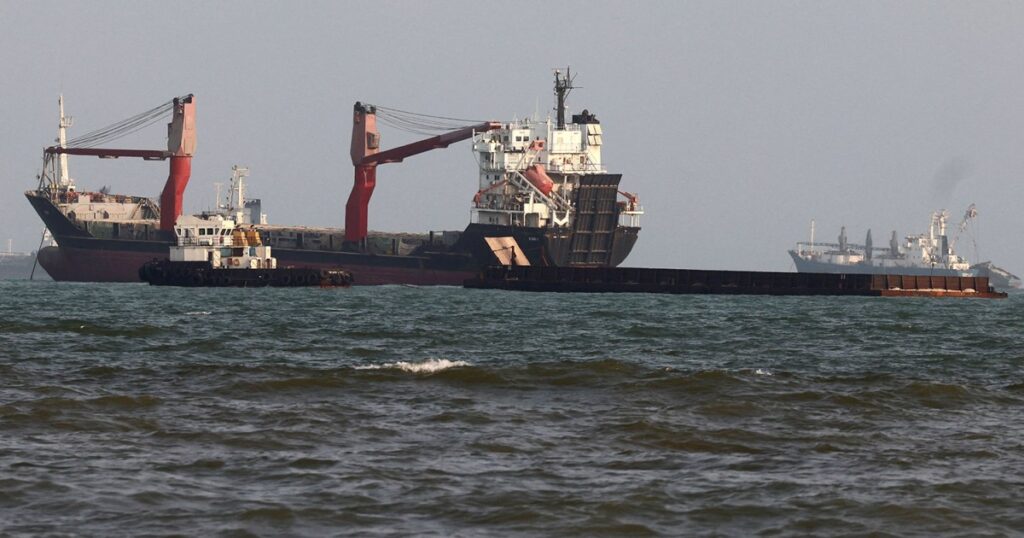
In a recent development on the geopolitical stage, Iran has adamantly rejected former U.S. President Donald Trump’s claim to “control” the strategic Strait of Hormuz, a vital waterway for global oil shipments. The dispute underscores escalating tensions and has significant implications for global energy markets.
The Strait of Hormuz, located between the Persian Gulf and the Gulf of Oman, is one of the world’s most critical maritime chokepoints, with roughly 20% of the world’s petroleum passing through it. Control and security over this narrow passage have long been a contentious issue, particularly between Iran and the United States.
Iranian authorities have declared that the Strait will remain closed to international shipping if the United States does not meet Iran’s demands and alter its “behaviour” in the region. This stance was made clear following recent remarks by Trump asserting American dominance over the Strait.
Iran’s position indicates a strong refusal to accept any claims of U.S. control over the waterway and represents a strategic message that Iran holds significant leverage in the region. Officials emphasize that Iran’s control is tied to its sovereign rights and defense, rejecting any form of foreign domination.
The announcement comes at a time when global energy prices have surged, partly due to fears of instability in the Middle East affecting oil supply chains. The potential closure or disruption of the Strait of Hormuz could exacerbate these price spikes by threatening a major artery for crude oil transport.
Diplomatic efforts are currently underway to ease tensions, with international stakeholders closely monitoring negotiations aimed at ensuring free navigation through the Strait. Iran is demanding that the United States modify its policies and actions in the region, which Tehran views as aggressive and provocative.
The U.S. has historically emphasized the importance of freedom of navigation through the Strait and has deployed naval forces to protect shipping routes. However, the recent rhetoric from both sides illustrates a deepening divide that complicates diplomatic resolutions.
Energy-importing countries express concern about the escalating rhetoric, as any prolonged disruption could lead to higher fuel costs and economic instability worldwide. Many nations are calling for restraint and dialogue to prevent further deterioration of the situation.
Analysts warn that continued brinkmanship could escalate into military confrontation, which would have severe repercussions beyond the regional level, impacting global markets and international security.
The situation remains fluid, with ongoing talks in various international fora seeking to find common ground. Iran’s insistence on having its demands met before reopening the Strait signals a tough negotiation ahead.
In summary, Iran’s rejection of Trump’s claim to control the Strait of Hormuz and its threat to keep it closed unless its conditions are met has added a new layer of complexity to an already volatile geopolitical landscape. The outcome of these talks will be crucial for ensuring stability in one of the world’s most important energy corridors.