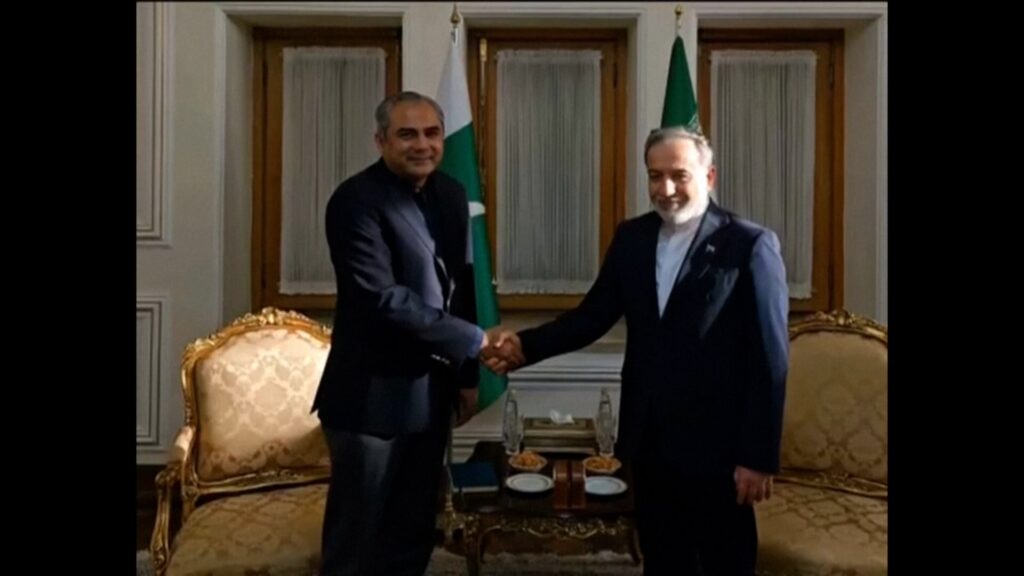
Pakistan’s Interior Minister Mohsin Naqvi has arrived in Tehran for a high-level diplomatic engagement with Iranian officials, notably holding talks with Iranian Foreign Minister Abbas Araghchi. The primary focus of these discussions is to address the reopening of the strategic Strait of Hormuz, a critical maritime route that has seen intermittent tensions and operational disruptions affecting global energy supplies. The Strait of Hormuz is a vital chokepoint through which a significant portion of the world’s oil shipments pass, making its accessibility a matter of international interest.
During his visit, Minister Naqvi emphasized Pakistan’s commitment to regional stability and the importance of fostering cooperative relations with neighboring countries. He highlighted the economic ramifications that the closure or restricted access to the strait can impose not only on Iran and Pakistan but also on the broader international community.
Foreign Minister Abbas Araghchi welcomed the dialogue, underscoring Iran’s willingness to collaborate on measures to ensure the security and operational continuity of the Strait. Both sides discussed initiatives aimed at de-escalating tensions in the Persian Gulf area and explored frameworks for joint maritime security efforts.
The talks in Tehran occur against a backdrop of heightened geopolitical tensions in the Middle East, with various international actors vested in the security and freedom of navigation in this crucial waterway. Pakistan, sharing borders with Iran and experiencing significant energy demands, stands to benefit from stable and secure maritime routes.
This diplomatic engagement reflects Pakistan’s growing role in regional diplomacy and its interest in contributing to peaceful resolutions of complex issues. It also highlights Iran’s openness to engage with regional partners to address mutual concerns, particularly those that impact the economy and security.
Experts suggest that reopening the Strait of Hormuz could lead to improved energy trade dynamics and bolster economic cooperation in South and Central Asia. Additionally, enhanced security measures and confidence-building steps between Iran and Pakistan may pave the way for broader cooperation in trade, transportation, and energy sectors.
Minister Naqvi’s visit sets a precedent for increased diplomatic activities between Pakistan and Iran, potentially marking a turning point in how regional challenges are addressed collectively. The discussions also underscore the interconnected nature of regional security, energy supply, and economic prosperity.
Observers note the significance of sustained dialogue and practical cooperation in overcoming infrastructural and geopolitical hurdles to the Strait’s full operational status. Both Pakistan and Iran aim to foster an environment where commerce and navigation are uninterrupted by conflict or political disputes.
As talks continue, international stakeholders are watching closely to see how these diplomatic efforts might influence broader stability and economic development in the Middle East and South Asia. The engagement between Minister Naqvi and Foreign Minister Araghchi in Tehran signifies a step forward in addressing shared concerns through diplomacy and dialogue, setting a hopeful tone for future collaborations.