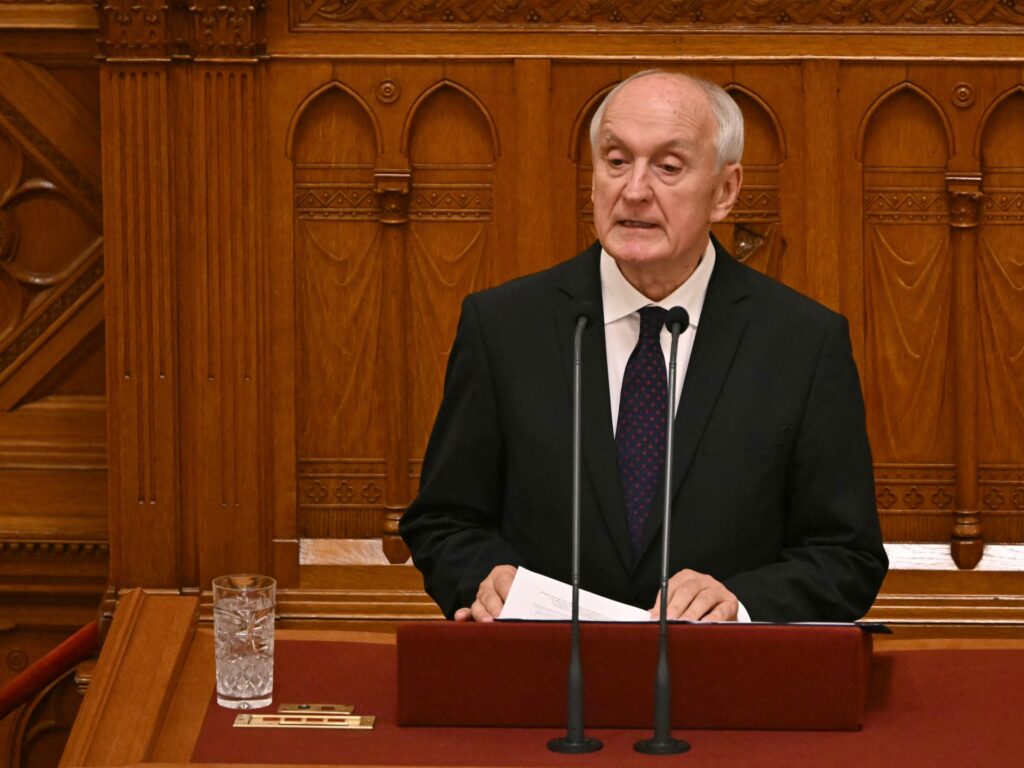
In a significant political development in Hungary, András Baka, a former Supreme Court judge who was previously ousted by former Prime Minister Viktor Orban, has been elected as the new President of Hungary. This move marks a notable shift in the country’s political landscape, as Baka replaces Tamás Sulyok, an Orban appointee who was recently removed amid a campaign to challenge Orban-era power structures.
András Baka’s election is historic due to his past conflict with the Orban administration. Baka was dismissed from his position on the Supreme Court during Orban’s initial tenure, a controversial decision that drew widespread criticism both domestically and internationally regarding judicial independence in Hungary. His return to a prominent political role signals a potential recalibration of Hungary’s judiciary and executive interplay.
Tamás Sulyok, Baka’s predecessor, was part of the judiciary system aligned with Viktor Orban’s government. His removal came as part of a broader strategy led by Katalin Tisza, a political figure spearheading efforts to dismantle power structures established during Orban’s era. This strategic campaign aims to restore balance and create checks on governmental overreach, emphasizing a renewed focus on judicial fairness and democratic values.
The election process that led to Baka’s presidency involved active parliamentary engagement, reflecting the current government’s intention to promote figures who have previously come under political pressures but who are considered advocates for judicial independence.
Baka’s new role as president places him at the heart of Hungary’s ongoing political and legal reforms. His tenure is expected to influence the direction of Hungary’s constitutional and judicial policies significantly, particularly in light of international scrutiny over rule of law issues in the country.
Supporters of Baka hail his election as a victory for judicial independence and democratic principles. They look forward to a period where the judiciary acts as a robust check on executive power, fostering greater transparency and fairness in governance.
Opponents, however, view this appointment with caution, questioning whether Baka’s past conflicts and opposition stance might lead to further political polarization. The balance between addressing past injustices and ensuring political stability remains a delicate task for Hungary’s leadership.
The political atmosphere in Hungary remains highly dynamic, with this appointment underscoring ongoing tensions between different factions within the country’s government and political landscape.
In summary, the election of András Baka as Hungary’s president marks a crucial turning point. It highlights efforts to readdress past grievances related to Orban’s governance and sheds light on the future trajectory of Hungary’s judicial and political reforms. The country now looks forward to how these changes will unfold in the coming years under Baka’s leadership.