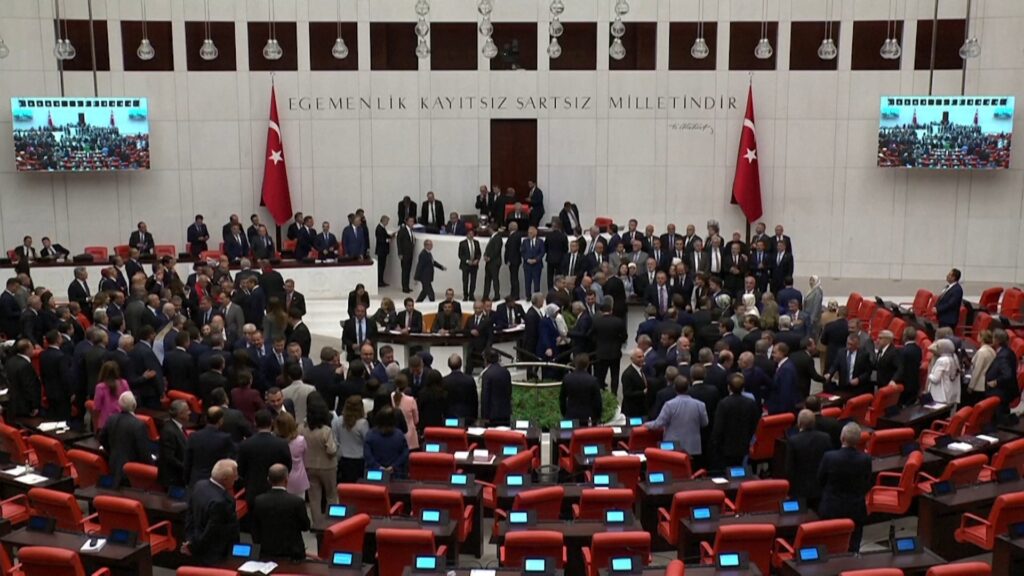
In a significant move aimed at promoting peace and social reintegration, Turkiye has passed a new law that provides thousands of members of the Kurdistan Workers’ Party (PKK) with the opportunity for amnesty. The legislation sets forth terms allowing PKK members to rejoin society if the group fully disarms, signaling a potential step toward resolving long-standing conflicts.
The PKK, designated as a terrorist organization by Turkiye and several other countries, has been involved in an armed struggle against the state for decades. This law represents an unprecedented initiative to encourage PKK militants to lay down their arms and integrate peacefully into civilian life.
Under the new law, eligible PKK members who surrender and comply with the disarmament terms can benefit from amnesty provisions, which may include freedom from prosecution for related offenses and support in reintegration efforts. The legislation highlights a framework designed to facilitate dialogue and trust-building between the state and former insurgents.
Officials involved in drafting the law emphasize the importance of societal reconciliation and the benefits of reducing armed conflict, which has affected the region’s stability and development. Advocates believe that the reforms can pave the way for a more inclusive and peaceful society by addressing the root causes of insurgency and providing alternatives to violence.
The law also imposes strict conditions to ensure that disarmament is genuine and accompanied by a commitment to refrain from future armed activities. Monitoring and verification mechanisms will be established to oversee compliance and help reintegrate former combatants through vocational training, psychological support, and community programs.
Responses to the law have been mixed. Some view it as a courageous step toward peace, while others express concerns over security and the potential risks associated with granting amnesty. Opposition groups argue that stringent measures must be in place to prevent misuse of the law and ensure accountability.
Despite challenges, many experts see the legislation as an opportunity to break the cycle of violence that has plagued Southeastern Turkiye and the broader region. Successful implementation could enhance security, foster economic growth, and improve relations with minority populations.
The Turkish government intends to engage with civil society, local communities, and international partners to support the effective application of the law. It underscores the state’s commitment to reconciliation while maintaining a firm stance against unlawful armed activities.
This development comes amid broader efforts by Turkiye to address internal conflicts through political dialogue and social reforms. The law could serve as a model for other countries grappling with similar insurgency issues, balancing justice and peace-building in a complex security environment.
In conclusion, Turkiye’s new law offers a pathway for thousands of PKK members to reintegrate into society through disarmament and amnesty, marking a pivotal moment in the nation’s ongoing quest for peace and stability. As the law takes effect, its success will largely depend on cooperation between the government, former militants, and the wider society to build a lasting peace.