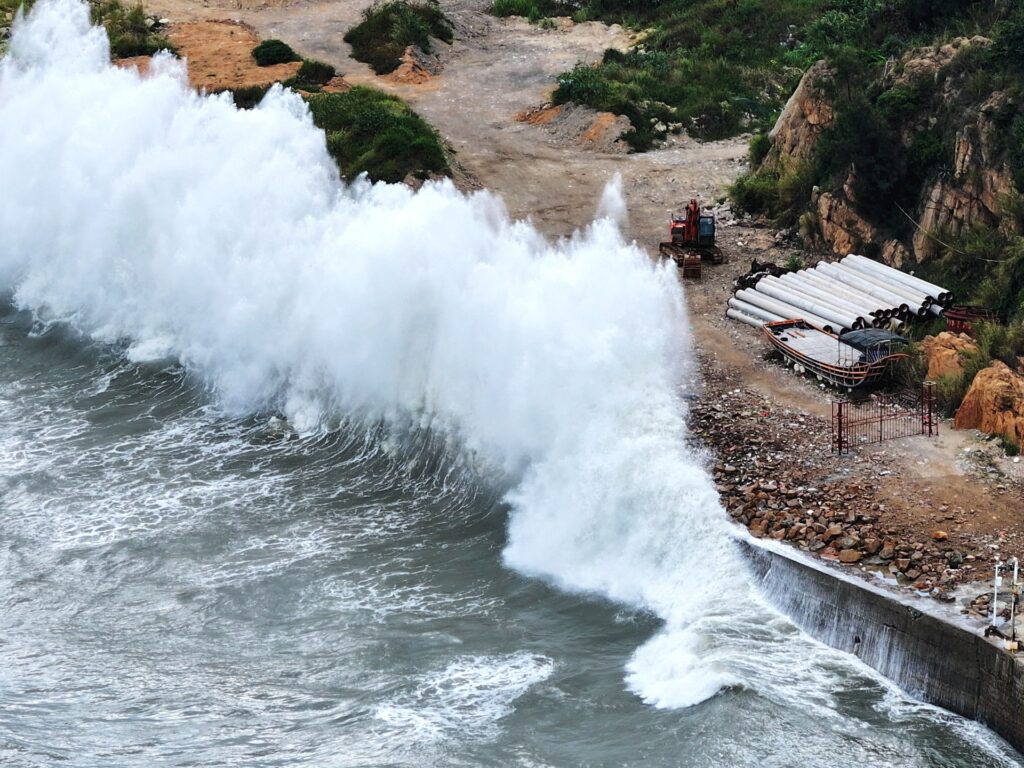
China is on high alert as Typhoon Dolphin approaches its eastern coast, prompting significant disruptions and precautionary measures. Over 1,600 flights have been canceled due to the storm’s advancing trajectory and intensifying winds, reaching speeds of up to 162 km/h overnight. The typhoon poses a serious threat to the region, leading authorities to initiate evacuations and safety protocols to protect residents and minimize damage.
The eastern coastal areas are particularly vulnerable to the typhoon’s impact, with strong winds and heavy rain expected to cause flooding, structural damage, and power outages. Transportation hubs are grappling with the chaos as airlines cancel flights to prevent passengers from being stranded or caught in hazardous conditions.
In addition to flight cancellations, local governments have urged citizens in affected regions to evacuate to safer locations. Emergency shelters have been set up to accommodate those displaced by mandatory evacuation orders. The government is also mobilizing resources to respond quickly to any emergencies arising from the typhoon’s effects.
Weather forecasts indicate that Typhoon Dolphin could bring severe weather conditions for several days as it moves along the coastline. Residents are advised to stay indoors, avoid non-essential travel, and monitor updates from meteorological authorities and emergency services.
This event underscores the increasing need for preparedness and swift response mechanisms in areas prone to natural disasters such as typhoons. Authorities continue to coordinate with airlines, local governments, and emergency response teams to ensure public safety and effective management of the situation.
As Typhoon Dolphin approaches, the focus remains on minimizing risk and safeguarding lives while restoring normalcy as soon as possible following the storm’s passage. Ongoing updates will be provided to keep the public informed about developments and necessary safety measures.