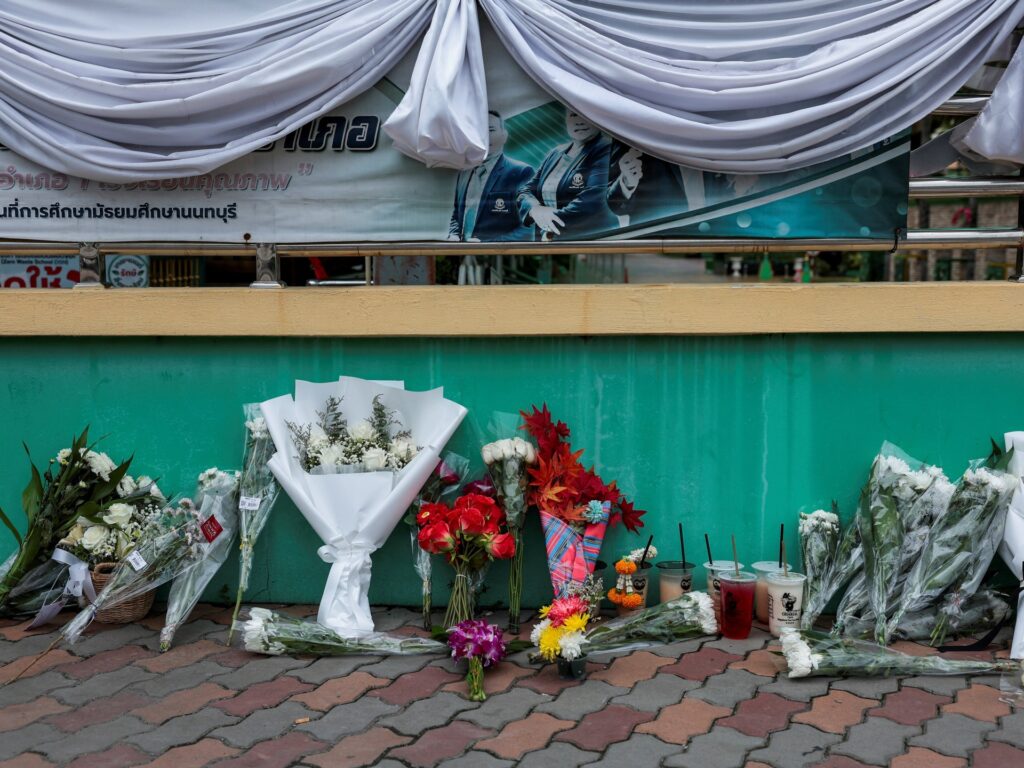
The recent school shooting in Thailand has taken a tragic turn, as the death toll has risen to nine following the passing of a young girl who was critically injured in the attack. This incident marks one of the deadliest school shootings in the country’s recent history, sending shockwaves throughout the nation and prompting urgent discussions about gun control and school safety.
Thailand, known for having one of the highest rates of gun ownership in Asia, faces unique challenges when it comes to preventing firearms-related violence. The culture surrounding guns and the accessibility of weapons contribute significantly to the difficulty in controlling incidents like this.
The shooting occurred at a local school, a place that should be a safe haven for children and young people. Details about the perpetrator remain under investigation, but the community is grappling with grief and shock as they come to terms with the devastating event.
Authorities are working tirelessly to provide support for the victims’ families and to conduct a thorough investigation into how the shooter obtained the weapon and orchestrated the attack. The government is under pressure to review existing gun laws and implement stricter measures to prevent such tragedies in the future.
In recent years, Thailand’s high gun ownership rate has been linked to both legal firearm possession for self-defense and illegal arms trafficking within the country. This high prevalence poses ongoing risks, particularly in public spaces such as schools.
Educational institutions across the country are now reevaluating security protocols, emergency preparedness, and mental health resources to better protect students and staff. Experts emphasize the importance of early intervention and community vigilance to identify and assist individuals who may pose a risk to themselves or others.
This heartbreaking incident highlights the need for comprehensive policy reforms that address not only the possession and control of firearms but also the underlying social and psychological factors contributing to such violence.
As Thailand mourns this tragic loss, the nation must come together to find solutions that balance cultural norms, public safety, and the well-being of its citizens, especially its younger generations. Preventing future tragedies will require coordinated efforts from government, law enforcement, educational authorities, and communities at large.
The death of the young girl in the wake of the school shooting serves as a solemn reminder of the urgent need for change and the importance of safeguarding the future of all students in Thailand.