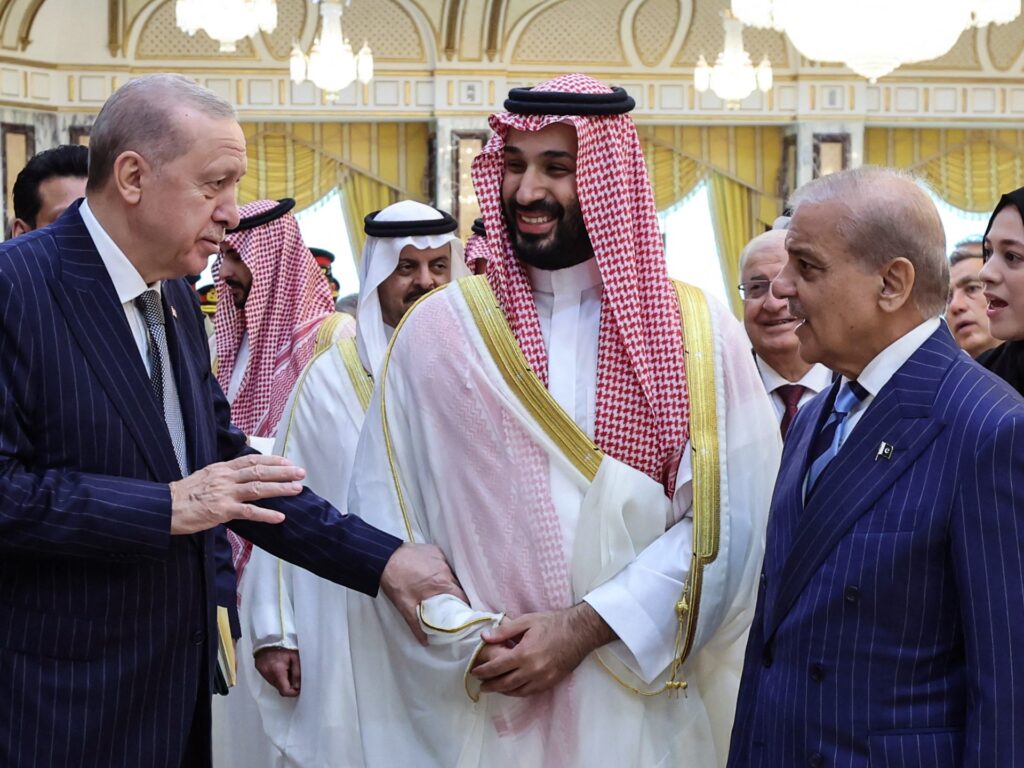
In a significant geopolitical development, Saudi Arabia, Turkey, and Pakistan have announced the formation of a new defence pact. This alliance is seen as a strategic move in the complex political and security landscape of the Middle East and surrounding regions. The pact aims to bolster mutual defence capabilities, enhance military cooperation, and potentially shift the balance of power in a region rife with longstanding rivalries and conflicts.
The announcement has come at a critical time, just as Israel approaches its national elections, adding a layer of complexity to the country’s security and foreign policy considerations. Israeli officials are currently assessing the implications of this new alliance, which could alter security dynamics and influence diplomatic relations.
Historically, Israel has had a cautious and often tense relationship with Saudi Arabia, Turkey, and Pakistan. While Saudi Arabia and Israel have shown signs of warming ties in recent years, especially through back-channel communications and shared concerns over Iran, formal diplomatic relations remain absent. Turkey’s relations with Israel have been oscillating, marked by periods of cooperation and contention, while Pakistan does not maintain official diplomatic relations with Israel.
The formation of this defence pact signals a potential consolidation among these Muslim-majority countries, which may be aimed at countering perceived threats in the region, including from Israel and Iran. The pact could result in increased military collaboration, intelligence sharing, and joint exercises, thereby reshaping regional security frameworks.
Israel’s response to the new pact will be pivotal. Analysts suggest that Israel might reinforce its own alliances and possibly engage in intensified diplomatic efforts with other regional players and global powers such as the United States to mitigate any adverse impacts. Additionally, Israel may boost its defence readiness and strategic posturing in response to the emerging alliance.
Domestic political considerations are likely influencing Israel’s stance as well. With elections looming, political leaders might use the situation to galvanize public opinion on national security issues, emphasizing the importance of robust military and diplomatic strategies in ensuring the country’s safety.
International reactions have been mixed. Some Western allies view the pact with caution, wary of increasing instability in an already volatile region. Others see it as a natural realignment reflecting new geopolitical realities, including shifting alliances and power balances.
The pact raises questions about the future of Middle Eastern alliances and the potential for new diplomatic engagements or escalations. It underscores the dynamic nature of regional politics, where traditional rivalries are increasingly intersecting with broader global strategic interests.
As the situation develops, close monitoring of political statements, military activities, and diplomatic exchanges will be crucial. The new defence pact could serve as a catalyst for significant changes in the region’s security architecture and international relations, impacting not only Israel but the broader Middle East and beyond.
In conclusion, the Saudi Arabia, Turkey, and Pakistan defence pact represents a notable shift in regional dynamics that Israel must carefully navigate amidst its electoral period. The coming months will be critical in determining how this alliance shapes security policies, diplomatic ties, and geopolitical strategies in the Middle East.