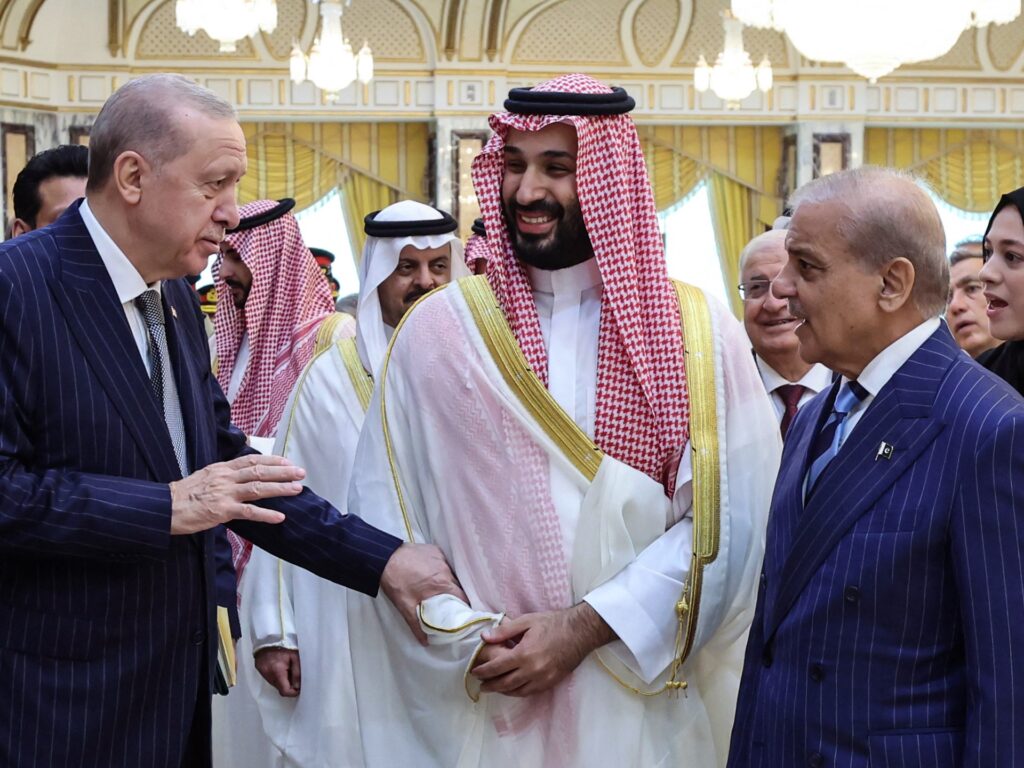
As Israeli elections approach, a significant geopolitical development has emerged in the Middle East, prompting close scrutiny and strategic recalculations. Saudi Arabia, Turkiye, and Pakistan have announced a new defence pact, marking a notable alignment of these influential Muslim-majority nations. This trilateral agreement has raised questions in Israel regarding its potential impact on regional security dynamics and Israel’s own strategic positioning.
The defence pact between Saudi Arabia, Turkiye, and Pakistan represents a collaboration focused on mutual security interests. While details remain somewhat undisclosed, experts suggest the pact aims to enhance joint military cooperation, intelligence sharing, and coordinated responses to regional threats. This initiative reflects the complex interplay of alliances in the Middle East and South Asia and signals shifting balances of power.
Prime Minister Benjamin Netanyahu’s government is currently evaluating the implications of this development. Given Israel’s fragile security environment and the proximity of upcoming elections, Netanyahu’s response may influence both domestic political discourse and regional diplomacy. Historically, Saudi Arabia and Israel have maintained a cautious and unofficial understanding against shared threats, particularly concerning Iran. However, this new pact, involving Turkiye and Pakistan, countries with their own contentious histories with Israel, complicates the strategic equations.
The pact’s formation could be viewed as a counterbalance to Israeli influence, signaling a coalition of states with significant military capabilities willing to present a united front. Particularly, Pakistan’s role is critical as it has no formal diplomatic relations with Israel and has historically supported the Palestinian cause. Turkiye, too, has had a fluctuating relationship with Israel, marked by both cooperation and conflict.
For Netanyahu, the timing of this pact is sensitive. On one hand, it underscores potential regional isolation challenges Israel faces. On the other, it opens avenues for Israel to reconsider its diplomatic and security strategies, possibly accelerating efforts to deepen ties with other regional players or global powers. Analysts anticipate that Netanyahu might push for heightened defense readiness while exploring diplomatic maneuvers to mitigate the impact of this new alliance.
The defence pact also prompts broader questions about the future of Middle Eastern geopolitics. It reflects a growing trend of regional blocs forming around common interests but also brings to light the underlying tensions that persist across nations with divergent agendas. For Israel, navigating this new environment will require careful balancing of military preparedness and diplomatic engagement.
In the coming weeks, as elections draw near, Netanyahu’s approach to this development will be closely watched. His administration’s response could shape Israel’s security outlook and influence electoral narratives, potentially affecting public perception and voter behavior. This delicate moment highlights the intricate link between regional geopolitics and domestic political landscapes in Israel.
In sum, the Saudi, Turkiye, and Pakistan defence pact introduces a novel variable into Middle Eastern security calculations, challenging Israel to adapt amid evolving regional alliances. Netanyahu’s decisions in response to this strategic shift will be pivotal, both for Israel’s future and for the broader stability of the region.