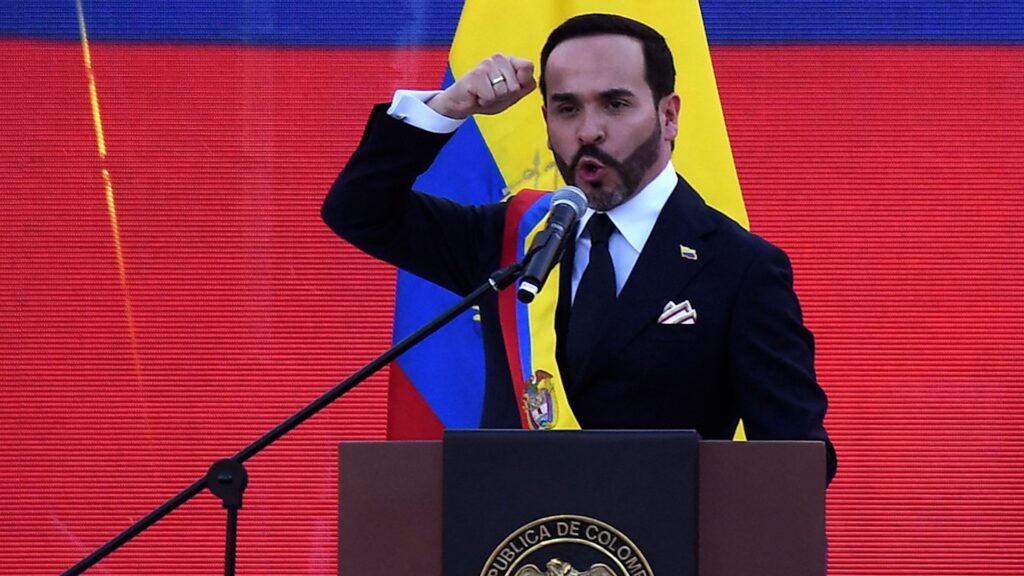
In a pivotal moment for Colombia, Abelardo De La Espriella, a right-wing politician, has been sworn in as the nation’s new president. His ascendancy to the presidency follows a narrow victory in June’s presidential runoff, signaling a closely contested election that captivated the country’s attention. From the moment he took office, De La Espriella made a resolute pledge to tackle one of Colombia’s most enduring and challenging issues: narco-terrorism.
Narco-terrorism has been a scourge for Colombia for decades, intertwining illegal drug trafficking with acts of violence and terrorism, destabilizing regions and undermining the country’s institutions. The new president’s vow to ‘crush’ this menace reflects a commitment to restore peace and security to affected communities. De La Espriella’s approach is expected to combine strengthened law enforcement measures with increased international cooperation to dismantle drug cartels and armed groups linked to narcotics.
Colombia has seen previous administrations attempt to combat narco-terrorism, with varying degrees of success. De La Espriella’s administration faces the critical challenge of not only reducing drug production and trafficking but also addressing the root causes such as poverty, inequality, and corruption that fuel the illegal drug trade. His government has signaled plans to bolster the military and police forces, enhance intelligence capabilities, and push for social programs aimed at offering alternatives to communities vulnerable to the drug trade.
International reaction to the new president’s stance has been cautiously optimistic. Key allies, particularly the United States and neighboring countries, have expressed support for Colombia’s renewed focus on security and counter-narcotics efforts. International collaborations may include intelligence sharing, joint operations, and assistance in rehabilitating former combatants or drug traffickers willing to surrender.
De La Espriella’s leadership style is expected to be firm and uncompromising as he addresses narco-terrorism head-on. However, experts caution that the complex nature of the drug trade intertwined with political and social issues demands sustained effort and multifaceted strategies. There is also a call for balancing aggressive law enforcement with respect for human rights to avoid alienating communities.
The president’s narrow electoral victory underscores the divided political landscape in Colombia. His success in implementing his agenda will depend heavily on his ability to unite the nation and work collaboratively with Congress and civil society. As Colombia embarks on this new chapter, all eyes will be on Abelardo De La Espriella to see if his promises translate into tangible progress against narco-terrorism and ultimately, a safer Colombia for all its citizens.