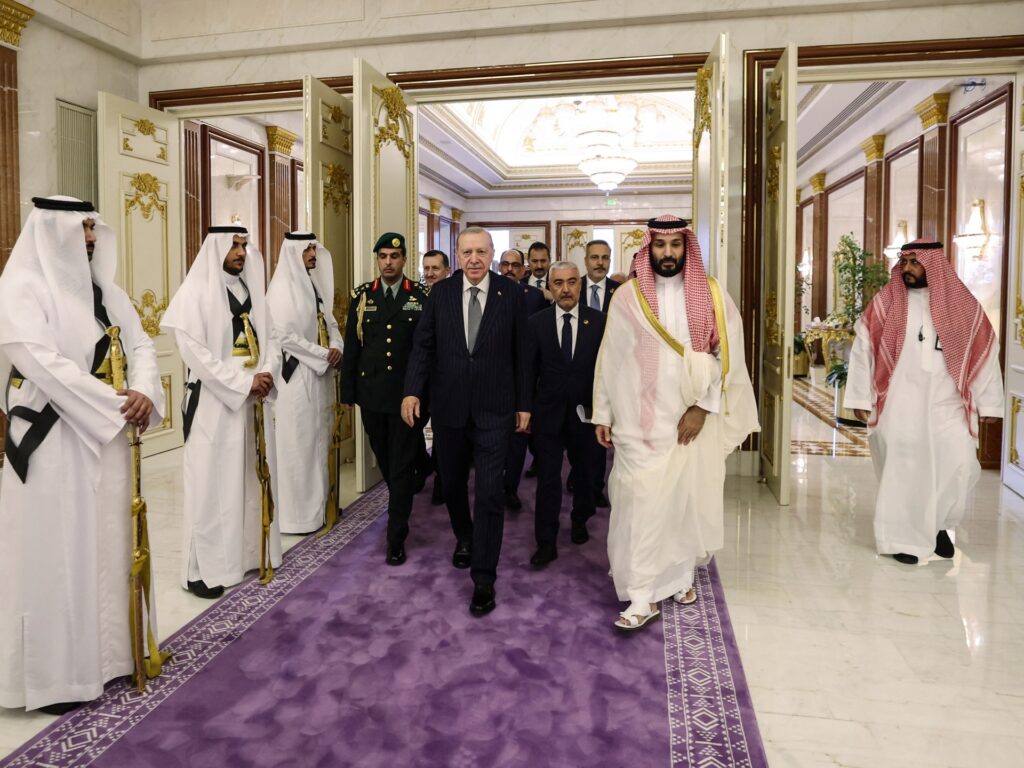
The recent Mecca Defence Pact, a security agreement formed among several Middle Eastern countries, marks a significant development in the region’s geopolitical landscape. Analysts suggest that this pact could signal a shift in how regional partners balance their security needs and their relationships with global powers, particularly the United States.
Historically, the US has played a central role in Middle Eastern security, maintaining military alliances and offering support against various threats. However, the emergence of the Mecca Defence Pact indicates that regional players are exploring alternatives to solely relying on the US. This does not necessarily mean an abandonment of America’s involvement but rather an effort to diversify security collaborations.
The pact brings together key Gulf states and possibly some neighboring countries to create a collective security framework. By pooling resources, intelligence, and defence capabilities, these nations aim to address common threats more efficiently and assert greater regional autonomy.
Analysts note several motivations behind this move. One is the perceived unpredictability of US foreign policy, which has at times caused regional allies to question the consistency of American support. Another factor is the desire for a more balanced power structure in the Middle East, where countries wish to reduce dependency on an external power while still benefiting from strategic cooperation.
Importantly, most regional partners are not seeking to discard US involvement outright. Instead, they appear to be supplementing existing ties with new regional mechanisms, thereby increasing their own leverage in negotiations and security arrangements.
For the United States, this development presents both challenges and opportunities. On one hand, it may reduce American unilateral influence in the region. On the other, it offers a chance to engage with a more integrated Middle Eastern security framework, potentially leading to more stable and sustainable partnerships.
The Mecca Defence Pact could also affect broader regional dynamics. A stronger collective defence mechanism may deter external threats and reduce the risk of conflicts escalating. It could also shift alliances and necessitate recalibrations in US diplomatic and military strategies.
In conclusion, the Mecca Defence Pact represents a pragmatic approach by Middle Eastern countries to enhance their security while maintaining beneficial ties with the US. For the United States, adapting to this evolving landscape will be crucial to sustaining its role as a key player in the Middle East.