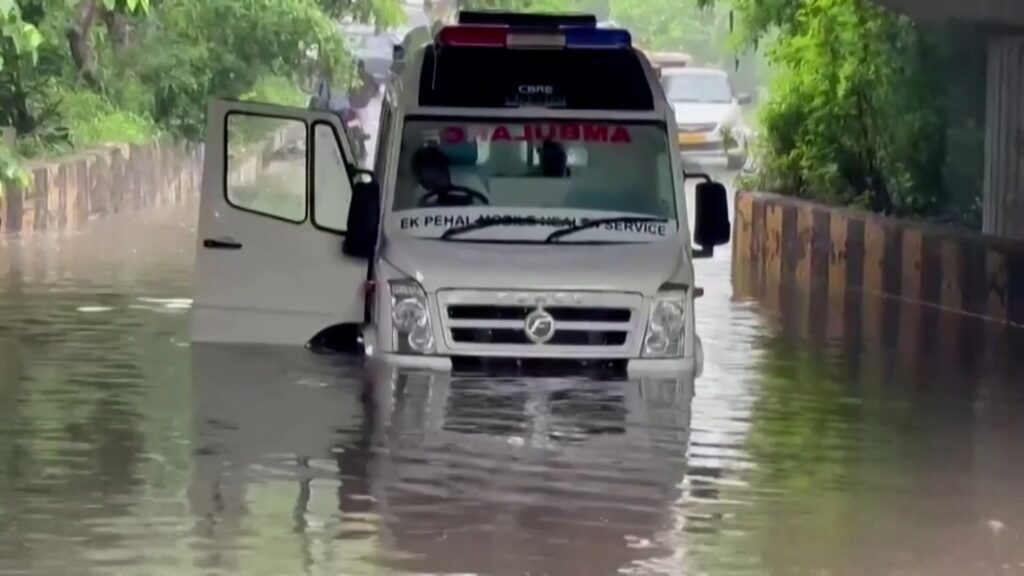
New Delhi and its surrounding towns have been placed on red alert due to heavy rains that have relentlessly pounded the region. The downpour has severely disrupted daily life, leading to significant traffic snarls and leaving countless commuters stranded on the roads.
Emergency services have been on high alert to manage the increasing number of calls related to waterlogging and traffic jams. Authorities have advised residents to avoid non-essential travel and stay indoors for safety.
Traffic congestion has escalated rapidly in key areas, affecting public transport and private vehicles alike. Several major roads have reported bottlenecks, with some routes temporarily closed due to flooding. Commuters are facing extended travel times, and many have been forced to abandon their vehicles midway.
Local administration is actively working to drain waterlogged streets and clear blocked drains to mitigate further disruption. Efforts are also underway to restore power in affected localities where outages have occurred due to the weather.
The India Meteorological Department (IMD) has issued warnings for the coming days, predicting continued heavy rainfall over the region. This forecast raises concerns about potential flooding and further challenges for emergency response teams.
Residents are urged to take precautions such as avoiding waterlogged areas, refraining from crossing flooded roads, and keeping emergency numbers handy. Authorities have set up helplines to assist those affected by the adverse weather conditions.
The impact of the heavy rain is not confined to New Delhi city alone; neighboring towns are also experiencing disruptions, highlighting the widespread nature of this weather event.
Schools and offices in several parts of the city have announced closures or delayed timings to ensure public safety. Transport services are advising passengers to check schedules before traveling.
This episode of heavy rainfall is one of the most intense in recent years, underscoring the increasing vulnerability of urban infrastructure to extreme weather conditions. Experts are calling for enhanced drainage systems and better urban planning to reduce the impact of such events in the future.
Meanwhile, citizens are demonstrating resilience and community spirit, helping each other navigate through the difficulties posed by the unrelenting rains. Volunteers and local organizations are distributing necessities and assisting those stranded.
As the city braces for continued wet weather, the focus remains on minimizing damage, ensuring safety, and restoring normalcy as swiftly as possible. The situation is being monitored closely, with updates being provided regularly by local authorities and the meteorological department to keep the public informed.
The heavy rains serve as a reminder of the challenges posed by climate change, emphasizing the need for comprehensive disaster preparedness and sustainable urban development practices.
For now, New Delhi and its residents remain vigilant, hoping for a quick respite from the downpour and a return to normal life.