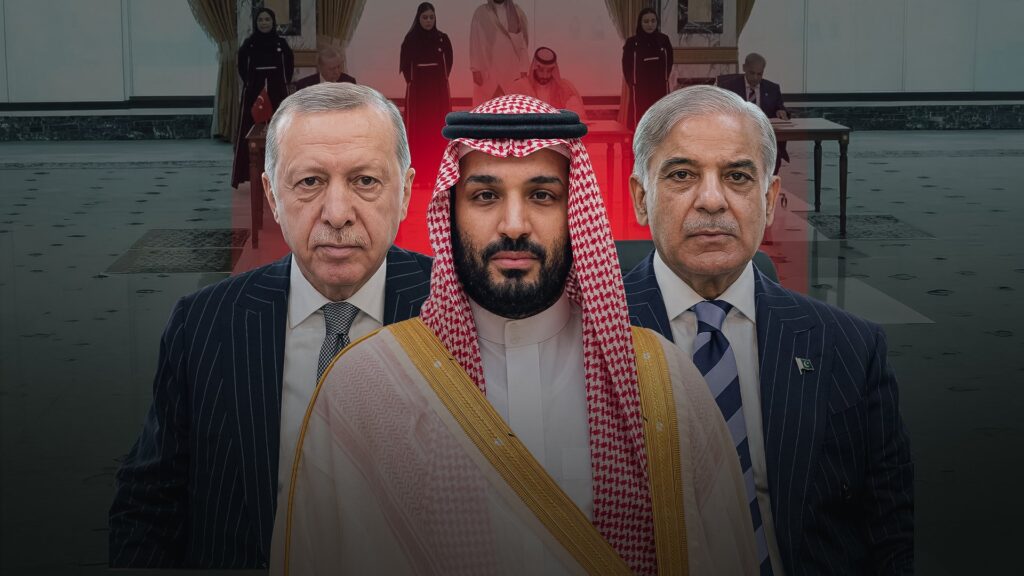
In a significant geopolitical development, Saudi Arabia, Turkiye, and Pakistan have formalized a trilateral defence pact signed in Mecca, designed to bolster their collective security and deter potential aggression in a region marked by tension and conflict. This alliance signals a strategic move by the three nations to coordinate military and security efforts amidst rising regional instability, particularly in the context of ongoing conflicts and Iran’s contentious role in Middle Eastern dynamics.
The defence pact was signed during a high-profile meeting in Mecca, underscoring the importance these nations place on mutual cooperation. The agreement aims to strengthen military collaboration, intelligence sharing, and joint training exercises, enhancing the capability of these countries to respond collectively to any external threats.
Saudi Arabia, a leading power in the Gulf region, has been seeking to solidify its alliances to counterbalance Iran’s influence. Turkiye, strategically located at the crossroads between Europe and Asia, has increasingly demonstrated its intent to play a more assertive role in regional security. Pakistan, with its significant military forces and geopolitical stance, adds critical strength to the alliance.
The three countries have communicated that this pact is not offensive in nature but is primarily intended for deterrence and defense, aiming to ensure stability and peace in their respective regions. It also highlights their commitment to combating terrorism, securing borders, and preventing any form of external intervention that could destabilize their sovereignty.
The pact comes at a time when tensions with Iran remain high, attributed mainly to proxy conflicts, territorial disputes, and accusations of meddling in internal affairs. Each signatory country views the agreement as a strategic buffer against these challenges, intending to present a united front against any escalation.
This trilateral defence agreement also has implications for global geopolitics. It could influence the power dynamics in the Middle East and South Asia, where alliances play a crucial role in shaping diplomatic and military engagements. Western and regional powers will closely observe this development, considering how it may affect ongoing conflicts and peace efforts.
Experts suggest that beyond military cooperation, the pact may also foster deeper economic and political ties among Saudi Arabia, Turkiye, and Pakistan. This nexus could pave the way for broader integration efforts that support collective growth and stability.
While the details of the pact remain largely confidential, officials have assured that mechanisms will be established for regular consultation and crisis management among the signatories. This proactive approach is expected to enhance transparency and trust within the alliance.
The signing in Mecca holds symbolic significance, reflecting the cultural and religious ties that bind the three predominantly Muslim nations. It symbolizes a shared commitment to safeguarding their common interests and promoting peace across their borders.
In conclusion, the Saudi Arabia-Turkiye-Pakistan defence pact represents a pivotal moment in regional security architecture. By uniting their military strengths and strategic interests, these countries are aiming to create a stable security environment capable of withstanding external challenges. This alliance reflects a broader trend of regional powers seeking to assert their sovereignty and regional influence in an increasingly complex global landscape.