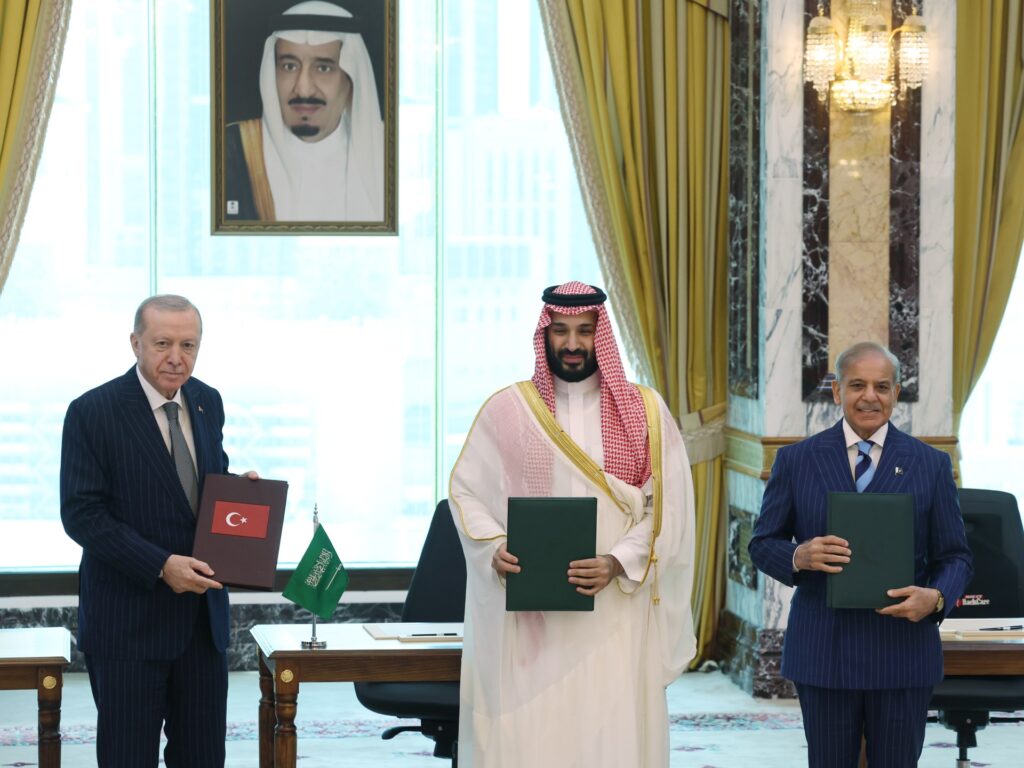
In a significant move reflecting the changing dynamics and rising tensions in their region, Saudi Arabia, Pakistan, and Turkiye have entered into a landmark defense agreement. This trilateral pact, announced recently, is aimed at bolstering collective security among the three nations amidst growing regional challenges and uncertainties.
The agreement outlines a mutual defense understanding where an attack on any one member of the alliance will be considered an attack against all three nations, according to statements from Pakistani officials. This commitment signals a robust stance on shared security and mutual protection, enhancing the geopolitical clout and military collaboration of the trio.
The region surrounding these countries has been experiencing a surge in instability due to various conflicts and political turmoil. Threats ranging from territorial disputes to ideological conflicts have prompted these nations to deepen ties and coordinate defense strategies. The pact is viewed as a strategic counterbalance to emerging threats and a step towards ensuring regional peace and stability through cooperative security measures.
Saudi Arabia, Turkiye, and Pakistan have historically maintained different approaches to regional issues, but this agreement marks a significant alignment in defense policy and mutual interests. It also reflects a broader trend of regional powers seeking to form strategic alliances that transcend traditional bilateral relations.
Experts suggest that this pact could reshape regional alliances and power equations, impacting neighboring countries and international actors with interests in the region. By establishing a formal mechanism of defense cooperation, the three countries aim to deter potential aggressors and manage conflicts more effectively.
Beyond military collaboration, the agreement is expected to pave the way for broader cooperation in intelligence sharing, joint training exercises, defense technology exchange, and coordinated diplomatic efforts. This enhanced cooperation is expected to contribute positively to regional security architecture and provide a model for similar multilateral defense agreements.
The announcement has garnered mixed responses globally, with some viewing it as a necessary measure for maintaining regional security, while others express concerns about escalating militarization and potential for conflicts to spread.
As the partnership begins to take shape, the world watches closely to see how this alliance will influence peace efforts, diplomatic negotiations, and stability in a region marked by complex political and security challenges. The defense pact between Saudi Arabia, Pakistan, and Turkiye stands as a testament to the evolving nature of regional alliances and the ongoing quest for security and stability in a turbulent geopolitical landscape.