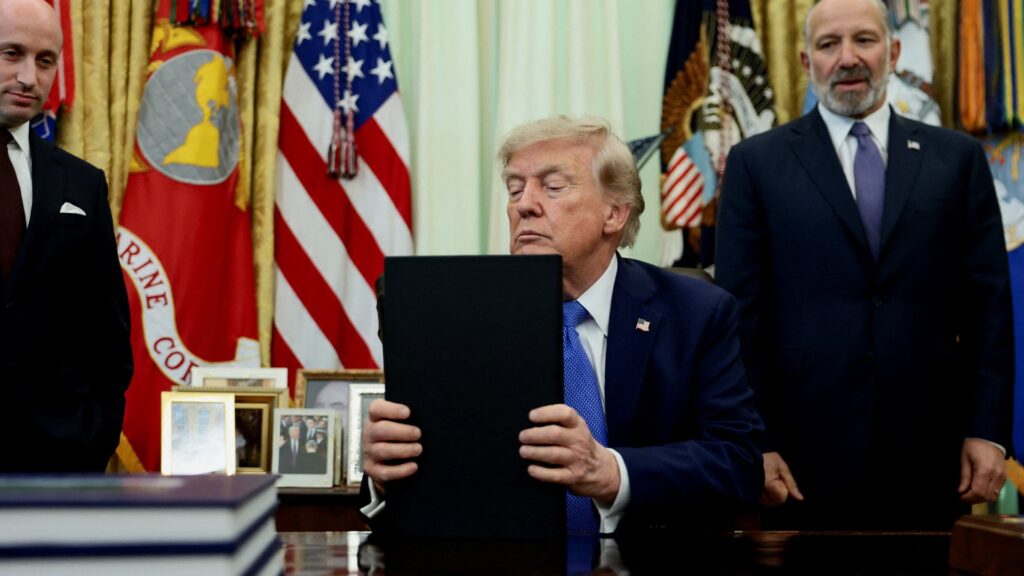
US President Donald Trump has taken significant steps to restrict birthright citizenship by signing two executive orders aimed at curbing so-called ‘birth tourism.’ The executive orders mark a new phase in the administration’s immigration policy, focusing on tightening eligibility for citizenship granted by birth within the United States.
Birth tourism refers to the practice where pregnant foreign nationals travel to the US with the primary intent of giving birth on American soil to secure citizenship for their child. This practice has been a contentious topic in immigration debates, with critics arguing that it exploits the 14th Amendment’s provision granting citizenship to anyone born in the country.
President Trump’s administration argues that the current birthright citizenship laws are outdated and have been exploited to bypass the normal immigration process. The new executive orders are designed to limit the ability of parents to acquire citizenship for their children through birthright claims, focusing on those who do not have legal status in the US.
While the orders stop short of repealing the 14th Amendment, they seek to reinterpret existing policies and enforcement mechanisms to discourage birth tourism. The orders direct government agencies to increase scrutiny of births to unauthorized immigrants and implement stricter verification processes for citizenship claims.
The move has drawn mixed reactions from the public and lawmakers. Supporters praise the administration for addressing what they see as a loophole that incentivizes illegal immigration and strains public resources. They argue that citizenship should be earned through legal channels and not automatically granted based on birthplace alone.
Opponents argue that these executive orders undermine constitutional protections and discriminate against immigrant families. Civil rights groups warn that such measures may lead to increased racial profiling and unfair treatment of minority communities.
Legal experts are also debating the scope and legality of the executive orders. Some believe that without legislative backing, the orders could face challenges in courts, as birthright citizenship is constitutionally guaranteed by the 14th Amendment.
Historically, the US has been a destination for birth tourism, with some foreign nationals traveling to American cities known for hospital resources and established immigrant communities. This trend has fueled the administration’s concerns about unchecked immigration and the implications for social services and national security.
The executive orders are expected to prompt changes in several federal agencies, including the Department of Homeland Security, the Department of State, and the Department of Health and Human Services. These agencies will be tasked with implementing policies that tighten the verification of citizenship claims and monitor birth records more closely.
As the new policies unfold, many are watching closely to see how they balance the enforcement of immigration laws with the protection of constitutional rights. The Trump administration has emphasized that these measures are necessary to secure the borders and uphold the rule of law.
The debate over birthright citizenship is likely to continue, with potential legal battles and legislative efforts shaping the future of immigration policy in the United States.