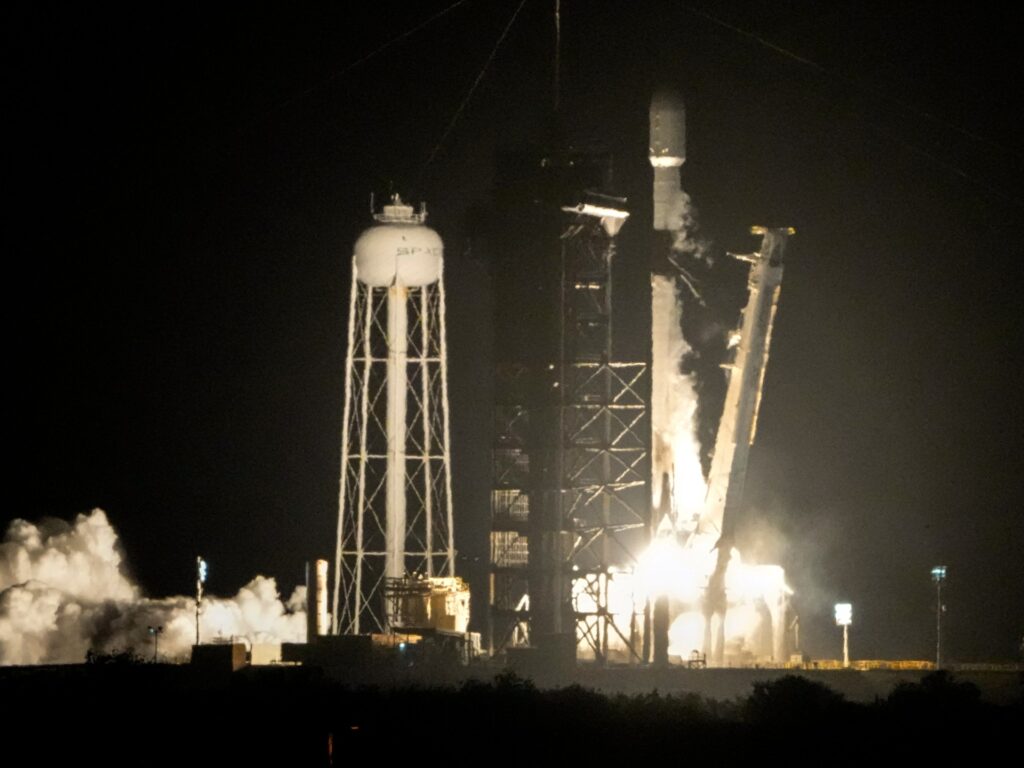
In a remarkable celestial event, a large piece of a SpaceX rocket, comparable in size to a school bus, has crashed into the Moon. This unexpected collision has captured the keen interest of scientists around the world who see it as a unique opportunity to study the effects of cosmic impacts on lunar geology.
The debris, identified as part of a spent rocket stage, was previously in orbit and eventually collided with the lunar surface at high velocity. Such impacts create craters and eject dust, offering invaluable data on crater formation processes and the behavior of lunar dust under impact conditions.
Researchers plan to closely monitor the site of the crash using a range of observational technologies, including lunar orbiters and Earth-based telescopes. The analysis will focus on understanding the dynamics of the impact, such as how the kinetic energy is transferred to the lunar surface and how the materials from the rocket interact with the Moon’s regolith.
One of the scientific motivations behind this research is to gain insights into the frequency and consequences of natural and artificial impacts on the Moon. The Moon, lacking an atmosphere, directly bears the scars of countless collisions, making it an excellent natural laboratory for studying impact physics.
Additionally, the study of lunar dust generated by the impact is crucial, as this dust can pose challenges for future lunar exploration missions. Understanding dust dispersal and its properties helps engineers design better equipment and habitats to withstand harsh lunar conditions.
This incident also underscores the growing impact of human space activities on celestial bodies. As space missions increase, so does the amount of anthropogenic debris orbiting or impacting nearby objects like the Moon. Scientists stress the importance of tracking and managing space debris to minimize potential risks.
Space agencies and commercial space companies are collaborating more closely to monitor orbital debris and predict possible future impacts. Such efforts aim to protect both active spacecraft and the scientific integrity of celestial environments.
In the coming months, lunar science teams are expected to release detailed findings from their analysis of the crash site. These findings will contribute to a broader understanding of planetary body surfaces and the ongoing effects of space debris.
Overall, this event highlights the intersection of human space exploration and natural celestial processes, revealing opportunities and challenges that lie ahead as humanity deepens its presence beyond Earth.