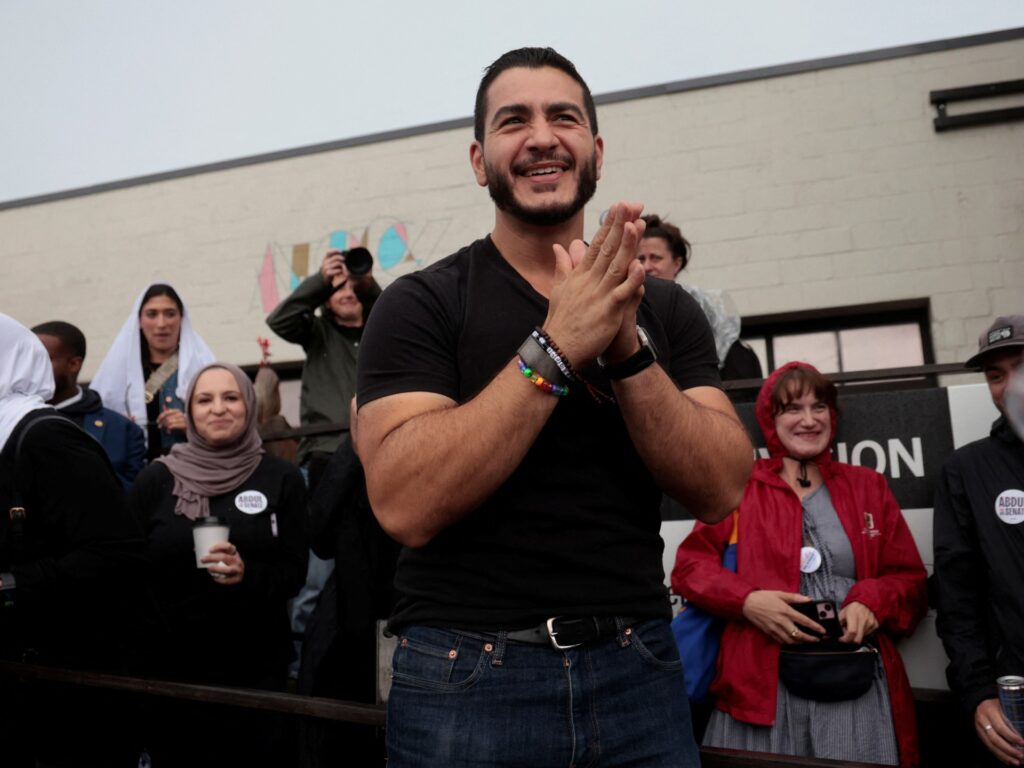
In a stunning political upset, Abdul El-Sayed has won the Michigan Democratic primary for the U.S. Senate, NBC News projected. This victory marks a significant achievement for the progressive advocate, who triumphed over Haley Stevens, a sitting Congresswoman known for her pro-Israel stance. Despite being outspent by more than $60 million in campaign expenditures, El-Sayed’s grassroots support and progressive platform resonated strongly with voters across the state. The Michigan primary had been closely watched as a bellwether for shifting political dynamics within the Democratic Party, with El-Sayed’s win underscoring the growing influence of progressive voices in what had traditionally been considered a more moderate battleground.
Abdul El-Sayed, former health director for Detroit and a vocal progressive, ran a campaign focused on economic justice, healthcare reform, and climate action. His message appealed to a broad coalition of voters, including younger generations and working-class communities who have been energized by calls for systemic change. The outcome was particularly impressive given the financial disparity with Stevens, whose campaign was backed by substantial donations and political endorsements.
Haley Stevens, who represented Michigan’s 11th congressional district, entered the race as the establishment favorite, leveraging her extensive experience in Congress and strong support from major Democratic figures and interest groups. Her pro-Israel position and moderate policy stances were key aspects of her platform, aiming to appeal to centrist voters and those concerned with international relations.
The primary results signal a shifting tide within Michigan’s Democratic electorate towards more progressive policies and candidates. El-Sayed’s victory could signal the momentum of the broader progressive movement nationally, challenging traditional party power dynamics. Analysts have noted that this outcome might encourage other progressive candidates to challenge established Democrats in upcoming elections.
Michigan voters in this primary showed clear support for a vision of change and reform, emphasizing social equity, environmental concerns, and comprehensive healthcare reform. El-Sayed’s grassroots campaign successfully mobilized volunteers and small donors, overcoming one of the biggest financial deficits recorded in recent Senate primary history.
With this primary win, Abdul El-Sayed will now face the Republican nominee in the general election, where his ability to maintain momentum and broaden his appeal will be crucial. The race is expected to be highly competitive, with Michigan’s Senate seat considered pivotal in shaping the balance of power in the U.S. Senate.
This election outcome has renewed discussions about the future direction of the Democratic Party, particularly in swing states like Michigan. Progressive activists are celebrating the victory as a sign that transformative policies and candidates can succeed against well-funded opponents. The win also highlights the effectiveness of grassroots organizing and the power of mobilizing younger voters and communities traditionally underrepresented in politics.
As the general election approaches, both parties are likely to intensify their campaigns, recognizing the significance of Michigan’s Senate seat in national politics. Abdul El-Sayed’s campaign will likely focus on sustaining voter engagement and expanding his coalition to secure a win in the broader electorate. Meanwhile, Republicans will strategize to capitalize on any divisions within the Democratic base to reclaim the seat.
Overall, Abdul El-Sayed’s primary win is a landmark moment that reflects changing political currents in Michigan and across the country. It demonstrates the growing clout of progressive political voices and the waning dominance of establishment-backed candidates in certain Democratic primaries. The upcoming general election will be a critical test of how these evolving dynamics play out on a larger stage.