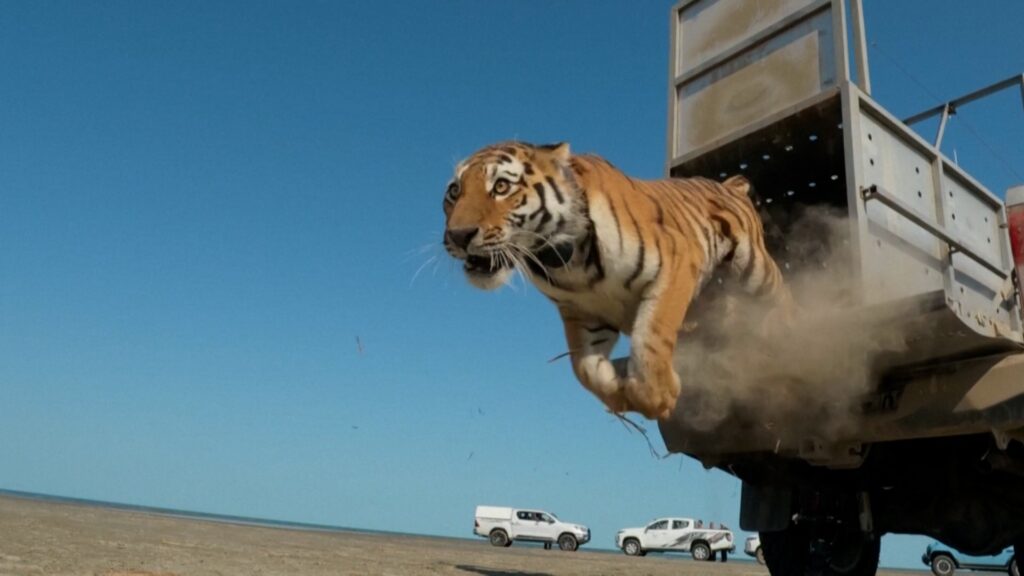
In a groundbreaking conservation effort, Kazakhstan has released the first Amur tiger into the wild in more than 70 years. This historic release is part of a broader initiative aimed at restoring the extinct Caspian tiger species, which was once native to the region but disappeared decades ago.
The Caspian tiger, also known as the Persian tiger, was declared extinct approximately 40 years ago due to habitat loss, poaching, and human-wildlife conflict. Recognizing the ecological importance of these apex predators, Kazakhstani wildlife conservationists have taken innovative measures by introducing the closely related Amur tiger as a substitute to revive the lost ecological niche.
Amur tigers, also known as Siberian tigers, share similar genetic makeup with the Caspian tiger, making them ideal candidates for this rewilding program. The translocation and release of the Amur tiger marks the first time in over seven decades that a tiger species has walked free in the wild lands of Kazakhstan.
This release took place in a designated protected area with ample natural habitat, abundant prey, and strong conservation safeguards to ensure the tiger’s survival and adaptation to the environment. Experts have carefully monitored the tiger’s acclimation process, tracking its movements and health to maximize the chances of successful integration in the wild.
The restoration project is supported by local authorities, wildlife conservation organizations, and international environmental groups dedicated to preserving biodiversity and combating species extinction. It is hoped that the presence of tigers will help balance the ecosystem by regulating prey populations and maintaining the health of the forest habitat.
Despite the optimism surrounding this release, conservationists emphasize that the survival of the introduced tiger depends heavily on strict anti-poaching measures, habitat protection, and community involvement. Continued funding and scientific research will be crucial to monitor the long-term success of the reintroduction program.
The revival of the tiger in Kazakhstan also holds cultural and symbolic significance, rekindling national pride and raising awareness about wildlife conservation in the country. It serves as a testament to the incredible efforts being made to reverse the damage caused by human activity and to restore the natural heritage of the region.
Looking ahead, Kazakhstan plans to continue the release of more Amur tigers, as well as implement broader environmental policies to safeguard these majestic animals and their habitats. The project is seen as a pioneering example of how extinct species or subspecies can be reintroduced successfully through science and collaboration.
This historic release is a beacon of hope not only for Kazakhstan but for global conservation initiatives aiming to protect endangered and extinct species. It demonstrates a vital step in preserving biodiversity and restoring the balance of nature, inspiring similar projects around the world.