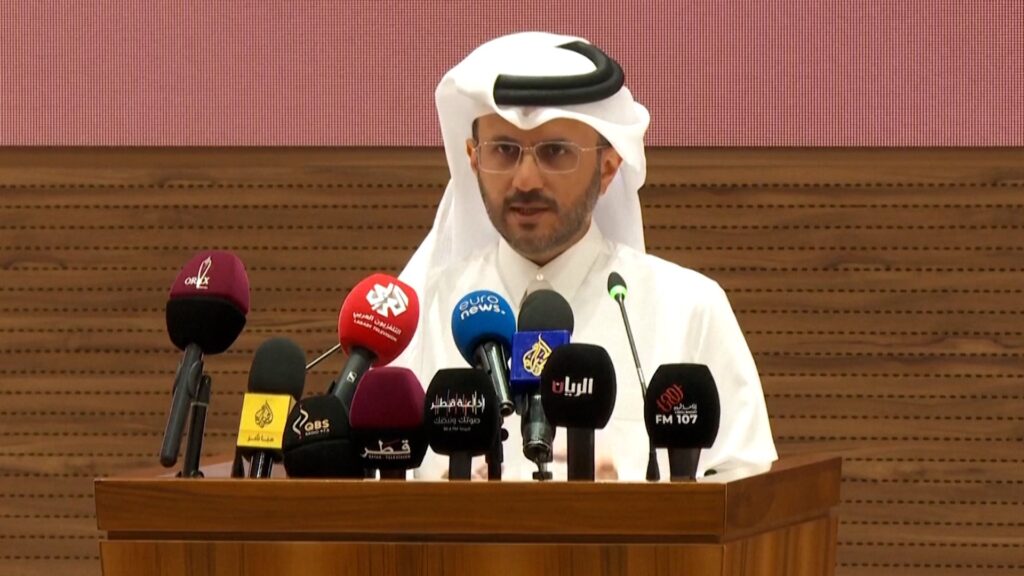
Qatar has announced that indirect talks are ongoing with the goal of reopening the Strait of Hormuz, a critical waterway for global oil shipments that has been a focal point of regional tensions. Dr. Majed al-Ansari, spokesman for the Qatari Foreign Minister, emphasized that these discussions are taking place to avoid further escalation in the Middle East.
The Strait of Hormuz is a narrow passage between the Persian Gulf and the Gulf of Oman, through which a significant proportion of the world’s oil supply transits. Recent threats and conflicts involving regional powers have raised concerns about the security and accessibility of this crucial shipping lane.
Qatar’s diplomatic efforts to facilitate dialogue underscore the importance of maintaining peaceful maritime passage and preventing disruptions that could have severe economic and geopolitical consequences globally. Despite the indirect nature of these talks, the focus remains on de-escalation and ensuring cooperation among the involved parties.
Regional instability often arises from competing political interests, military posturing, and economic pressures. By engaging in diplomacy, Qatar aims to create a platform for communication that could reduce misunderstandings and foster trust.
Several countries depend heavily on the uninterrupted flow of oil through the Strait for their energy needs and economic stability. The impact of any blockade or conflict could ripple through international markets, causing price volatility and supply shortages.
While details of the ongoing negotiations have not been publicly disclosed, the continuation of these indirect talks reflects a cautious optimism among regional actors about avoiding open conflict.
The international community watches closely as Qatar and other stakeholders work toward a resolution that safeguards maritime security and regional peace. The success of these efforts could set a precedent for managing other contentious disputes through dialogue rather than confrontation.