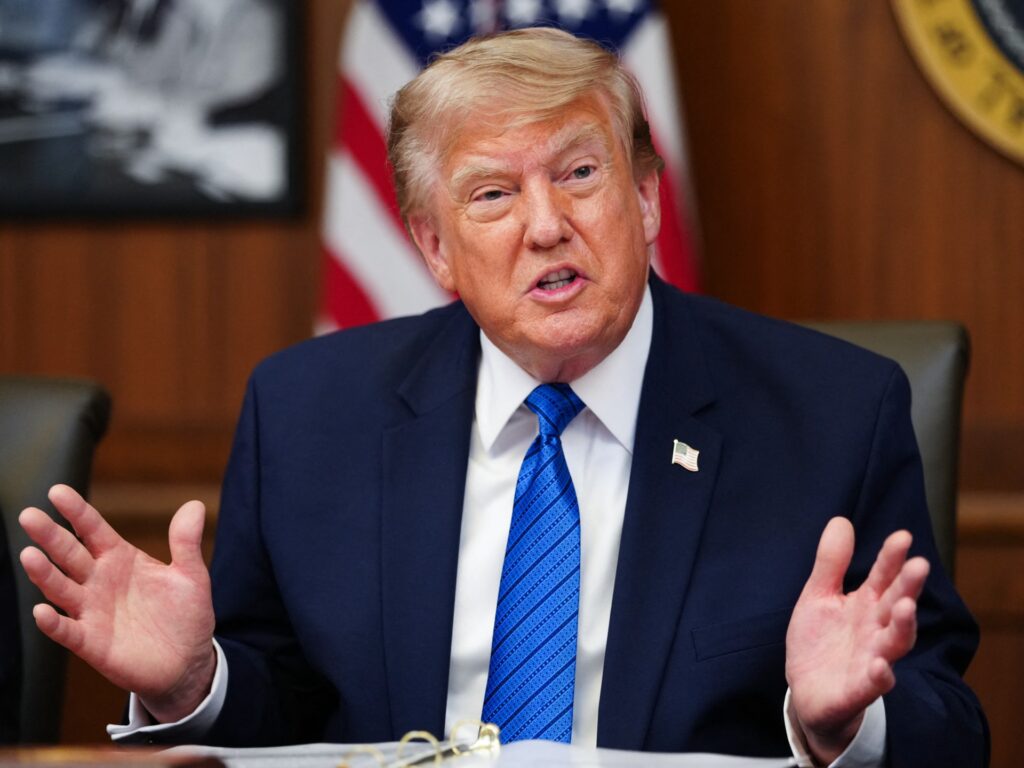
Amid escalating tensions in the strategic Strait of Hormuz, US President Donald Trump has blasted Iran, labeling Tehran’s stance as ‘duplicitous’ following their denial of engaging in talks with the United States. This development comes in a context where the naval blockade situation in the region is intensifying, prompting significant international concern.
The Strait of Hormuz, a vital waterway through which a substantial portion of the world’s oil supply passes, has been a hotspot for geopolitical tension. Recent moves suggest a standoff between US and Iranian naval forces, heightening fears over global energy security.
President Trump has taken a hardline approach, demanding what he described as ‘Total Surrender’ from Iran. His statements reflect a broader strategy to exert maximum pressure on Iran’s government amid accusations of destabilizing activities in the region. The US administration views Iran’s recent actions in the Strait as provocations that threaten free navigation and regional stability.
Despite these charges, Tehran has publicly denied any dialogues with Washington, aiming to portray a stance of defiance and sovereignty. Iranian officials emphasize their refusal to submit to US demands and stress their right to defend national interests and regional allies.
The diplomatic deadlock follows a pattern of strained relations exacerbated by earlier US withdrawal from the Iran nuclear deal and subsequent sanctions imposed on Tehran. The US insists that its tough policies are necessary to curb Iran’s nuclear ambitions and influence in the Middle East.
Observers note that the denial by Iran of talks with the US complicates efforts toward diplomatic resolution and prolongs uncertainty in the oil markets. The situation remains fluid, with international actors closely monitoring developments in the Strait of Hormuz.
The escalating naval blockade intensifies risks of conflict, potentially impacting one of the world’s most critical chokepoints for oil transit. The US Navy has been conducting freedom of navigation operations to challenge Iranian maritime restrictions.
In response, Iran maintains its right to control its waters and has warned of possible repercussions for any perceived aggression. This mutual brinkmanship raises concerns about accidental clashes turning into broader confrontations.
Global energy markets have reacted to the heightened tensions with increased volatility and rising prices, reflecting fears of supply disruptions. Major oil-importing countries are watching the standoff closely as it affects global economic stability.
International calls for de-escalation emphasize dialogue and diplomacy as the only viable path forward. However, the current rhetoric from both Washington and Tehran suggests a prolonged period of antagonism.
Experts suggest that overcoming mutual mistrust will require sustained diplomatic engagement and possibly third-party mediation. Without this, the risk of escalation in the Strait of Hormuz remains high, with potential consequences for regional and global security.
Meanwhile, the US continues to rally allies for a unified stance against Iran’s activities deemed threatening. Sanctions and military presence are part of a broader strategy to pressure Tehran into compliance with international norms.
Iran counters with narratives of resistance and sovereignty, aiming to fortify domestic support and bolster its position on the world stage. This dynamic contributes to the complexity of resolving the crisis.
As tensions simmer, shipping companies and insurers reassess risks associated with transiting the Strait, considering alternative routes and security measures.
The situation represents a significant flashpoint in US-Iran relations, reflecting deeper geopolitical struggles in the Middle East. The international community watches with bated breath as the dispute over the Strait of Hormuz unfolds, hopeful for a peaceful resolution but wary of escalating conflict.