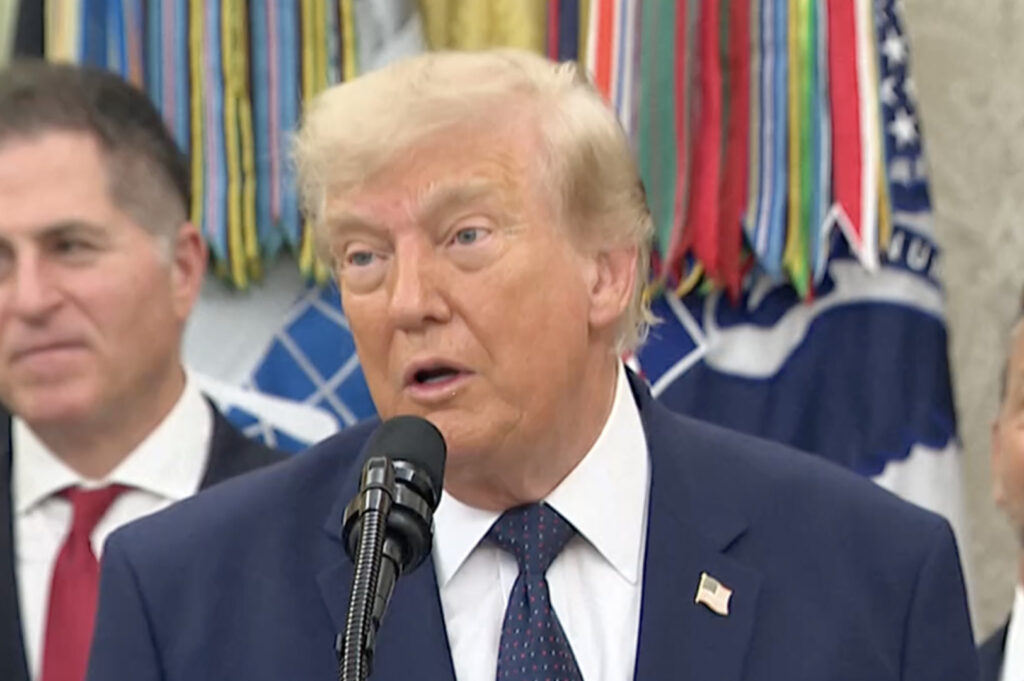
In a notable development in the football world, US President Donald Trump publicly defended FIFA’s controversial decision to overturn the red card suspension of Folarin Balogun. This reversal has sparked widespread discussions among fans, analysts, and officials across international football circuits.
Folarin Balogun, a promising footballer known for his agility and skill on the field, originally received a red card during a recent high-stakes match. The decision was met with criticism from various quarters, with many questioning the fairness and accuracy of the referee’s call.
FIFA’s subsequent review led to the overturning of the red card, allowing Balogun to continue participating in upcoming matches without suspension. This move was unprecedented in the context of recent disciplinary actions, highlighting FIFA’s willingness to revisit decisions based on thorough video analysis and evidence.
President Trump’s defense of this decision reflects his broader interest in international sports and governance. In his statement, he praised FIFA for their commitment to fairness and due process, emphasizing the importance of ensuring that judgements in sports are as accurate and just as possible.
“It is crucial that sports organizations like FIFA uphold principles of integrity and fairness,” Trump said. “The decision to overturn the red card shows that they are willing to correct mistakes and promote justice, which is good for the sport and its fans.”
The controversy initially arose after Balogun’s red card was issued during a match that could have had significant implications on tournament standings and national pride. Critics argued that the initial suspension would unjustly affect both the player’s career and his country’s chances in international competitions.
Supporters of the reversal point to advances in technology, such as Video Assistant Referee (VAR), which FIFA has adopted to minimize human errors in officiating matches. The Balogun case is now cited as an example of technology positively impacting sports adjudication.
However, the decision has not been without dissent. Some football purists and fans express concerns that such reversals might undermine the authority of refs and potentially lead to more frequent disruptions during matches.
FIFA officials have responded by assuring the public that such decisions will be made judiciously and only when clear evidence contradicts the initial ruling. They maintain that preserving the flow and spirit of the game remains a priority.
Balogun himself has commented on the situation, expressing relief and gratitude for FIFA’s review process. He acknowledged the intense pressure athletes face and emphasized the importance of fair treatment in competitive sports.
This event marks a significant moment in the ongoing evolution of football regulations and disciplinary procedures. It is a testament to the growing role of technology in enhancing transparency and fairness in sports.
President Trump’s engagement in this matter also underscores the increasing intersection of sports and political discourse, especially as sporting events garner global attention and diplomatic significance.
Looking ahead, the football community anticipates more such reviews and possible adjustments in rules to maintain competitive integrity. The debate surrounding Balogun’s red card is likely to influence how disciplinary cases are handled in future tournaments.
In summary, US President Donald Trump’s defense of FIFA’s decision highlights the importance of fairness and accountability in sports. It serves as an example of how modern techniques and governance can work together to uphold the spirit of the game while protecting the interests of players and fans alike.