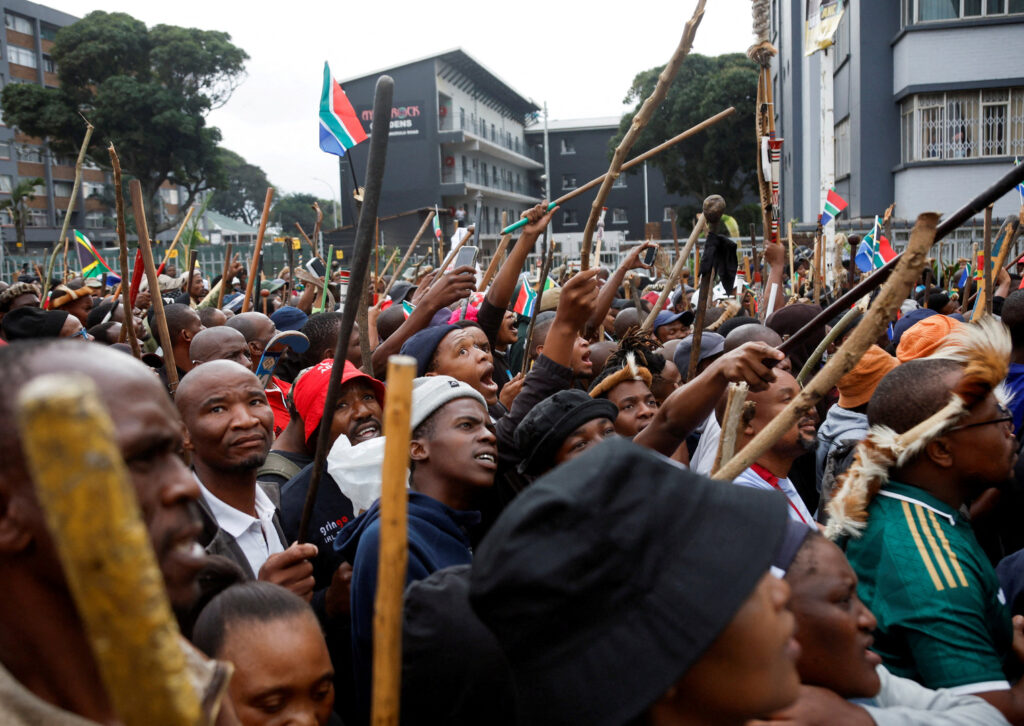
Anti-immigrant protesters march on the day of an unofficial deadline set by anti-immigrant groups for all undocumented migrants to leave, in Durban, South Africa, June 30, 2026. REUTERS/Rogan Ward TPX IMAGES OF THE DAY
On June 30, South Africa witnessed a significant and tense event marked by protests and heightened tensions surrounding undocumented migrants. This day had been set as a so-called ‘deadline day’ by various campaign groups who demanded that undocumented migrants leave the country by this date.
The movement stemmed from growing frustrations among certain segments of the South African population, who blame undocumented migrants for a range of socio-economic problems, including unemployment, crime, and pressure on public services. The campaign groups pushing for the deadline day argued that the government’s immigration policies were too lenient and that urgent action was needed to address the challenges posed by undocumented migrants.
Leading up to the deadline, protest actions were organized in various parts of the country, with chants and demonstrations targeting migrant communities. These protests occasionally escalated into violent episodes, further straining community relations and drawing international concern.
Despite the deadline, undocumented migrants largely did not leave in significant numbers. Many migrants cited fear of violence, lack of financial resources, and absence of viable alternatives as reasons for staying. They also highlighted their contributions to the local economy and communities, often working in informal sectors where labor is in demand.
The South African government found itself in a difficult position, needing to balance upholding the rule of law and immigration policies with human rights considerations and international criticism. Official responses emphasized the need for comprehensive immigration reform and greater security measures but also warned against vigilantism and xenophobic violence.
Community leaders, civil society organizations, and international bodies called for dialogue, emphasizing peaceful coexistence, protection of all residents regardless of status, and tackling the root causes of xenophobia.
The events of June 30 highlighted the complexities of immigration issues in South Africa, reflecting broader challenges faced by many countries in managing migration amid economic inequality and social tensions. The anti-migrant deadline galvanized attention on the urgent need for coherent national policies, social cohesion efforts, and regional cooperation to address migration flows and integration challenges.
While the ‘deadline day’ did not result in mass departures of undocumented migrants, it exposed deep social rifts and the potential for escalation if issues remain unresolved. Moving forward, stakeholders across South African society are tasked with fostering inclusive conversations and sustainable solutions to ensure safety, dignity, and opportunity for all residents.
The situation remains dynamic, with ongoing discussions about policy reforms and community initiatives aimed at mitigating xenophobia and supporting vulnerable populations in South Africa.