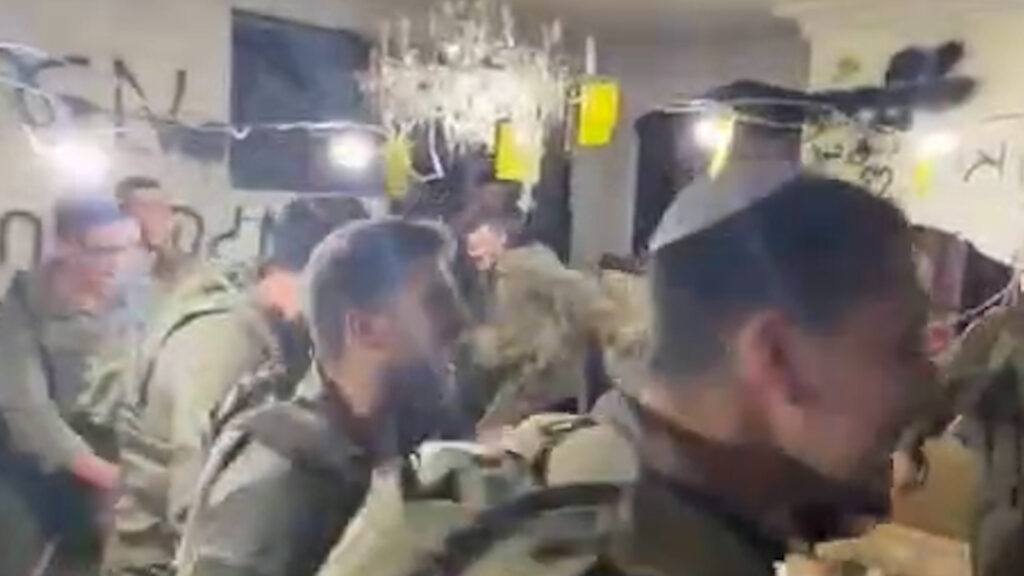
In a vivid and troubling incident, Israeli soldiers were reported to have celebrated inside the home of a displaced Lebanese family. This occurrence, emerging amidst ongoing tensions in the region, has sparked widespread attention and condemnation from various communities and human rights organizations.
The Lebanese family, forcibly displaced due to escalating conflict, found their home invaded by foreign military personnel not in the course of military operations but seemingly engaging in celebratory acts. Images and eyewitness accounts describe soldiers laughing, drinking, and exhibiting behavior considered deeply disrespectful given the traumatic context surrounding the family’s displacement.
This incident underscores the complexity and human cost of the conflict between Israel and Lebanon, highlighting issues of occupation, displacement, and the treatment of civilian properties during times of war. The invaded home, once a symbol of familial roots and safety, has been transformed into a venue for military personnel’s celebration, amplifying the pain and loss felt by the original occupants.
Human rights advocates argue that such actions may violate international laws protecting civilians and their properties during armed conflicts. The Fourth Geneva Convention specifically mandates safeguarding non-combatants and their homes from acts that degrade their dignity or exploit their circumstances.
The event has generated calls for thorough investigations by international bodies to ensure accountability and to prevent recurrence of similar occurrences. Activists emphasize that respect for human rights, regardless of ongoing hostilities, is critical to fostering eventual peace and reconciliation in the region.
In response, Israeli defense authorities have faced pressure to clarify the circumstances of the incident. Official statements have either been limited or framed around the chaos of conflict zones where control over individual soldiers’ actions becomes challenging.
Nevertheless, the psychological and symbolic impact of such actions is undeniable. The Lebanese family’s displacement and subsequent humiliation within their own home vividly illustrate the deeply personal toll of the broader geopolitical strife.
This incident also reignites discussions about the protections afforded to displaced persons and the urgent necessity to uphold humanitarian principles even amidst protracted conflicts. The plight of displaced families often remains overshadowed by larger military and political narratives, yet their stories highlight the profound human consequences of war.
International human rights groups continue to monitor the situation closely, urging all parties to respect human dignity and abide by international humanitarian laws. They stress that celebrating inside the homes of displaced civilians not only infringes legal norms but also inflames tensions and deepens wounds that peace efforts seek to heal.
As the conflict persists, episodes such as this serve as stark reminders of the urgent need for dialogue, accountability, and adherence to ethical conduct in wartime. The hope remains that through awareness and pressure, such violations can be minimized, fostering a safer environment for displaced families and civilians caught in the crossfire.
Ultimately, this incident is emblematic of the broader challenges faced by civilians in conflict zones worldwide and serves as a call to the international community to strengthen mechanisms protecting vulnerable populations. The displacement of families and subsequent violation of their homes not only represent immediate injustices but also erode the foundations necessary for lasting peace.