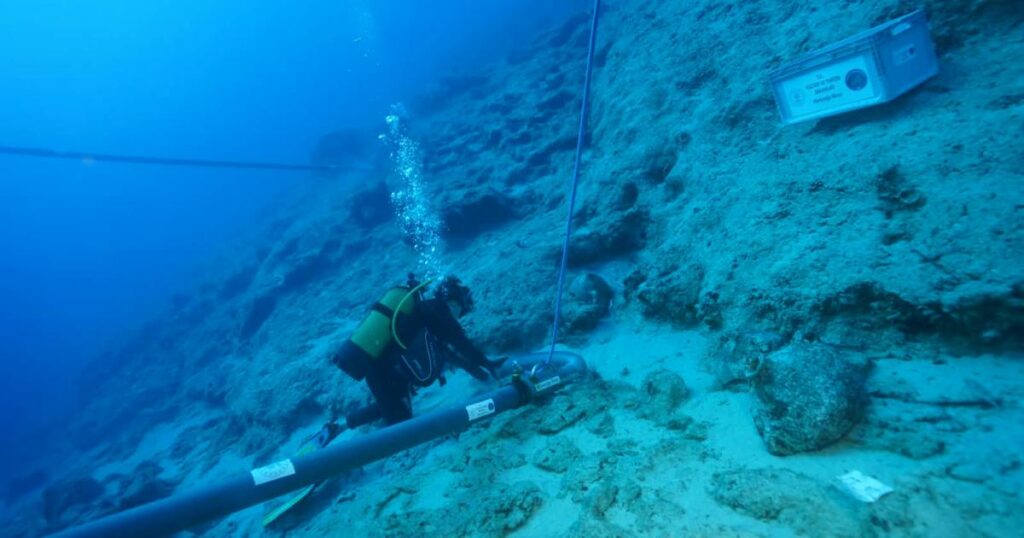
Archaeologists have uncovered the world’s oldest shipwreck off the coast of Turkiye, marking a groundbreaking discovery in maritime archaeology and early human civilization. The shipwreck, remarkably well-preserved, dates back thousands of years and is believed to be a major relic from early seafaring trade routes in the Mediterranean region.
The discovery was made during an underwater expedition near Turkiye’s coastline, where researchers employed advanced diving technology to explore the submerged site. Among the many artifacts found, storage jars recovered from the ship were subjected to detailed clay analysis. This scientific examination revealed that the clay used in the jars originated from workshops operating in the Jordan Valley during ancient times.
This finding is especially significant as it provides compelling evidence of early commercial and cultural exchanges between regions that are geographically distant. The Jordan Valley, an area historically rich in agricultural and artisanal activities, was known for its production of fine pottery. The presence of these jars aboard the shipwreck suggests that these goods were transported across the Mediterranean, indicating a well-established network of early trade.
Experts believe the ship may represent one of the earliest known examples of long-distance maritime commerce, shedding light on the development of early trade routes that facilitated the exchange of goods, ideas, and technologies among ancient civilizations. The discovery also offers new perspectives on the maritime capabilities and navigational skills of early sailors, who ventured across open waters using primitive but effective seafaring technology.
Throughout the excavation, archaeologists uncovered various other artifacts such as tools, coins, and remnants of cargo which further enrich the historical narrative of the period. Each of these items contributes to a broader understanding of the socio-economic conditions, trade practices, and everyday life of those who lived millennia ago.
The analysis of the clay from the storage jars was conducted using modern techniques like X-ray fluorescence and petrographic microscopy. These methods provided accurate identification of the mineral composition and the geographic origin of the materials, confirming the link to early history workshops in the Jordan Valley.
This discovery also highlights the interconnectedness of ancient societies, demonstrating that the exchange of commodities like pottery was part of larger economic systems that transcended local boundaries. It supports theories that ancient civilizations maintained complex trade networks, which helped spread cultural practices and technological innovations across regions.
The shipwreck site in Turkiye promises to be a rich source of information for future archaeological research, offering a direct glimpse into the maritime activities of ancient times. Ongoing studies will aim to uncover more about the ship’s construction, the nature of its voyage, and the broader historical context of its sinking.
Researchers hope that continued excavation and analysis will not only deepen our understanding of early maritime trade but also provide valuable insights into the evolution of early human societies. The find is poised to redefine current knowledge about the origins and progress of ancient seafaring and commerce.