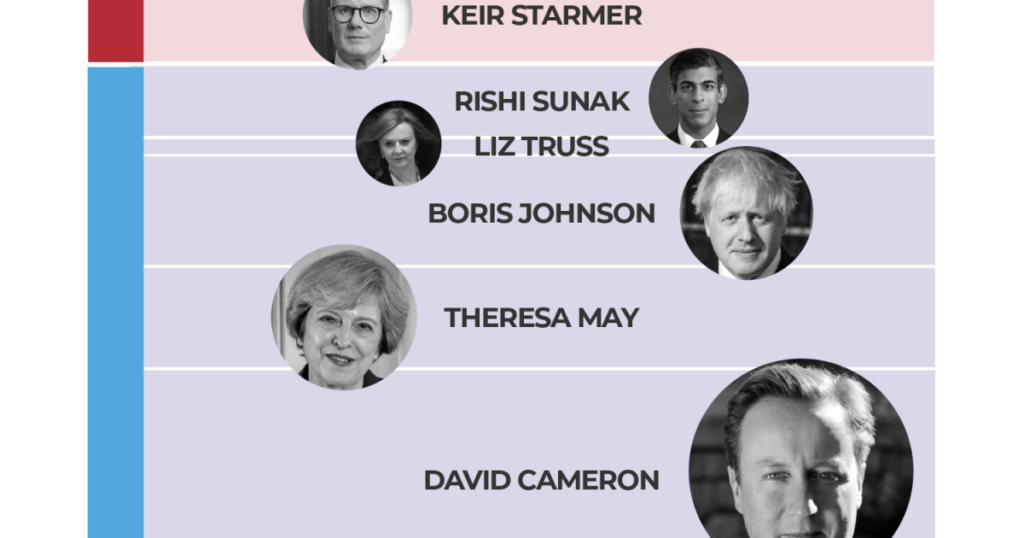
The political landscape of the United Kingdom is once again engulfed in turmoil, as Keir Starmer has announced his resignation after less than two years in office as Prime Minister. This announcement marks a significant moment in the UK’s political history, as the country is set to appoint its seventh prime minister within just ten years—a clear indicator of ongoing instability.
Keir Starmer, leader of the Labour Party, stepped down amid mounting pressure from within his own party. The decision follows a series of internal conflicts and dissatisfaction with his leadership strategies. The Labour Party, facing challenges in uniting its members and satisfying its diverse supporter base, has seen increasing calls for change at the helm.
This rapid turnover in the prime ministerial office underscores the deep political divisions and challenges the UK has been facing over the past decade. Since 2014, the country has been grappling with significant issues including Brexit, economic struggles, and social unrest, contributing to a highly volatile political environment.
The resignation of Starmer adds to a list of leaders who have failed to maintain prolonged stability while managing the complex demands of running the country. His tenure, though brief, was marked by efforts to navigate the post-Brexit reality and address pressing domestic issues.
Political analysts suggest that the repeated change in leadership has eroded public confidence in the government’s ability to deliver consistent policies and effective governance. Furthermore, the ongoing partisan conflicts have hampered the UK’s progress on various fronts, including economic recovery and social reforms.
The Labour Party now faces the critical task of selecting a new leader who can unite the party and restore stability to the prime ministership. This leadership change is expected to have far-reaching implications not only for the party but also for the country’s future direction.
The UK’s international standing is also at stake, as foreign governments and investors watch closely to see how the political uncertainty will be resolved. Stability at the top is crucial for maintaining the UK’s role on the global stage, particularly in trade and diplomacy.
Historically, the UK has valued strong and steady leadership to guide the country through challenging times. The pattern of short-lived premierships in recent years contrasts sharply with this tradition and raises concerns about governance effectiveness.
In summary, Keir Starmer’s resignation as the seventh UK prime minister in a decade highlights a period of unprecedented political upheaval. The country must now confront the challenge of political renewal and unity to regain public trust and international confidence. The upcoming appointment of a new prime minister will be a pivotal step in this ongoing saga, with significant consequences for the UK’s political stability and future progress.