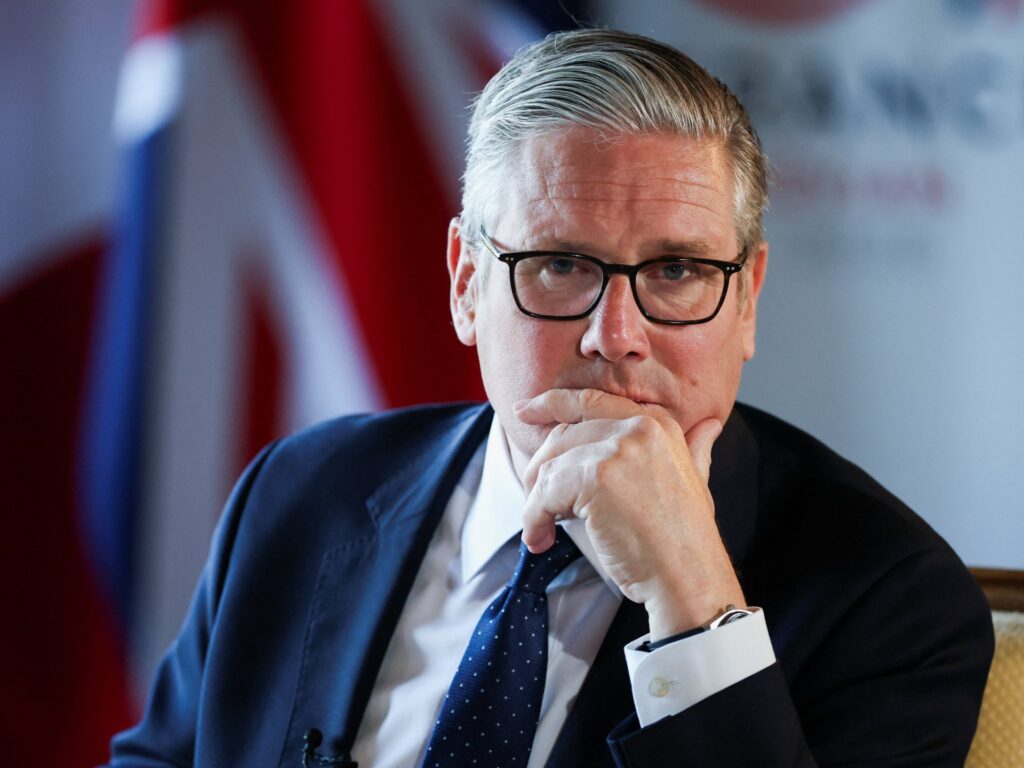
Keir Starmer, the British Prime Minister, assumed office during one of the most challenging periods in recent political history. Entrusted with leading the country amid economic turmoil, rising geopolitical tensions, and societal divides, his mandate was clear but formidable. However, as time has passed, critics argue that his leadership has been marked by a lack of clear vision and decisive action, branding his administration as directionless and ineffective.
From the outset, Starmer faced an uphill battle. The lingering effects of the COVID-19 pandemic, Brexit complications, and inflationary pressures demanded robust policies and resilient governance. Despite his reputation as a skilled lawyer and former Director of Public Prosecutions, translating these qualities into political strength has proven difficult. His attempts to navigate complex issues have often been met with accusations of indecisiveness and equivocation.
Key policy areas have highlighted perceived weaknesses in his leadership style. Economic strategies aimed at recovery and growth have been criticized for lacking boldness and clarity. Voters and political analysts alike express frustration over ambiguous messaging and a failure to outline a compelling roadmap for the nation’s future.
Moreover, internal party dynamics have added to the perception of faltering leadership. Discontent within his own ranks reveals tensions and a lack of cohesion, undermining the government’s ability to present a united front. This internal discord feeds public skepticism about the administration’s capacity to implement significant reforms.
Internationally, Starmer’s diplomacy has been called into question. In a global landscape marked by shifting alliances and new challenges, his government’s positions have sometimes appeared reactive rather than proactive, leading to concerns about Britain’s standing on the world stage.
Critics also highlight his handling of social issues. Efforts to address inequality, climate change, and public services have been portrayed as inconsistent or insufficient, leaving activists and citizens disillusioned. The prime minister’s perceived inability to connect with diverse voter bases further complicates the political environment.
Despite these critiques, supporters argue that Starmer’s approach reflects a measured and pragmatic leadership style suitable for the complexities of governing today. They contend that steady navigation through turbulent waters requires caution and consensus-building rather than drastic measures.
However, the mounting pressure from opposition parties, media, and public opinion suggests that Starmer’s government must recalibrate its strategy to restore confidence. Clearer communication, more decisive actions, and a reinvigorated vision are necessary to counter the narrative of a leader without direction.
In sum, Keir Starmer’s tenure as prime minister encapsulates a struggle to reconcile ambition with the realities of governance in a fractured and fast-changing world. The coming months will be critical in determining whether he can overcome these challenges or if his leadership will continue to be defined by uncertainty and criticism.