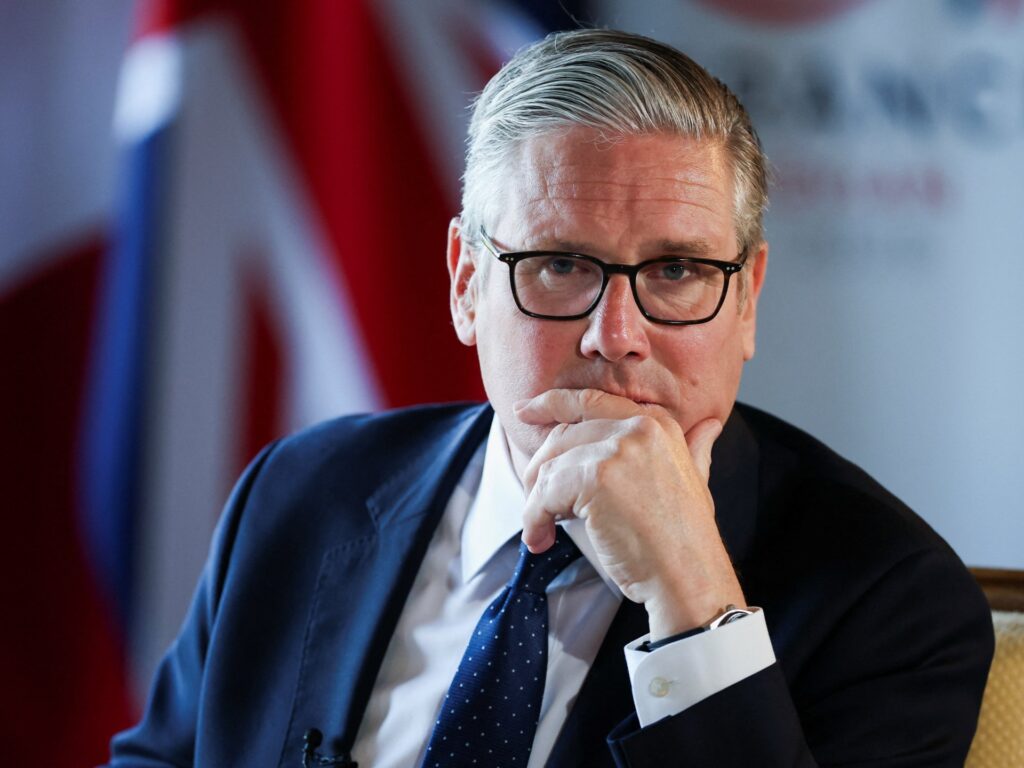
Keir Starmer, the British Labour Party leader and former Shadow Secretary of State for Exiting the European Union, has faced significant challenges and criticism since rising to prominence in British politics. Despite being generally regarded as a decent and earnest individual, his tenure has been marked by accusations of weak leadership and poor judgment, contributing to a perceived lack of clear direction within the party and the wider political landscape.
Starmer ascended to leadership at a difficult time for the Labour Party, following the turbulent years under Jeremy Corbyn and the party’s defeat in the 2019 general election. Many had hoped that Starmer’s pragmatic and measured approach would help to restore the party’s fortunes. However, his cautious style has been seen by some as indecisiveness, leaving Labour appearing unsure of its identity and policies.
Critics argue that Starmer has struggled to balance the demands of different wings within the Labour Party, failing to connect effectively with either the traditional working-class base or the more progressive elements. This has fueled a narrative that the party under his leadership lacks a coherent vision for the future.
The British public and political commentators have pointed to perceived hesitations on key issues including Brexit, economic policy, and social welfare as evidence of his lack of strong leadership. Where some expected bold reform or a clear stance to distinguish Labour from the governing Conservative Party, they found instead what they describe as a muddled and overly cautious approach.
Starmer’s handling of internal party disputes and his approach to opposing the government have also attracted criticism. Detractors suggest that his attempts to avoid internal conflict have led to stasis rather than progress, while his reluctance to consistently challenge Prime Minister Rishi Sunak’s administration has been seen by some as weakness.
Despite these challenges, Starmer continues to enjoy significant support within sections of the Labour Party, especially among those who appreciate his professionalism and dedication to rebuilding the party from the ashes of Corbyn-era losses. Supporters argue that his cautious strategy could pave the way for a more sustainable Labour resurgence.
Nonetheless, the criticism that Keir Starmer lacks a sense of direction remains a potent one, shaping public perception and influencing political discourse. As the UK faces ongoing economic and social issues, the question remains whether Starmer can overcome these critiques and provide the decisive, visionary leadership that many believe is required to renew Labour’s prospects and compete effectively in future elections.
In summary, Keir Starmer’s leadership is characterized by a dichotomy: a leader considered decent and earnest but also one viewed by many as lacking in clear strategic vision and political boldness. This paradox continues to define both his personal political brand and the fate of the Labour Party under his command.