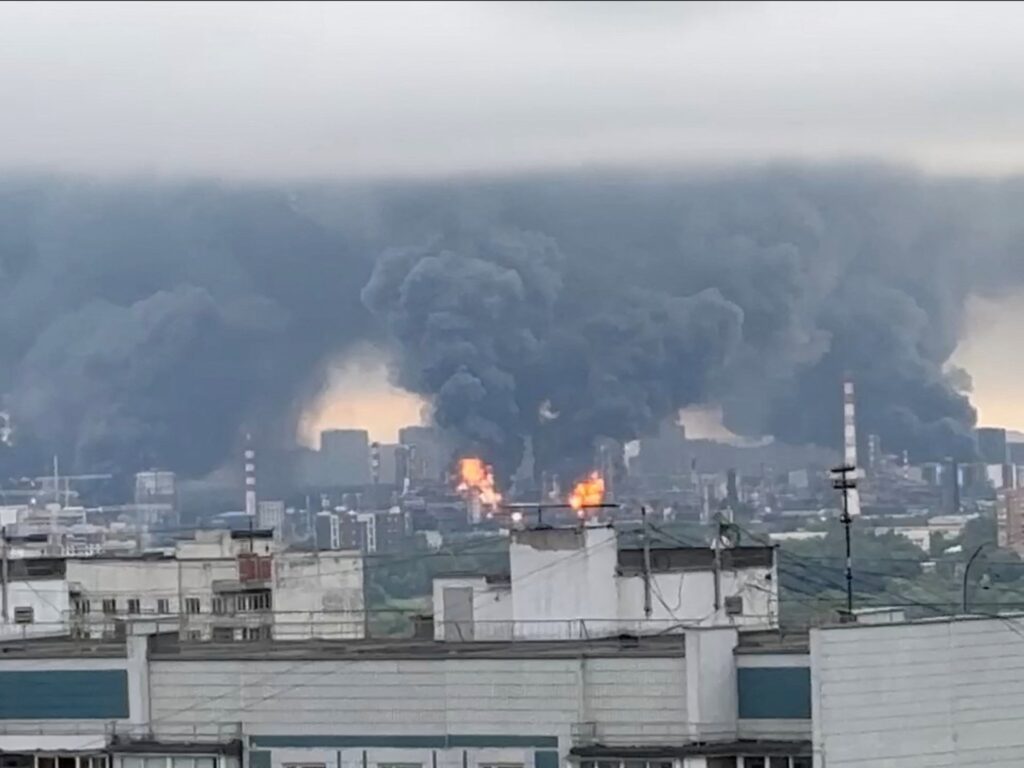
In a significant escalation of hostilities in the ongoing conflict between Ukraine and Russia, Ukrainian forces have targeted a major oil refinery in Moscow. This attack is part of a broader Ukrainian strategy focusing on crippling Russia’s energy infrastructure, which plays a critical role in the country’s economy and military capabilities.
The targeted Moscow refinery is one of Russia’s key facilities for processing crude oil, supplying a substantial portion of the nation’s fuel. Its damage has not only disrupted refinement capabilities but has exacerbated Russia’s existing fuel crisis, impacting transportation and military logistics across the country.
Since the conflict began, Ukraine has intensified its focus on striking critical economic and energy sites in Russia to weaken its war efforts. This latest attack reflects a shift in strategy towards more aggressive and direct assaults on Russian soil, aiming to undermine the Kremlin’s capacity to sustain its military campaigns.
Simultaneously, Ukrainian President Volodymyr Zelenskyy is actively seeking international support to bring about an end to the war. In a notable development, Zelenskyy has reached out to former U.S. President Donald Trump, aiming to secure his influence and advocacy for Ukraine’s cause on the global stage.
Zelenskyy’s strategy involves leveraging Trump’s substantial political network and his continued influence within certain segments of the American populace and political circles. The Ukrainian leader hopes that Trump’s backing could pressure the current U.S. administration and other global powers into a more robust stance against Russian aggression and towards facilitating peace negotiations.
The combination of military pressure through targeted infrastructure strikes and diplomatic maneuvers illustrates the multi-faceted approach Ukraine is employing in its efforts to end the conflict. The refinery strike, while a military action, sends a clear signal about Ukraine’s resolve and capability to strike deep into Russian territory.
Russian officials have condemned the attack, calling it an act of terrorism and promising to retaliate. The incident further complicates the already tense security situation in the region and highlights the high stakes involved as both sides escalate their military and political tactics.
Energy experts warn that sustained attacks on oil refineries could have long-term impacts on global energy markets, potentially driving up oil prices and increasing economic instability worldwide. Russia’s role as a major energy supplier means that disruptions within its oil sector could ripple through international markets.
As President Zelenskyy continues his diplomatic efforts, the world watches closely to see if new alliances and negotiations can pave the way to peace. Meanwhile, the conflict shows no signs of abating, with both sides gearing up for potentially prolonged engagements.
The attack on the Moscow refinery underscores the evolving nature of the conflict, where traditional frontlines are supplemented by strategic strikes targeting critical infrastructure. It also highlights the complex interplay between military actions and diplomatic initiatives in the contemporary geopolitical landscape.
This ongoing situation remains fluid, with potential ramifications not just for Ukraine and Russia but for global security and economic stability. The international community remains engaged, seeking pathways to de-escalation and peace, even as the conflict intensifies on the ground.