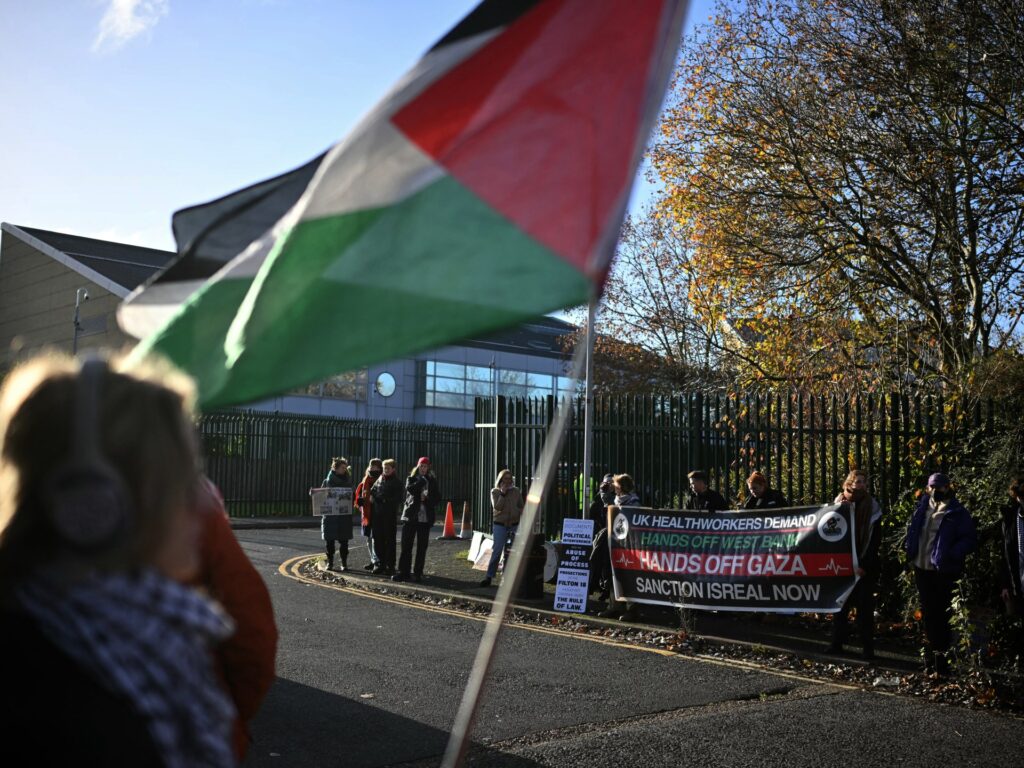
In a controversial ruling, a UK court has sentenced four activists associated with Palestinian Action, following charges related to criminal damage and grievous bodily harm (GBH). The defendants were involved in a high-profile raid on an Israel-affiliated arms company, which has been characterized by the presiding judge as a ‘terrorist act.’
The incident involved the activists breaking into the premises of an arms manufacturing firm connected to Israel. This action was undertaken as a form of protest against the company’s role in supplying weapons linked to the ongoing conflict in Palestine. The defendants faced multiple charges: criminal damage for the destruction caused during the raid and GBH charges for the injuries inflicted during the confrontation.
Despite the charges being primarily criminal, the court took a strong stance by framing the raid within the context of terrorism. The judge emphasized that the nature and intent of the raid met criteria of a terrorist act, highlighting the premeditated use of violence to intimidate or coerce a population or government.
The conviction and sentencing have sparked a debate over whether the activists’ actions should be categorized as terrorism or civil disobedience. Supporters argue that the group engaged in legitimate protest against militarization and human rights abuses, while critics see the raid as a dangerous escalation involving violence and unlawful entry.
Palestinian Action has a history of direct action against companies involved in arms trade, particularly those linked to Israeli military operations. Their campaigns have often led to legal confrontations and public discourse about the ethics and methods of activist movements.
Human rights organizations have expressed concern over the sentencing, suggesting it could set a precedent that discourages activism and protest by framing such acts as terrorism. Legal experts note that the ruling may influence future cases involving politically motivated protests in the UK.
The defendants will serve prison sentences as determined by the court, reflecting the seriousness of the offenses as judged. However, the verdict has fueled ongoing discourse about the intersection of political activism, civil rights, and national security within the framework of UK law.
This case underscores the complexities faced by judicial systems in balancing security concerns with freedoms to protest, especially in politically sensitive issues such as the Israeli-Palestinian conflict. As this story develops, it remains a pivotal example of how such conflicts play out far beyond the immediate regions of dispute.