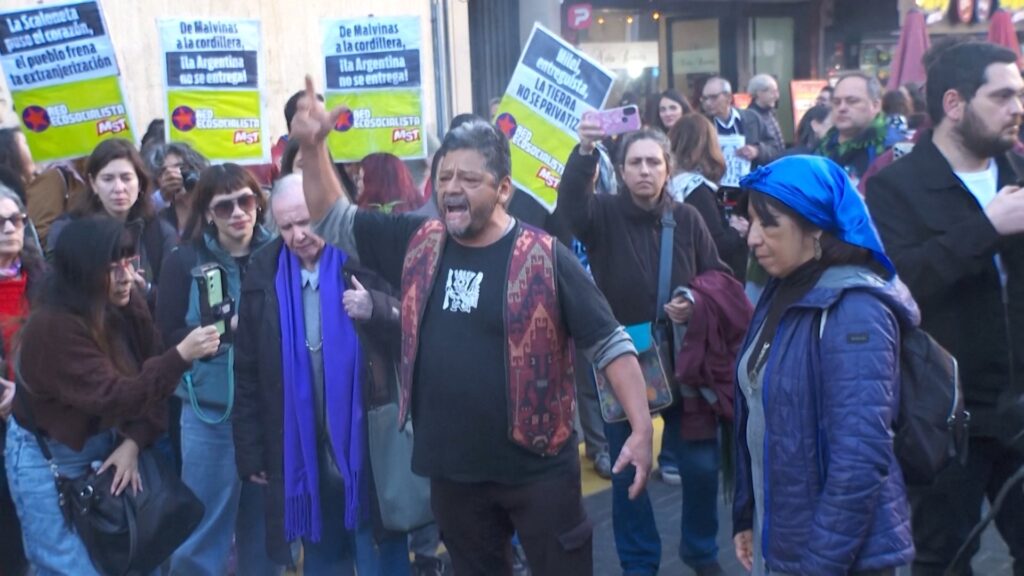
In a powerful demonstration reflecting deep-rooted concerns, indigenous groups in Argentina have protested against a controversial bill proposed by President Javier Milei. This bill aims to liberalize foreign ownership laws, allowing international buyers to acquire rural land in Argentina, a move that indigenous communities and various activists strongly oppose.
The protests have taken place predominantly in Buenos Aires, where indigenous activists gathered to voice their fears about the potential consequences of foreign ownership on their ancestral lands and cultural heritage. The bill, which is part of Milei’s broader economic liberalization agenda, seeks to attract foreign investment and stimulate economic growth by opening up the agricultural sector to international investors.
However, indigenous groups argue that this policy disregards their historical connection to the land and threatens their rights and livelihoods. They emphasize that rural land is not merely an economic asset but a vital component of their identity, culture, and survival. The proposed changes could lead to displacement, loss of land control, and environmental degradation in indigenous territories.
The bill has also sparked widespread debate among politicians, environmentalists, and civil society organizations. Supporters of the legislation argue that opening land ownership to foreigners can boost Argentina’s agricultural exports, increase productivity, and generate much-needed jobs and revenue. They believe foreign investment is crucial for modernizing the agricultural sector and integrating Argentina more fully into the global economy.
Critics, on the other hand, highlight the risks of land grabbing, exploitation, and the undermining of national sovereignty. They warn that foreign ownership could prioritize profit over sustainable practices and marginalize native populations who have long stewarded these lands.
Indigenous leaders have called for a more inclusive dialogue involving all stakeholders to ensure that any reforms respect the rights and traditions of indigenous peoples. They demand recognition of their land rights under international agreements and urge the government to prioritize sustainable and equitable development.
The protests in Buenos Aires have drawn significant attention to the complexities of balancing economic development with social justice and environmental protection. As the bill proceeds through legislative channels, the government faces the challenge of addressing indigenous demands while pursuing its economic objectives.
Analysts suggest that reaching a compromise will require transparent communication, legal safeguards for indigenous lands, and mechanisms to ensure that the benefits of foreign investment are shared fairly. The situation remains fluid, with ongoing negotiations and public pressure shaping the future of Argentina’s rural land policy.
This conflict highlights broader global tensions between globalization-driven economic policies and the rights of indigenous communities to maintain control over their ancestral territories. Argentina’s decisions in this area could set important precedents for other nations grappling with similar issues.
In summary, the opposition of indigenous groups to Milei’s plan to open Argentina’s rural lands to foreign buyers underscores the need for careful consideration of social, cultural, and environmental factors in economic policymaking. As protests continue, the government must navigate a complex landscape to achieve a solution that respects all parties involved and fosters sustainable development.