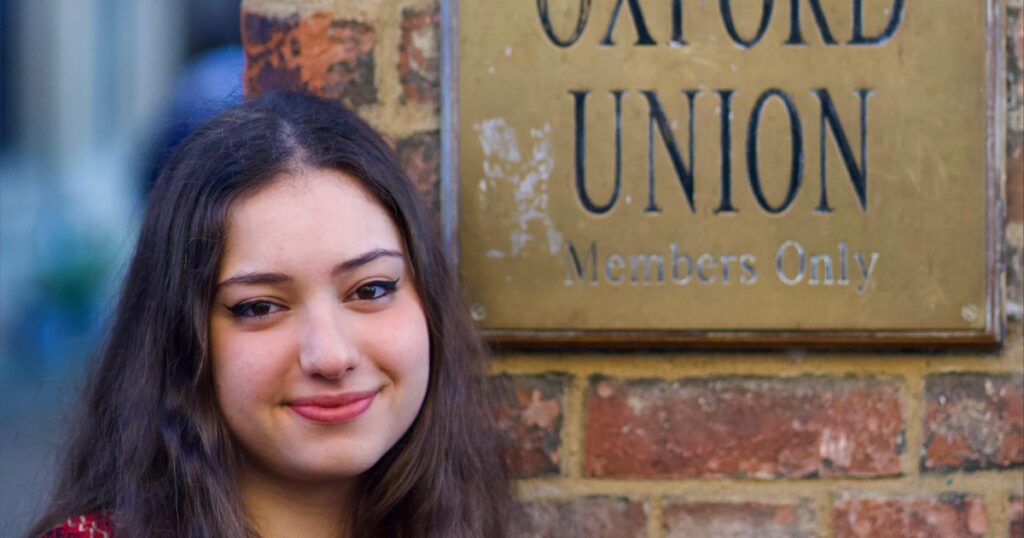
Arwa Elrayess, the first Palestinian to lead the prestigious University of Oxford’s debating society, the Oxford Union, has found herself at the center of controversy amid a wave of falsehoods and challenges during her tenure. Despite mounting pressure from various quarters, Elrayess remains resolute in her position, emphatically stating that she has no intention to resign.
Elrayess’s historic election as the leader of one of the world’s most renowned debating societies marked a significant milestone, highlighting the progress and recognition of Palestinian voices in international academic settings. Her leadership was celebrated as a symbol of diversity and inclusion at Oxford, a university known for fostering global intellectual dialogue.
However, her presidency has not been without turmoil. In recent weeks, a series of accusations and unfounded claims have surfaced, targeting her leadership style, political views, and personal background. Many of these allegations have been identified as falsehoods aimed at undermining her credibility and destabilizing the Oxford Union.
Despite the hostile environment, Elrayess has demonstrated remarkable resilience. In a public statement, she addressed the controversies head-on and called for a fair assessment based on facts rather than misinformation. She emphasized her commitment to the Union’s mission of promoting open and respectful debate on campus.
Supporters of Elrayess have rallied around her, stressing the importance of safeguarding democratic processes within student organizations and resisting attempts at character assassination. Scholars and activists alike have underscored the challenges faced by minority leaders in prominent positions and the need to protect their right to lead without fear of unjust reprisal.
The Oxford Union, with its storied history and influential alumni, remains a vital platform for shaping discourse on critical global issues. Elrayess’s leadership journey is a poignant reminder of the complexities involved in balancing tradition, political sensitivities, and the ongoing struggle for inclusion and representation.
As Elrayess navigates through this difficult period, her stance signals a broader message about perseverance and integrity. Her refusal to resign in the face of adversity serves as an inspiration for young leaders worldwide who strive to overcome obstacles and contribute meaningfully to their communities.
In the meantime, the Oxford Union community continues to engage in dialogue about the role of leadership, diversity, and the importance of truth in public discourse. The situation surrounding Elrayess underscores the challenges faced by those who break new ground and challenge established norms.
Ultimately, Arwa Elrayess’s experience at the Oxford Union illustrates the ongoing fight for equitable representation in academic and social institutions. Her story is not just about controversy but also about courage, determination, and the unwavering pursuit of justice and equality.
Her tenure, marked by both achievements and trials, will likely inspire future generations of students and leaders. It highlights the critical need for institutions to support diverse voices and foster environments where all members can thrive free from misinformation and undue pressure.
In conclusion, Arwa Elrayess stands firm as the embattled yet unyielding president of the Oxford Union, a trailblazer who refuses to step down amid falsehoods, championing the cause of truthful leadership and inclusive dialogue.