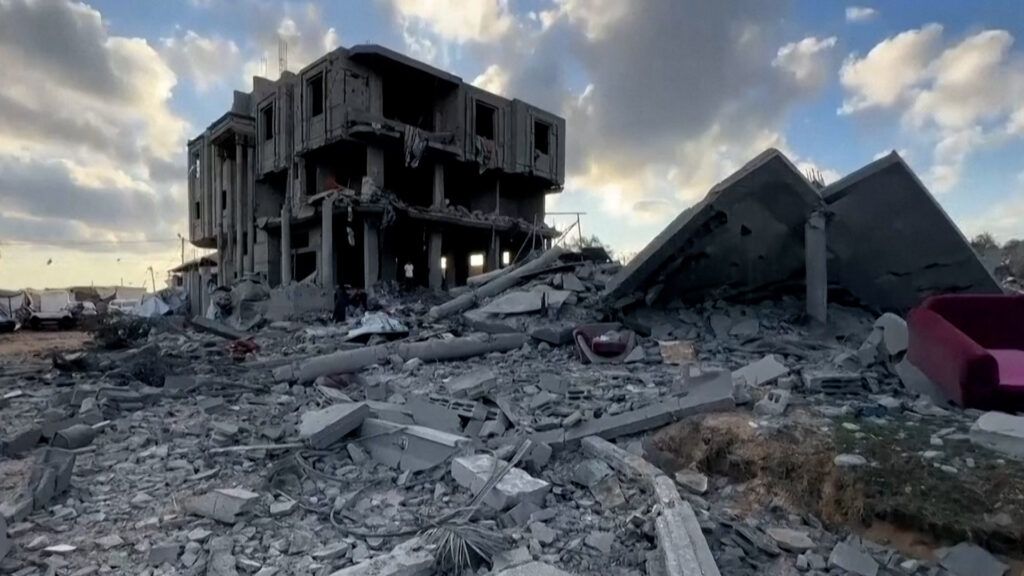
In the aftermath of a recent Israeli strike on Khan Younis, Palestinians are left grappling with the devastating consequences, highlighting the fragility and volatility of the ceasefire situation. Despite reports or hopes of a ceasefire agreement, the ground reality tells a different story, with residents surveying rubble and destruction that underscores ongoing conflict tensions.
The strike in Khan Younis, located in the southern Gaza Strip, caused significant damage to homes and infrastructure, displacing families and disrupting daily life. Eyewitness accounts from local Palestinians describe a scene of utter devastation, with destroyed buildings and shattered community spaces standing as grim reminders of the recent violence.
This latest incident has cast doubt on the effectiveness and longevity of any ceasefire that might have been declared. Residents question the notion of peace when military actions continue to threaten their safety and livelihoods. The apparent contradiction between ceasefire declarations and on-the-ground attacks fuels frustration and fear among the Palestinian population.
Humanitarian organizations operating in the region have expressed deep concern over the casualties and the widening gap between ceasefire announcements and actual events. Aid groups stress the urgent need for a sustainable and verifiable ceasefire to prevent further loss of life and to allow humanitarian aid to reach those in desperate need.
The conflict’s impact extends beyond physical destruction; it also exacerbates psychological trauma experienced by the communities caught in the crossfire. Children and families live under constant threat, with their environments transformed into scenes of violence, fostering long-term emotional distress.
International calls for restraint and renewed peace negotiations intensify as images and reports from Khan Younis circulate globally. Observers and diplomats urge both sides to adhere to ceasefire terms and engage in dialogue to avoid further escalation.
The situation in Khan Younis serves as a stark reminder that ceasefires in the region remain fragile and often precarious. Without concrete steps towards peace and mutual understanding, residents continue to bear the brunt of ongoing hostilities, challenging the very concept of a ceasefire in these contested areas.
As Palestinians inspect the damage after the Israeli strike, their resilience and will to survive amidst conflict shine through. However, the question remains: how long can such a ceasefire be sustained when devastation seems to persist unabated?
This incident underscores the urgent need for renewed commitment to peace, transparency in ceasefire enforcement, and genuine efforts to bridge divides that fuel the prolonged conflict in Gaza and beyond. Only through sustained diplomacy and respect for ceasefire agreements can the cycle of destruction and despair be broken, paving the way for a future where communities like Khan Younis can rebuild and thrive without fear of renewed attacks.