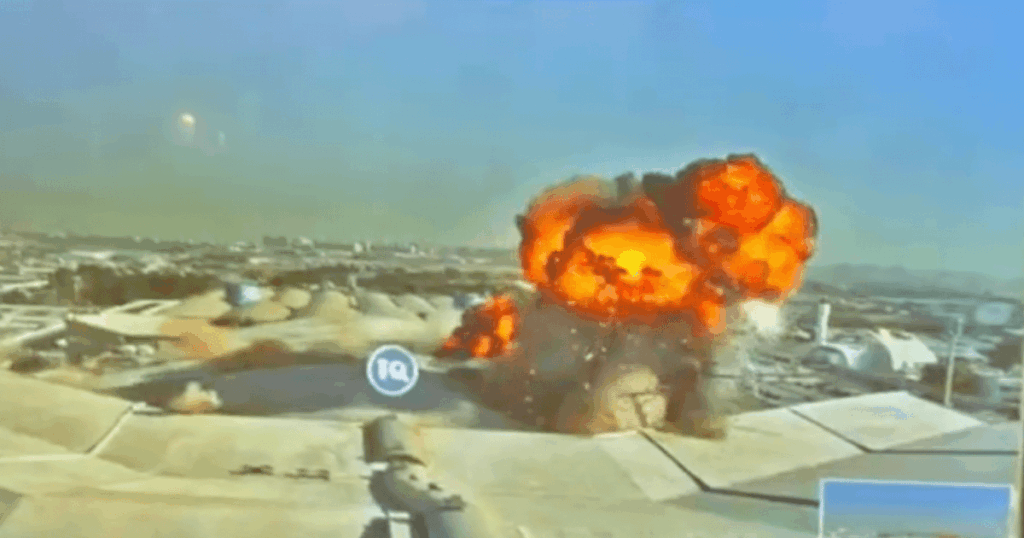
Kuwait has publicly released surveillance footage it claims captures a deadly Iranian drone strike targeting Kuwait International Airport. The footage reportedly shows an unmanned aerial vehicle launching an attack on the airport grounds, raising serious concerns over regional security and escalating tensions between Kuwait and Iran.
The Iranian drone strike on Kuwait International Airport marks a significant development in the ongoing geopolitical unrest in the Middle East. Although details on casualties and damage remain under investigation, initial reports suggest the attack was deliberate and aimed at critical infrastructure within Kuwait’s capital.
Authorities in Kuwait expressed grave concern over the incident, emphasizing the threat posed by drone warfare to national security and civilian safety. The surveillance footage released is intended to serve both as evidence of the strike and a warning against future aggression.
Kuwaiti officials have condemned the attack strongly, calling it a violation of international law and Kuwaiti sovereignty. Calls for an immediate international response and heightened security measures around vital transportation hubs have been echoed by government representatives and security experts alike.
Iran has yet to officially acknowledge involvement in the strike. The country’s military or governmental statements on the event have not been released, contributing to ongoing diplomatic tensions between Tehran and Kuwait.
Regional allies and global powers monitoring Middle Eastern stability are watching developments closely. Many fear this incident could trigger a broader escalation if diplomatic channels fail to resolve the dispute.
The use of drones in modern warfare, especially in sensitive and high-traffic infrastructure locations like airports, poses a complex challenge to existing defense mechanisms. This incident underscores the urgent need for enhanced detection and counter-drone technologies.
Kuwait International Airport, a critical hub for travel and commerce in the Gulf region, has been temporarily reviewing and upgrading its security protocols following the attack. Flights have reportedly been reassessed to ensure safety and prevent further incidents.
In response to the strike, Kuwait’s government is reported to be seeking support from international allies, calling for cooperation to mitigate threats from unmanned weapons systems. Efforts to strengthen regional security alliances and intelligence sharing are underway, aiming to prevent the recurrence of such attacks.
Civilians and travelers have expressed alarm over the incident, with many calling for transparent communication from authorities regarding ongoing risks and security improvements. Public sentiment highlights the broader anxiety over escalating regional conflicts and their impact on civilian life.
The release of the CCTV footage is a strategic move by Kuwait to present undeniable visual evidence of the attack, aimed at rallying international condemnation and support. This approach seeks to increase pressure on Iran and the global community to address the use of drones in targeted attacks.
Security analysts note that the incident serves as a harsh reminder of the vulnerabilities faced by critical infrastructure worldwide amid emerging warfare technologies. It also highlights the necessity for international norms and agreements to regulate drone use and prevent militant exploitation.
As investigations continue, Kuwait plans to collaborate with international security agencies to analyze the footage comprehensively and explore preventive measures. These efforts will likely influence future regional policies on counterterrorism and defense.
The attack on Kuwait International Airport represents a pivotal moment in Gulf geopolitics, emphasizing ongoing challenges in curbing aggression and maintaining peace in a volatile neighborhood. The global community’s response in the coming days will be critical in shaping the trajectory of regional relations and security frameworks.
With tensions running high, the situation remains fluid, and all eyes are on diplomatic efforts to de-escalate potential conflict and restore stability to the region.