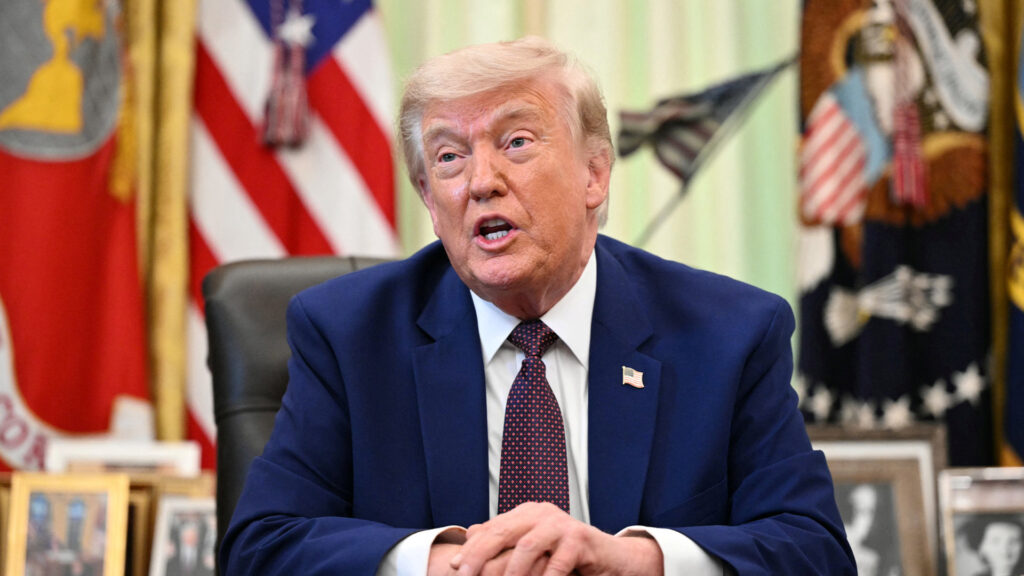
In a recent development, former U.S. President Donald Trump has expressed his intention to separate the ongoing discussions concerning the conflict in Lebanon from the broader and more complex negotiations related to the war with Iran. This strategic move aims to isolate the peace efforts in Lebanon from the contentious issues involved in talks with Iran, potentially allowing for more focused and productive dialogue on both fronts.
Trump’s stance marks a notable shift in diplomatic approach, emphasizing the need to tackle the Lebanon conflict independently. The Lebanon conflict, characterized by political instability and violence, requires urgent attention to prevent further deterioration of the situation. By advocating for separate negotiations, Trump hopes to facilitate direct engagement with Lebanese stakeholders without the complications that the Iranian war discussions bring.
The war with Iran, involving contentious nuclear program negotiations and regional security concerns, presents a highly sensitive and multifaceted challenge. By decoupling these talks, Trump appears to be aiming to reduce the load on diplomats who are trying to manage multiple crises simultaneously. This approach could also help in minimizing the risks of delays or failures in resolving either conflict due to overlapping issues.
Experts suggest that this separation strategy might lead to quicker resolutions in Lebanon, as the parties involved can focus singularly on their localized issues without being overshadowed by broader geopolitical struggles involving Iran. On the other hand, it may create new complexities in the international diplomatic landscape by adopting a segmented strategy.
Trump’s proposal reflects his broader foreign policy philosophy, which often veers toward compartmentalizing international issues to better address specific problems. This might resonate with some international partners who prefer targeted negotiations, while others could criticize it for potentially fragmenting diplomatic efforts.
The international community awaits further details on how these separated talks will be organized and managed. The success of Trump’s approach will largely depend on the willingness of involved parties to engage constructively in distinct discussions and the capability of mediators to navigate the nuanced diplomatic terrain.
In summary, Trump’s call to separate Lebanon conflict talks from the war on Iran negotiations introduces a new dynamic in U.S. foreign policy agendas, aiming for clearer focus and possibly more effective conflict resolution measures in both arenas.