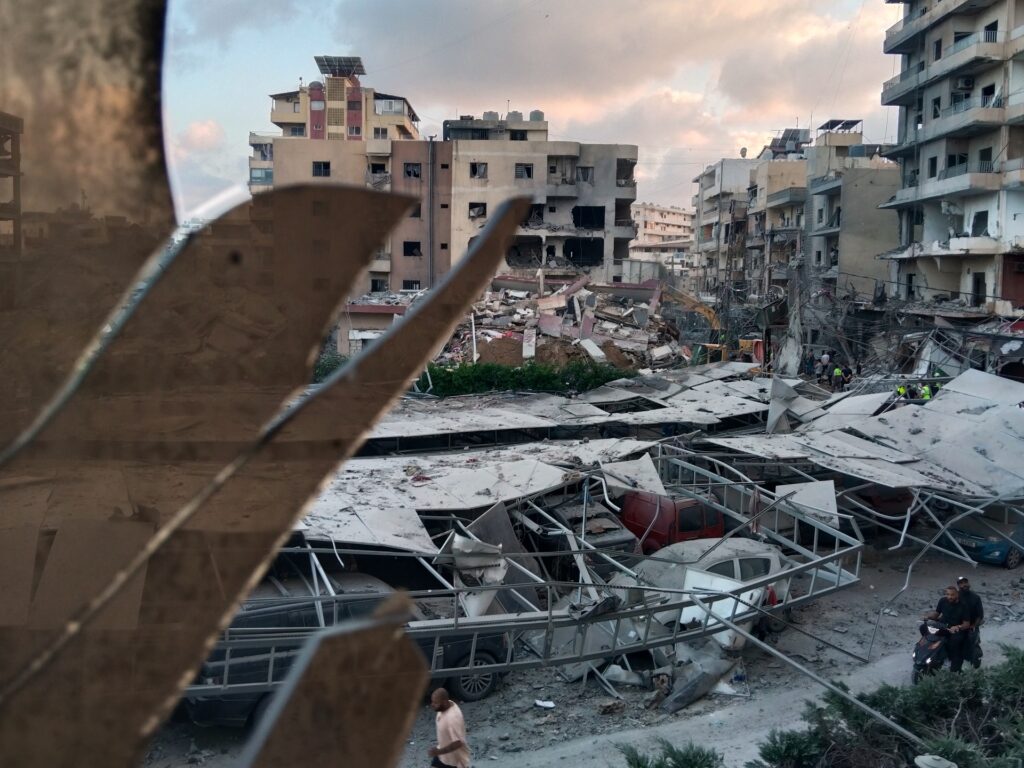
In a startling development that has raised international alarm, Israel launched a series of deadly attacks on Lebanon, resulting in the deaths of five people. This incident comes shortly after former U.S. President Donald Trump announced a reported de-escalation agreement aimed at ending hostilities between the two nations. The fresh violence has cast doubt on the credibility and viability of this agreement, bringing into question the future of peace efforts in the region.
According to sources on the ground, Israeli forces targeted several locations in Lebanon in a coordinated strike. The attacks led to casualties, including both combatants and civilians, sparking widespread condemnation from Lebanese officials and international observers alike. The timing of the strikes, immediately following the announcement of a de-escalation, has fueled concerns that the ceasefire agreement may not have been fully implemented or supported by all involved parties.
The Lebanon-Israel border has long been a flashpoint for conflict. Various militant groups, including Hezbollah, have been active in the region, contributing to frequent exchanges of fire and aggressive postures by both sides. The recent attack underscores the fragility of peace efforts in this volatile area.
Trump’s announcement had initially brought a glimmer of hope for decreased tensions and the possibility of renewed diplomatic engagement. However, the attack seems to undermine that optimism, illustrating the complexity of the conflict and the challenges facing peace negotiations.
Analysts suggest that the attacks could be a message from Israel to militant groups in Lebanon, signaling a readiness to respond to perceived threats with military action. Conversely, it could also reflect internal political dynamics within Israel or Lebanon, where hardline positions often gain traction amidst ongoing insecurity and instability.
International reactions have been swift, with many countries calling for restraint, dialogue, and a return to negotiations. The United Nations and various European nations have expressed concern about the potential for escalation and the humanitarian impact on Lebanese civilians caught in the crossfire.
The deaths resulting from the strikes have further complicated the fragile situation on the ground. Humanitarian organizations warn of worsening conditions in affected areas and call for immediate measures to protect non-combatants and provide urgent aid.
In conclusion, while the announcement of a de-escalation marked a hopeful moment for peace in an intensely troubled region, the recent deadly attacks by Israel on Lebanon signal the ongoing volatility and the deep-rooted challenges to achieving lasting peace. The international community watches closely, urging dialogue and peaceful resolution to prevent further loss of life and regional instability.