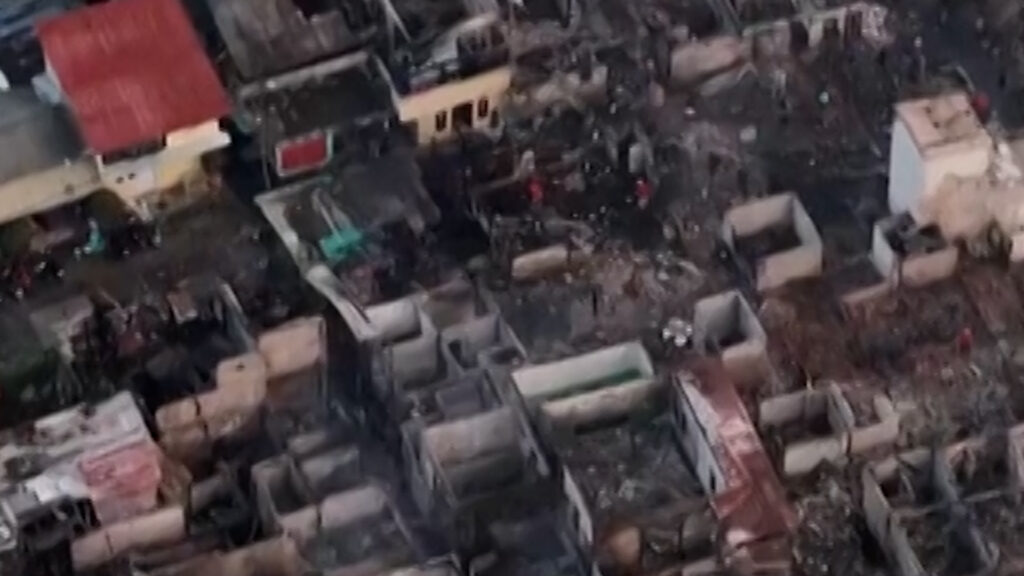
A devastating fire swept through a bustling market in Jakarta, causing extensive damage and leaving hundreds of people homeless. The blaze broke out in the early hours of the morning, quickly spreading through the densely packed market stalls and engulfing the entire area.
Local authorities and firefighters were dispatched promptly to the scene, battling the flames for several hours before managing to bring the fire under control. Despite their efforts, the fire caused significant destruction, reducing numerous market stalls to ashes and destroying the homes that were closely integrated with the marketplace.
Eyewitnesses described the scene as chaotic and heart-wrenching, with families scrambling to recover what little they could from the wreckage. Many residents of the surrounding neighborhoods have lost not only their businesses but also their homes, as living quarters were commonly located above or adjacent to the market premises.
Emergency response teams have set up temporary shelters and relief centers to assist those displaced by the tragedy. Local government officials have expressed their commitment to providing support and aid to the affected families, promising a swift yet thorough recovery process.
This incident has highlighted issues related to fire safety and disaster preparedness in densely populated urban areas like Jakarta. Marketplaces, which often serve as both commercial hubs and living spaces, are particularly vulnerable to such disasters due to close quarters and flammable materials.
The cause of the fire is currently under investigation, with preliminary reports suggesting possible electrical faults or negligence. Authorities have urged the public to exercise caution and adhere to safety regulations to prevent similar incidents in the future.
Community leaders and volunteers have also mobilized to provide immediate assistance, distributing food, clothing, and essential supplies to those impacted. Fundraising campaigns and donations have begun to gather momentum, reflecting widespread public solidarity and concern.
As the city comes to terms with the aftermath of this tragic event, efforts are underway to rebuild the affected market and residential areas. The road to recovery will be challenging, but the resilience and cooperation of the Jakarta community provide hope for a renewed and safer future.
This calamity serves as a stark reminder of the vulnerability of urban populations to fire hazards and the critical need for enhanced safety measures, infrastructure improvements, and emergency response protocols in metropolitan markets.