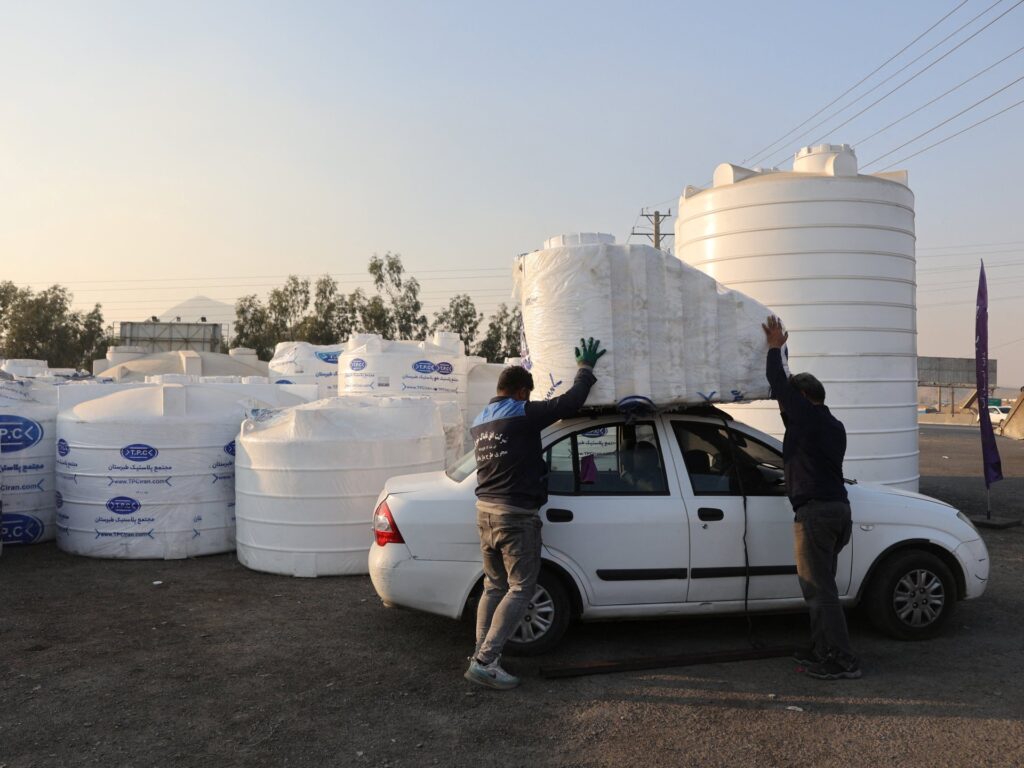
The ongoing conflict has significantly exacerbated Iran’s already severe water crisis. Attacks by the United States and Israel on Iran’s desalination plants and other crucial water infrastructure have intensified the nation’s struggle to provide safe and sufficient water to its population.
Iran has long faced challenges related to water scarcity due to its arid climate, mismanagement of resources, and increasing demand from a growing population. However, recent military actions targeting vital water facilities have deepened the crisis, threatening public health, agriculture, and economic stability.
Desalination plants, essential in supplementing freshwater supplies in Iran’s dry regions, have become key targets in the conflict. Damage to these facilities has resulted in decreased availability of potable water, forcing communities to rely on dwindling natural sources.
Moreover, attacks on water infrastructure such as pumping stations, treatment plants, and pipelines have disrupted water distribution networks. This has led to interruptions in water access for millions, particularly in urban centers and rural areas alike.
The consequences extend beyond immediate water shortages. Agriculture, a major sector in Iran, suffers tremendously from inadequate irrigation caused by the damaged infrastructure, leading to reduced crop yields and heightened food insecurity.
Experts warn that without international intervention and restoration efforts, the damage could have long-term impacts on Iran’s environment and population health. Contaminated or insufficient water supplies increase the risk of waterborne diseases and create humanitarian challenges.
Iran’s government has condemned the attacks, emphasizing the need for peaceful resolution and protection of civilian infrastructure. Human rights organizations also criticize the targeting of essential services, considering it a violation of international laws.
In response, Iran is attempting to repair and fortify its water systems, but limitations in resources and ongoing conflict hinder rapid recovery. The situation calls for urgent attention from the global community to prevent further deterioration of water security in the region.
The war demonstrates the critical link between conflict and resource security. Iran’s water crisis, intensified by attacks on its infrastructure, illustrates how warfare can disrupt essential services, worsening already challenging environmental and humanitarian conditions.
Addressing Iran’s water crisis will require coordinated efforts to rebuild infrastructure, ensure protection against attacks, and implement sustainable water management policies. Without such measures, the ongoing conflict risks pushing millions into deeper water insecurity, with serious implications for regional stability and human welfare.