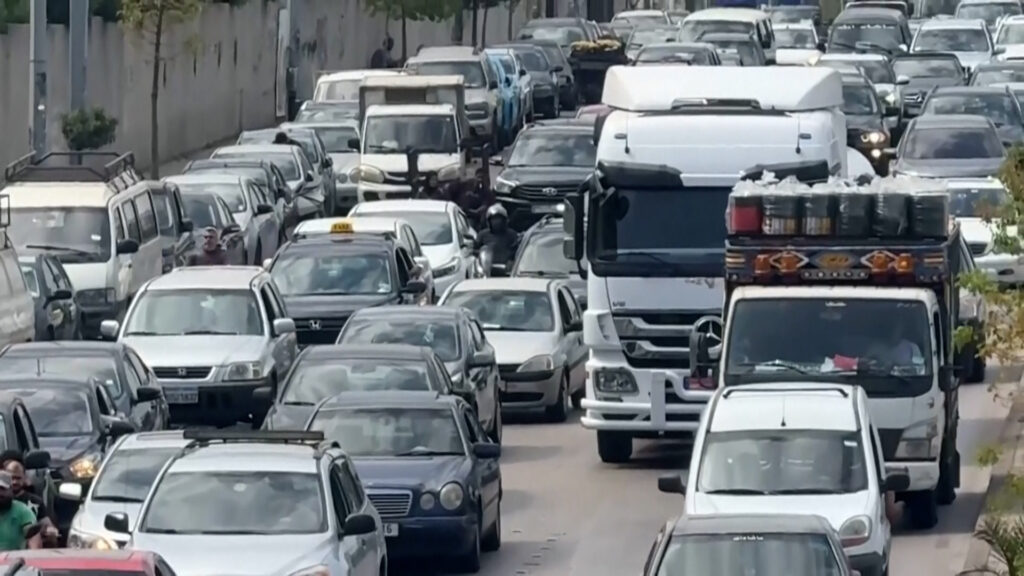
The southern suburbs of Beirut, known as Dahiyeh, have become scenes of chaos as residents rushed to evacuate following warnings of impending Israeli strikes. Videos circulating on social media depict heavily congested roads with gridlocked traffic, underscoring the urgency and panic gripping the area. Dahiyeh, a densely populated area predominantly inhabited by Shia Muslims, has historically been a hotspot during conflicts involving Israel and Lebanon.
The sudden evacuation order came in the wake of escalating tensions between Israel and militant groups based in Lebanon, triggering fears of military strikes that could lead to significant destruction and civilian casualties. Residents were seen hurriedly packing belongings and seeking safety, highlighting the severity of the situation.
Authorities in Beirut have urged calm while reinforcing security measures, but the volatile geopolitical climate has prompted many families to seek refuge away from potential conflict zones. Emergency services have been put on high alert, preparing to respond to any incidents resulting from military actions.
The gridlock captured in videos illustrates the dilemma faced by thousands trying to flee simultaneously, with limited routes available for evacuation in the densely built-up suburbs. This bottleneck has increased the risk of accidents and delayed the movement of vulnerable populations, including the elderly and young children.
International observers have expressed concern over the rising violence in the region, urging all parties to exercise restraint and pursue diplomatic solutions to prevent further escalation. Humanitarian organizations have also mobilized resources to assist displaced residents and provide emergency aid.
The conflict between Israel and groups in Lebanon has deep roots, involving complex political and religious dynamics that have fueled a cycle of violence over decades. Recent escalations followed a series of incidents, including cross-border attacks and rocket fire, exacerbating the fragile situation.
Beirut’s southern suburbs have been targeted in previous conflicts, suffering significant damage and loss of life. The current evacuation underscores the unpredictable and dangerous nature of the ongoing hostilities.
Residents displaced by the latest threats face uncertainty about their homes and livelihoods, with many uncertain when it will be safe to return. The Lebanese government has called for international support to help manage the crisis and protect civilians caught in the crossfire.
Efforts to broker ceasefires and peace talks have repeatedly stalled, leaving communities vulnerable to sudden outbreaks of violence. The humanitarian impact of these conflicts continues to grow, with many families living in temporary shelters or displaced within the country.
As the situation evolves, the international community remains watchful, hoping for de-escalation and a return to stability in Lebanon and the broader Middle East region. Meanwhile, the residents of Beirut’s southern suburbs brace for what could be a prolonged and challenging period of conflict and recovery.