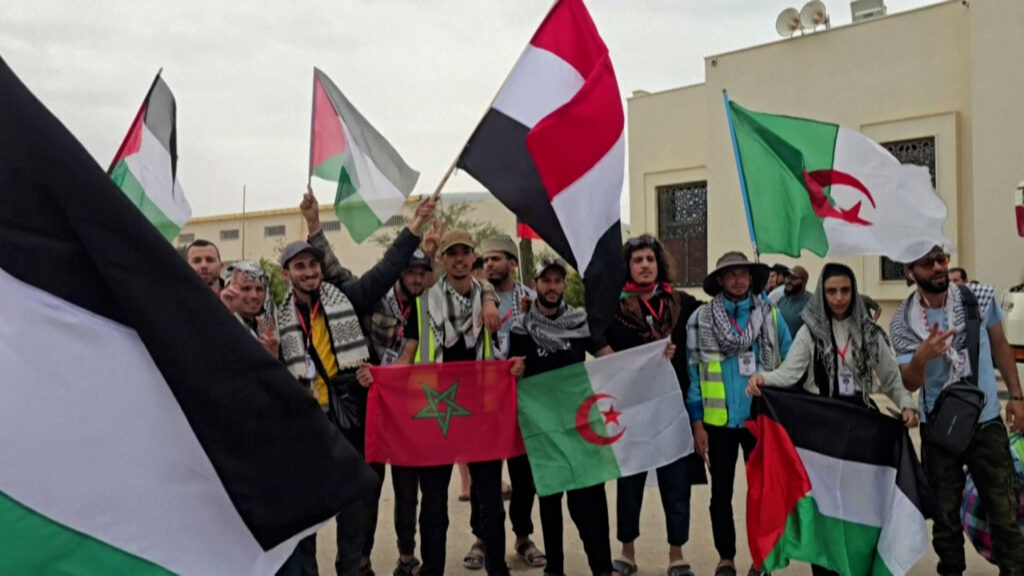
Forces loyal to Libyan commander Khalifa Haftar have detained members of a land convoy attempting to bring humanitarian aid to Gaza. The convoy was stopped at the Sirte checkpoint, a strategic location in Libya controlled by Haftar’s allied forces. This incident highlights the complex geopolitical tensions in the region, where various factions exert control over borders and checkpoints.
The activists were part of a broader humanitarian effort aimed at delivering essential supplies to Gaza, which has been facing severe shortages and hardships amid ongoing conflict. The detention of the convoy members raises concerns about the safe passage of aid through Libyan territory, a critical route for delivering assistance to Gaza by land.
Khalifa Haftar, a powerful figure in Libya’s prolonged civil conflict, controls significant portions of the country, including Sirte, which has become a focal point for military and political activity. His forces’ decision to detain the convoy reflects the heightened security measures and political calculations that influence access and movement within Libya.
Humanitarian organizations have expressed alarm over the detention, emphasizing the importance of unobstructed humanitarian aid to civilians in conflict zones. They call for dialogue and cooperation among all parties to ensure that aid can reach those in need without delay or interference.
This development comes amid renewed calls for international support and pressure to allow safe corridors for humanitarian assistance in Gaza. The ongoing conflict has left many in the region vulnerable, making the delivery of aid a matter of urgent priority.
The detainment also underscores the challenges faced by aid convoys navigating complex regional dynamics and the involvement of multiple armed groups with competing interests. The incident may further complicate diplomatic efforts to stabilize the region and facilitate humanitarian operations.
As the situation develops, it remains crucial for the international community to monitor these events closely and advocate for the protection of humanitarian workers and the unimpeded flow of aid. The safety of civilians and the alleviation of suffering depend heavily on such access.
The Libyan checkpoint incident serves as a reminder of the broader issues facing humanitarian missions in conflict zones, where political and military considerations often jeopardize the delivery of life-saving assistance. It highlights the urgent need for coordinated efforts to secure safe passage and protect humanitarian principles across volatile regions.