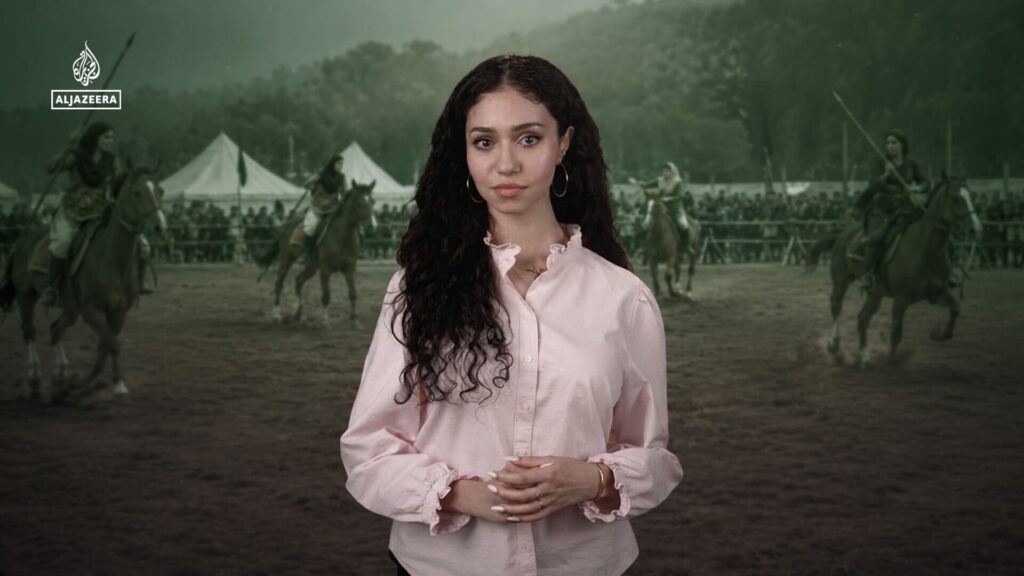
Tent-pegging, a traditional equestrian sport with deep roots in South Asian and Middle Eastern cultures, has long been dominated by male participants. However, Pakistani women are now making remarkable strides in this challenging and exhilarating sport, showcasing their skills and redefining gender roles in the region. Al Jazeera’s Hala Al Shami sheds light on the inspiring journey of these trailblazing women.
Tent-pegging involves horse riders using a lance or sword to strike and pick up small ground targets at a full gallop, demanding exceptional horsemanship, precision, and courage. Historically, the sport has been a male preserve, often linked to martial traditions and rural masculinity in Pakistan. However, societal shifts and the determination of women riders have begun to change this narrative.
In villages and towns across Pakistan, women are increasingly donning traditional riding gear and participating in local tent-pegging competitions. These pioneering women face multiple challenges, including societal conservatism, limited access to training facilities, and scarce financial resources. Despite these obstacles, they exhibit remarkable enthusiasm and commitment, driven by a passion for horses and the sport.
The rise of women in tent-pegging is more than a sporting story—it is a significant step towards gender equality in Pakistani sports. Female riders are not only honing their skills in local arenas but have also started competing on national and international platforms, earning accolades and inspiring a new generation.
Al Shami highlights several prominent figures who have broken through barriers. Riders like Nosheen Iqbal and Fariha Khan have become household names due to their consistent performances and dedication. Their achievements have sparked increased media attention, gradually changing public perception and encouraging greater acceptance of women in traditionally male-dominated sports.
Training academies dedicated to equestrian sports have also begun offering specialized programs for women, fostering a supportive environment for skill development. These platforms provide essential access to quality coaching, horses, and equipment, which were previously major hurdles for female aspirants.
The government and various NGOs have started recognizing the potential benefits of promoting women in sports, including social empowerment and community development. Initiatives aimed at supporting women tent-peggers have included sponsorships, training scholarships, and public awareness campaigns.
Moreover, the involvement of women in tent-pegging contributes to preserving and modernizing Pakistan’s cultural heritage. By embracing this traditionally male sport, women are asserting their right to participate fully in cultural and sporting life, paving the way for more inclusive traditions.
The story of Pakistani women in tent-pegging is emblematic of broader changes in society, where challenges to gender norms are gradually leading to greater equality and opportunities. Their journey serves as an inspiration to women across Pakistan and beyond, proving that with determination and support, barriers in even the most traditional domains can be broken.