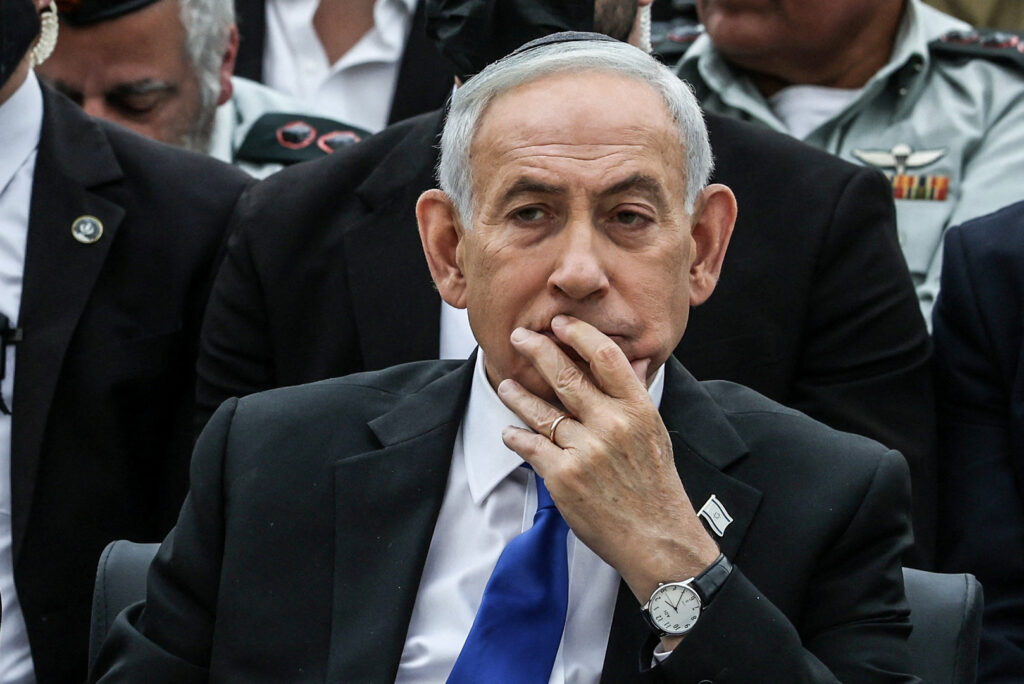
Israel’s Prime Minister Benjamin Netanyahu attends a ceremony commemorating Israel’s Remembrance Day for fallen soldiers, or Yom HaZikaron, at the Military Cemetery on Mount Herzl in Jerusalem April 21, 2026. ILIA YEFIMOVICH/Pool via REUTERS
As diplomatic efforts intensify between the United States and Iran to finalize a peace deal, tensions persist with Israel’s vocal opposition and its commitment to counter perceived threats. The potential US-Iran agreement, aimed at restoring the nuclear accord and reducing regional hostilities, is seen by Israel as a direct challenge to its security and strategic interests.
Israel has consistently expressed concerns over Iran’s nuclear ambitions and its support for militant groups across the Middle East. Despite the negotiations progressing, Israeli officials have vowed to continue their military operations targeting what they describe as regional destabilizers and nuclear threats emanating from Iran and Iranian-backed entities.
The Israeli government’s stance is rooted in fears that the US-Iran deal might embolden Tehran, providing it with financial resources and international legitimacy that could accelerate its nuclear program and increase its influence in Syria, Lebanon, and Gaza. Israeli Prime Minister and security chiefs have repeatedly warned that Iran remains the primary existential threat to Israel’s security.
Israeli defense activities include targeted strikes in Syria against Iranian forces and proxies, designed to disrupt weapon transfers and degrade Iran’s military foothold near Israeli borders. These actions underscore Israel’s reluctance to accept any agreement that doesn’t ensure a complete dismantling of Iran’s nuclear weapons capability.
From Washington’s perspective, the deal is seen as a way to contain Iran diplomatically and avoid military conflict. The Biden administration has worked extensively to bring Iran back into compliance with nuclear limits set forth in the 2015 Joint Comprehensive Plan of Action (JCPOA). However, balancing this with Israel’s security concerns remains a complex challenge.
Experts note that Israel’s hardline approach may complicate US diplomatic efforts, as Israeli strikes risk provoking Tehran and diminishing trust in the negotiation process. Conversely, Israel argues that without continuous pressure, Iran would be free to expand its nuclear program unchecked.
The regional dynamics further complicate the equation, with Gulf states cautiously supportive of the US-Iran dialogue while sharing Israel’s apprehensions about Iranian ambitions. The delicate balance involves preventing escalation while seeking long-term stability in a volatile region.
In conclusion, while the US and Iran move closer to a historic deal that could reshape Middle Eastern geopolitics, Israel’s opposition and ongoing military actions serve as potential obstacles that might sabotage the agreement. The coming months will be critical in determining whether diplomatic progress can withstand these tensions or if Israel’s insistence on confronting Iranian threats will derail the peace efforts.