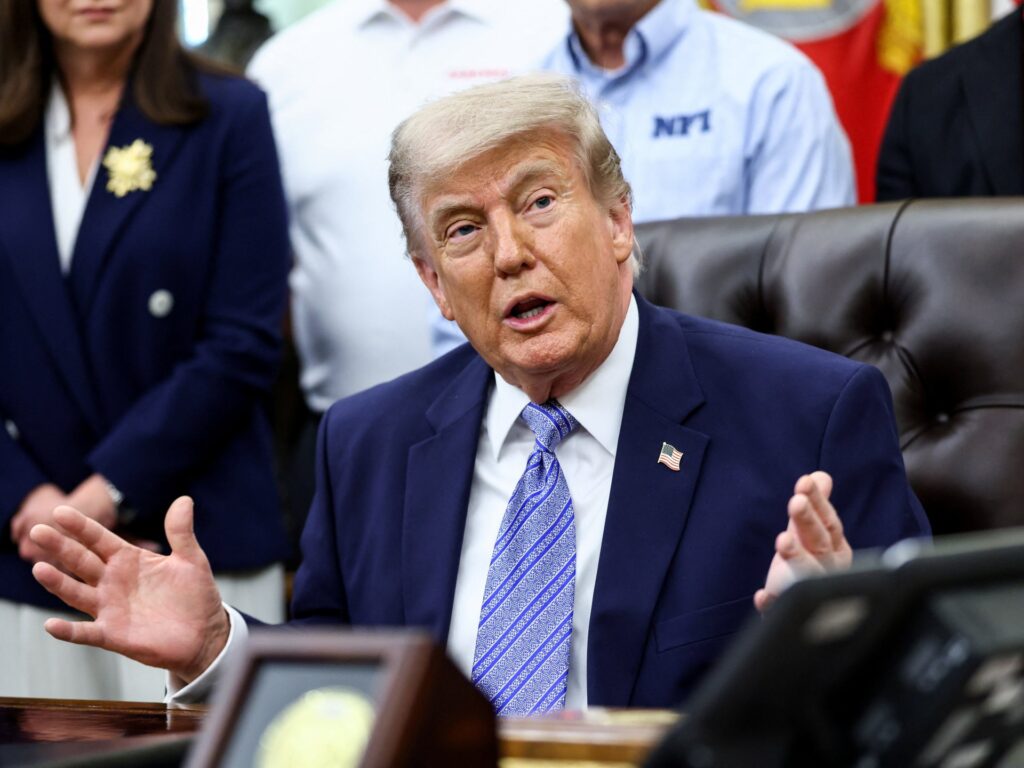
US President Donald Trump has publicly connected the ongoing negotiations with Iran to the broader Middle East peace process, specifically emphasizing the expansion of the Abraham Accords. These accords, originally brokered in 2020, marked a historic normalization of relations between Israel and several Arab nations. Trump’s recent statements suggest that progress in talks with Iran might pave the way for further diplomatic breakthroughs in the region.
The Abraham Accords, signed initially between Israel, the United Arab Emirates, and Bahrain, with later participation from Sudan and Morocco, have been hailed as a significant step toward peace and stability in the Middle East. Trump, who was president during the signing of these agreements, has highlighted that Iran’s role and stance in the region remain pivotal in shaping future diplomatic ties.
President Trump articulated that his administration views the negotiations with Iran not only as a way to curb Iran’s nuclear ambitions but also as a strategic move to foster broader regional cooperation through the expansion of the Abraham Accords. The idea is that by engaging Iran diplomatically, there may be increased incentives for other Middle Eastern countries to pursue peaceful agreements.
Experts note that this linkage underscores the complexity of Middle Eastern geopolitics, where nuclear non-proliferation efforts are deeply intertwined with regional security and alliances. Trump’s approach reflects a strategic vision aiming to leverage diplomatic negotiations as a multifaceted tool for peace.
Critics of the approach argue that linking Iran negotiations directly to the Abraham Accords may complicate efforts by introducing additional political variables. However, supporters believe that a comprehensive diplomatic strategy is essential for lasting peace.
The expansion of the Abraham Accords could potentially include more Arab and Muslim-majority nations normalizing relations with Israel, thereby transforming the geopolitical landscape of the Middle East. Trump’s administration has consistently pushed for these diplomatic developments as part of a broader Middle East peace initiative.
As negotiations with Iran proceed, the international community is closely watching to see how these discussions might influence the broader framework of the Abraham Accords and regional diplomacy. The success of this linkage could redefine alliances and contribute to a more stable and peaceful Middle East.
In summary, President Trump’s linkage of Iran negotiations to the expansion of the Abraham Accords signals an ambitious and interconnected approach to resolving some of the Middle East’s most enduring conflicts. This strategy highlights the potential for diplomacy to bridge longstanding divides and foster new partnerships across the region.