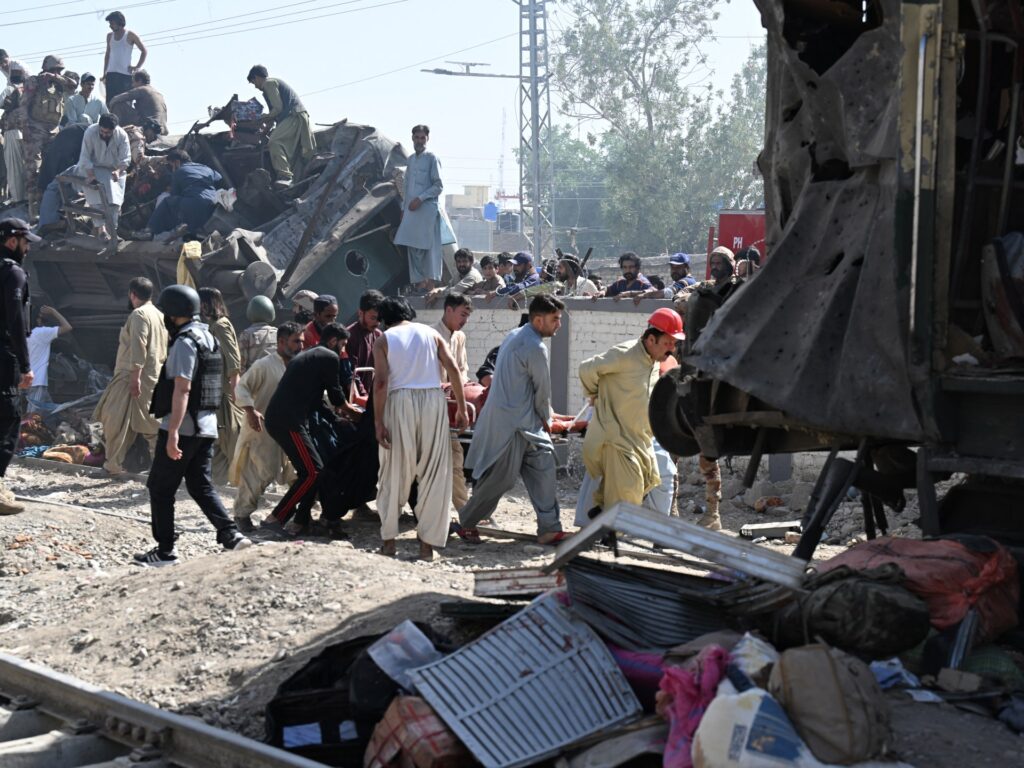
A tragic suicide car bomb attack on a train in Pakistan has resulted in the deaths of at least 24 people, marking a devastating blow to the region’s security and civilian safety. The explosion occurred in the southwestern province of Balochistan, an area that has experienced repeated violence and insurgent activity in recent years.
The Balochistan Liberation Army (BLA), a separatist militant group seeking independence for Balochistan, has claimed responsibility for the attack. The group, which has been involved in a protracted insurgency against the Pakistani state, reportedly used a vehicle laden with explosives to target a passenger train, causing significant destruction and loss of life.
Emergency response teams rushed to the scene following the explosion, working to provide aid to survivors and transport the injured to nearby hospitals. The severity of the blast has left many victims with critical injuries, and local medical facilities are struggling to cope with the influx of casualties.
Officials have condemned the attack, with the Pakistani government pledging to intensify efforts to combat terrorism and restore peace in Balochistan. This incident highlights the ongoing challenges faced by the country in addressing militant violence and ensuring the safety of its citizens.
The Balochistan Liberation Army has been active for several years, advocating for the rights and autonomy of the Baloch people. Its insurgency has led to numerous attacks on infrastructure, security forces, and civilians, complicating the security landscape in the region.
This latest attack on civilian transportation underscores the grave risks posed by militant groups operating in Pakistan, emphasizing the urgent need for effective counterterrorism strategies. The international community has also expressed concern over the continued instability in Balochistan and the broader implications for regional security.
Residents of Balochistan are mourning the victims of the bombing, with many calling for peace and justice. The attack has shaken the local population, hindering daily life and exacerbating fears of further violence.
In response, Pakistani law enforcement agencies are conducting investigations to identify those involved in planning and facilitating the attack. Security forces have increased patrols and surveillance in vulnerable areas to prevent future incidents.
Analysts suggest that the underlying political grievances in Balochistan, including demands for greater autonomy and resource control, continue to fuel unrest. Addressing these issues alongside security measures may be crucial for achieving lasting peace.
The attack on the train not only caused significant casualties but also disrupted a vital transportation link, impacting commerce and movement within the province. Authorities are working to repair damaged infrastructure and restore services as quickly as possible.
Families of the victims have called for support and assistance, as many have lost loved ones and face an uncertain future. Humanitarian organizations are mobilizing efforts to provide aid and counseling services to those affected.
Pakistan remains committed to combating terrorism and fostering development in its troubled regions, aiming to create a safer environment for all citizens. The government’s approach includes military operations, intelligence sharing, and community engagement to address the root causes of insurgency.
While the situation in Balochistan remains fragile, the resilience of its people and the combined efforts of national and international actors offer hope for progress toward stability and peace.
The tragedy serves as a stark reminder of the persistent threat posed by militant groups in South Asia and the ongoing struggle to protect vulnerable communities from violence. Continued vigilance and cooperative security efforts are essential to prevent future attacks and promote lasting peace in the region.