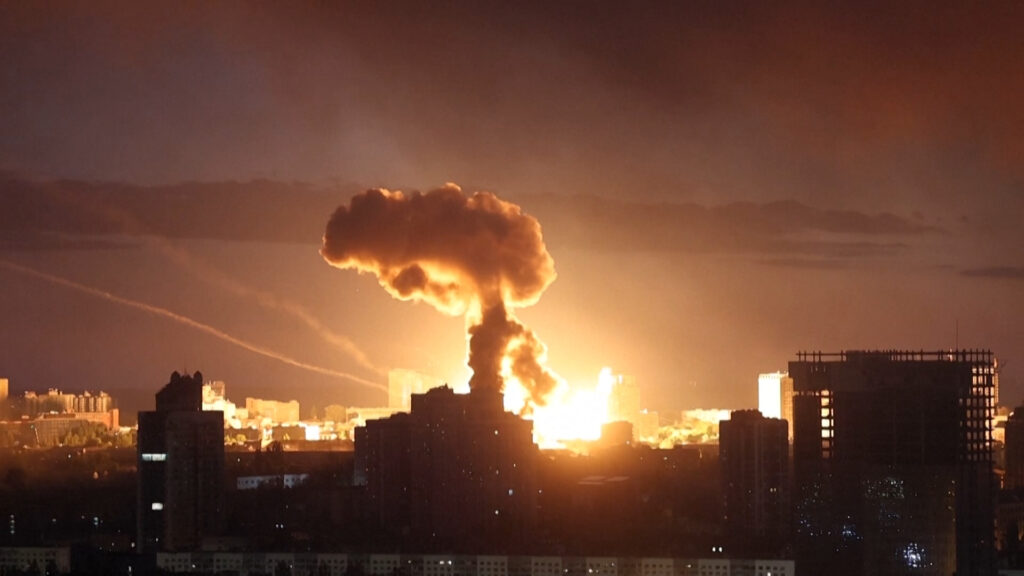
In a dramatic escalation of conflict, Russia launched a powerful overnight attack on Ukraine’s capital city. The assault involved the use of drones and ballistic missiles, underscoring the intensifying hostilities in the region. Among the armaments employed, Russia reportedly deployed a hypersonic missile, a weapon known for its high speed and maneuverability, making it a significant threat. This latest assault has caused widespread concern due to the potential for severe damage and casualties in the densely populated capital of Ukraine.
The use of hypersonic missiles marks a new chapter in the military tactics utilized in this conflict, signaling an increase in the level of aggression and technological capability. These missiles can travel at speeds exceeding five times the speed of sound and are difficult to intercept, increasing the risk of substantial destruction.
Ukraine’s defense forces are working amid challenging conditions to counter these attacks, which severely impact the city’s infrastructure and the lives of its residents. The international community has expressed alarm over the use of such high-impact and sophisticated weaponry in a civilian-dense area, calling for restraint and a ceasefire.
This development also raises questions about the broader strategy Russia is employing in the ongoing conflict, suggesting a potential shift towards more destructive and disruptive military actions. The attack reflects the ongoing tensions and unsettled status between Russia and Ukraine, with no immediate resolution in sight.
Experts warn that the introduction of hypersonic missiles into this conflict could set a precedent for future warfare, potentially prompting an arms race in hypersonic technology. The implications of such advanced weaponry being used in a conflict zone are profound, with long-term effects on regional stability and international security.
Residents of Kyiv reported hearing multiple explosions late into the night, with emergency services responding swiftly to affected areas. The government urged citizens to remain vigilant and follow safety protocols as the threat level remains high.
The attack has drawn condemnation from numerous world leaders and international organizations, highlighting the urgent need for dialogue and peaceful resolution to prevent further escalation and loss of life.
As the situation unfolds, global monitoring agencies continue to track the developments closely, providing updates and urging all parties to prioritize humanitarian concerns amidst the conflict. The use of hypersonic missiles in the assault on Kyiv marks a worrying turn in the conflict, emphasizing the severe risks involved when advanced military technologies are employed in densely populated areas.