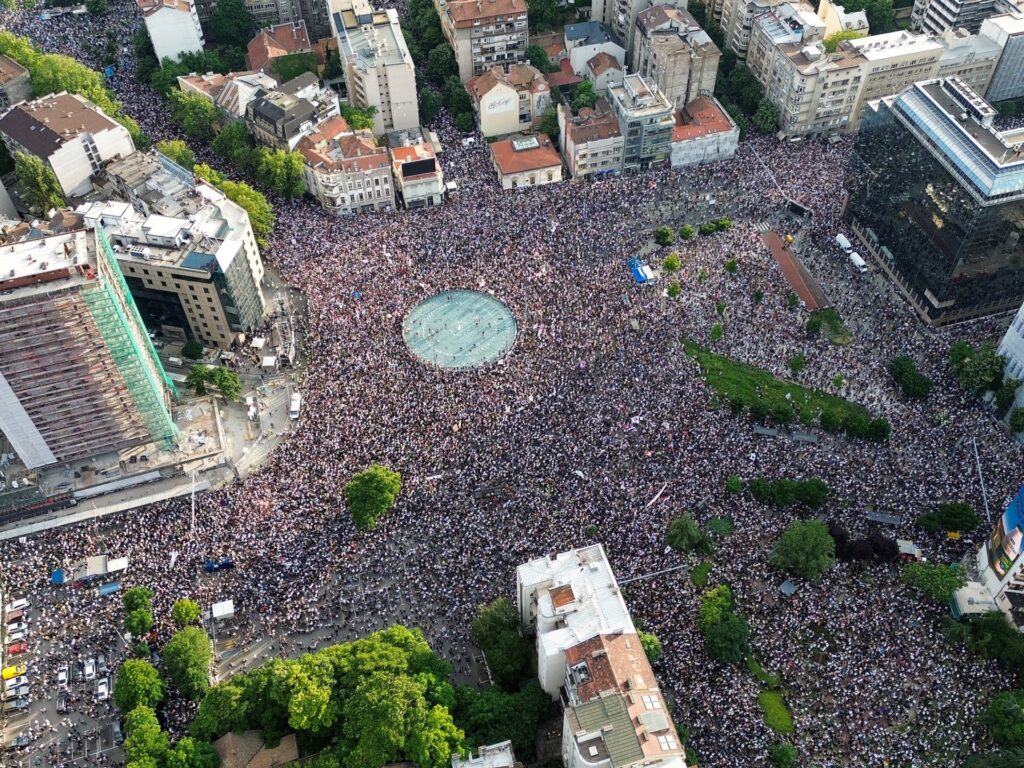
Tens of thousands of demonstrators have taken to the streets across Serbia in a wave of antigovernment protests. The movement, largely driven by students and young activists, began in the aftermath of the tragic Novi Sad disaster in November 2024. This event has sparked widespread public outrage and a call for significant political change within the country.
The demonstrations have grown considerably in size and intensity, reflecting deep-seated dissatisfaction among the population with the current government. Protesters are demanding early elections, arguing that the present administration has failed to protect citizens and address systemic issues effectively.
The student-led movement has organized numerous rallies, marches, and public assemblies, drawing support from various segments of society including academics, civil rights activists, and ordinary citizens. The participants express concern over governmental transparency, accountability, and the handling of the recent disaster which claimed numerous lives and caused significant damage.
In addition to calls for early elections, demonstrators demand reforms in governance and increased public participation in decision-making processes. The movement highlights broader grievances such as economic hardship, corruption, and limited civil liberties.
Authorities have responded cautiously to the protests, with some officials signaling willingness to engage in dialogue, while others have called for maintaining public order. Security forces have been deployed in major cities to monitor the gatherings and prevent escalation.
International observers have noted the peaceful nature of many of the protests, though they remain alert to the potential for violence or unrest. The situation is being closely watched by neighboring countries and international organizations concerned about stability in the Balkan region.
The government faces mounting pressure as the protests continue, with opposition leaders expressing solidarity with the movement and calling for constructive political solutions. As the demonstrations evolve, the Serbian political landscape could experience significant shifts depending on the government’s response and the protesters’ persistence.
This movement represents a critical moment in Serbia’s recent history, underscoring the power of civic activism and the public’s demand for democratic accountability and justice following a national tragedy.