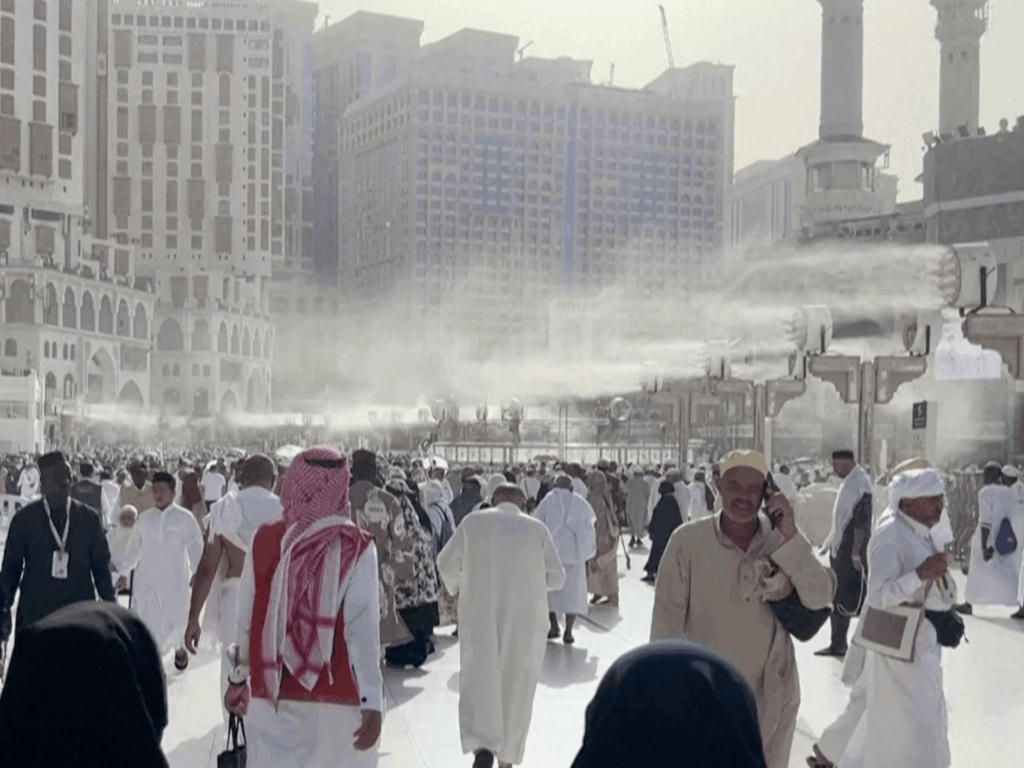
As the annual Hajj pilgrimage approaches, more than 1.5 million devotees have already made their way to Mecca, Saudi Arabia, enduring extreme heat to fulfill this sacred Islamic ritual. Hajj, one of the five pillars of Islam, attracts Muslims from around the world who gather to perform a series of religious rites with profound spiritual significance.
This year’s pilgrimage is marked by unusually high temperatures, presenting a challenge to many pilgrims who are trekking the holy sites. Despite the fierce heat, the determination and devotion of the pilgrims have remained unwavering. Authorities have been proactive, implementing stringent safety measures to ensure the well-being of all attendees. These include providing ample water stations, shaded rest areas, and medical teams dispersed throughout the pilgrimage routes.
Mecca, being the holiest city in Islam, sees an influx of believers during this period, making crowd management crucial to prevent any accidents. Organizers collaborate closely with security forces to maintain orderly movement and facilitate smooth access to key locations such as the Grand Mosque, Mount Arafat, and Mina.
The pilgrimage rituals, which span several days, include the Tawaf — circumambulating the Kaaba — and the symbolic stoning of the devil at Jamarat. These acts are imbued with centuries of religious tradition and meaning, symbolizing purification and renewed faith.
Health services have reported the importance of hydration and sun protection, urging pilgrims to use umbrellas, wear light clothing, and take rests when needed. Local authorities have set up emergency response teams specialized in treating heat exhaustion and other ailments associated with high temperatures.
The spirit of unity and faith is palpable among the pilgrims, who come from diverse countries, cultures, and backgrounds but share a common purpose. For many, participating in Hajj is a once-in-a-lifetime journey, a profound act of worship and dedication that strengthens their sense of belonging to the global Muslim community.
In recent years, the Saudi government has invested significantly in infrastructure improvements around Mecca to facilitate the Hajj pilgrimage. These developments have enhanced accessibility, transportation, sanitation, and safety for millions of visitors each year.
Despite the demanding conditions, the pilgrimage continues to serve as a powerful reminder of faith’s resilience and the enduring significance of spiritual traditions. As pilgrims complete their rites and prepare to return home, the lessons of perseverance, patience, and devotion remain etched in their hearts.
This year’s Hajj also underscores the capacity for collective endurance and the shared commitment of Muslims worldwide to observe their faith under any circumstances. The successful management of such a large-scale event amidst challenging environmental conditions highlights the concerted efforts of the Saudi authorities and the unwavering spirit of the pilgrims themselves.
As the pilgrimage concludes, reflections on the experience and the hope for peace, unity, and spiritual renewal resonate deeply across the global Muslim community, reaffirming Hajj’s profound role in Islam and human solidarity.