Hindutva, often translated as ‘Hinduness,’ is a political and cultural ideology that emerged in the early 20th century in India. It is important to understand that Hindutva is distinctly different from Hinduism, the ancient and diverse religion practiced by millions. While Hinduism is a broad faith encompassing a wide range of beliefs, practices, and philosophies with origins dating back thousands of years, Hindutva is a modern political movement centered on the idea of Hindu identity as a basis for national unity and political power.
The roots of the Hindutva movement are found primarily in the socio-political context of British colonial India. During this period, there was a growing sense of nationalism combined with communal tensions among various religious communities, particularly between Hindus and Muslims. Early proponents like Vinayak Damodar Savarkar, who penned the seminal work ‘Hindutva: Who is a Hindu?’ in 1923, sought to define Indian identity largely in terms of Hindu cultural and historical unity. Savarkar argued that the nation should be a Hindu nation, culturally and politically, which would entail uniting Hindus while positioning others outside this predominant identity.
This worldview contrasts sharply with the pluralistic outlook of Hinduism as a religion, which is inclusive and varies regionally and philosophically across its followers. Hinduism itself does not inherently prescribe a strict political identity or nationhood based on religious criteria. Instead, it embraces a multitude of paths to spirituality and acknowledges diversity in belief and practice.
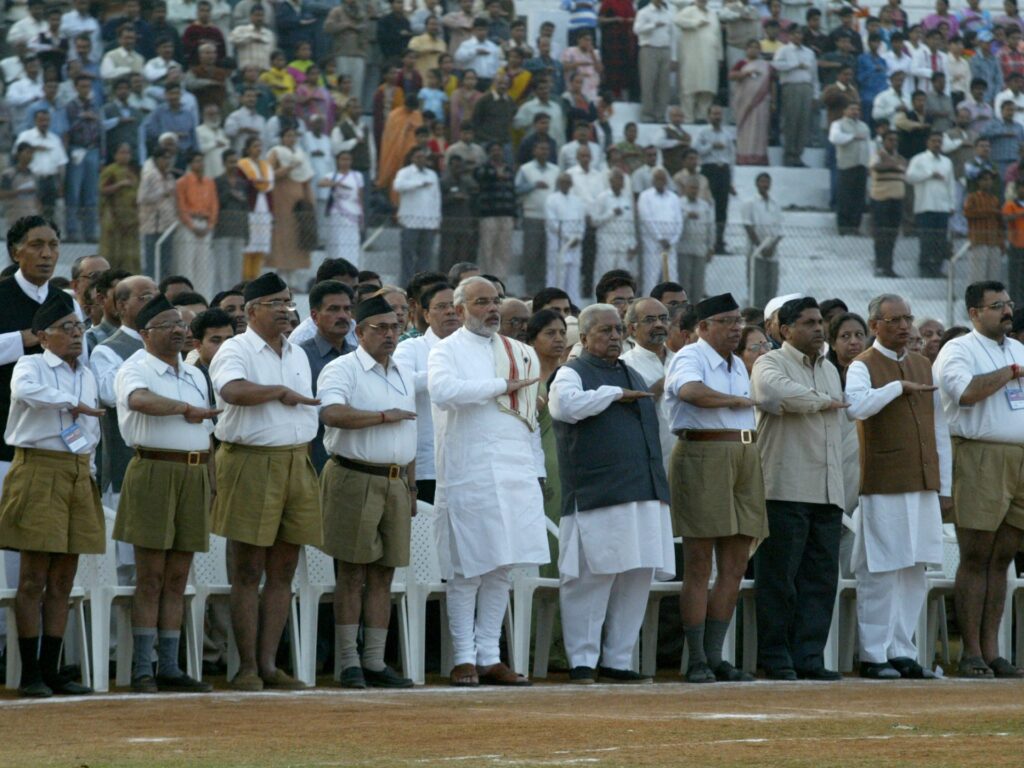
Hindutva as a movement gained traction in the 20th century through organizations such as the Rashtriya Swayamsevak Sangh (RSS), founded in 1925, which aimed to promote Hindu values and culture as central to Indian identity. Over time, Hindutva ideology has significantly influenced political parties, most notably the Bharatiya Janata Party (BJP), which has held power at various levels of Indian government.
The movement’s emphasis on Hindu cultural nationalism has drawn criticism and concern for contributing to social polarization and marginalization of minority communities, particularly Muslims and Christians. Critics argue that Hindutva’s interpretation of Indian national identity is exclusionary and conflates religious identity with citizenship, which can undermine the secular and pluralistic foundations of the Indian republic.
In summary, Hindutva is a 20th-century political ideology rooted in asserting Hindu cultural and religious identity as the defining feature of India’s nationhood, differing fundamentally from Hinduism, an ancient and diverse religious tradition. Understanding this distinction is key to grasping contemporary political and social dynamics in India.